Türkiye has 22 UNESCO World Heritage sites, and the list stretches from a hilltop shrine built about 11,600 years ago to an Ottoman mosque complex in Edirne. Roughly half already have a dedicated guide on this site. This page is the map: the full list in one table, then regional notes, with longer write-ups for the sites that have no page of their own yet (Xanthos-Letoon, Çatalhöyük, Hattusa, Aphrodisias, Sardis, Gordion and Arslantepe). Entry fees change every year and sources disagree, so we give none for those sites; check at the gate or on the Ministry of Culture and Tourism’s museum pages. The official list is on UNESCO’s Türkiye page.
The full list at a glance
| Site | Inscribed | Where | Our guide |
|---|---|---|---|
| Historic Areas of Istanbul | 1985 | Istanbul | Hagia Sophia, Süleymaniye, Chora |
| Göreme National Park and Rock Sites of Cappadocia | 1985 | Cappadocia | Cappadocia |
| Great Mosque and Hospital of Divriği | 1985 | Sivas | Sivas |
| Hattusa: the Hittite Capital | 1986 | Çorum | Below |
| Nemrut Dağ | 1987 | Adıyaman | Mount Nemrut |
| Xanthos-Letoon | 1988 | Muğla / Antalya | Below |
| Hierapolis-Pamukkale | 1988 | Denizli | Hierapolis |
| City of Safranbolu | 1994 | Karabük | Safranbolu |
| Archaeological Site of Troy | 1998 | Çanakkale | Troy |
| Selimiye Mosque and its Social Complex | 2011 | Edirne | Edirne |
| Neolithic Site of Çatalhöyük | 2012 | Konya | Below |
| Bursa and Cumalıkızık | 2014 | Bursa | Bursa |
| Pergamon and its Multi-Layered Landscape | 2014 | İzmir | Pergamon |
| Diyarbakır Fortress and Hevsel Gardens | 2015 | Diyarbakır | Diyarbakır |
| Ephesus | 2015 | İzmir | Ephesus |
| Ani Archaeological Site | 2016 | Kars | Kars and Ani |
| Aphrodisias | 2017 | Aydın | Below |
| Göbekli Tepe | 2018 | Şanlıurfa | Göbekli Tepe |
| Arslantepe Mound | 2021 | Malatya | Below |
| Gordion | 2023 | Ankara | Below |
| Wooden Hypostyle Mosques of Medieval Anatolia | 2023 | Five provinces | Afyonkarahisar |
| Sardis and the Lydian Tumuli of Bin Tepe | 2025 | Manisa | Below |
Istanbul, Bursa and Edirne: the Ottoman core
The Historic Areas of Istanbul cover four zones: the Sultanahmet peninsula, the Süleymaniye quarter, the Zeyrek quarter and the Theodosian land walls. Start with Hagia Sophia and Topkapı Palace, then add the Blue Mosque, the Süleymaniye Mosque and the Byzantine mosaics of the Chora Church. A guided Istanbul tour saves queue time at the busiest two. Our Istanbul city guide covers where to stay.
Bursa, the first Ottoman capital, is listed together with Cumalıkızık, a village of timber houses on the slopes of Uludağ (see Bursa). Edirne, the capital before Istanbul, has the Selimiye Mosque, the work Mimar Sinan called his masterpiece (see Edirne). Both are easy day trips or overnights from Istanbul.
The Aegean and Lycian coast
This is the densest cluster and the easiest to do independently.
- Troy is the northern anchor, close to Çanakkale: see Troy.
- Pergamon is a Hellenistic acropolis above Bergama, a day trip from İzmir: see Pergamon.
- Ephesus is the best-preserved Greco-Roman city on the coast: see Ephesus and Selçuk or book a guided Ephesus tour.
- Hierapolis-Pamukkale pairs a Roman spa city with white travertine terraces: see Hierapolis or join a Pamukkale tour.
Sardis and Bin Tepe
Sardis was the capital of Lydia and the seat of King Croesus, and in 2025 it became Türkiye’s 22nd World Heritage site, together with the Bin Tepe necropolis about 10 km north. At Sardis the highlights are the large gymnasium and synagogue complex, one of the biggest synagogues of the ancient world, and the columns of the Temple of Artemis. Bin Tepe holds more than 100 burial mounds across the plain, including the huge tumulus traditionally linked to King Alyattes. Sardis lies near Salihli, roughly 90 km east of İzmir, and fits between Pergamon and Ephesus on a loop. Allow half a day, and bring water: there is little shade.
Aphrodisias
Aphrodisias, near Karacasu in Aydın province, was a marble-carving centre dedicated to Aphrodite. Its stadium is among the best preserved in the Mediterranean world, and the Sebasteion’s relief panels, now shown in the on-site museum, are among the finest Roman sculpture in Türkiye. Also look for the Tetrapylon gateway and the Temple of Aphrodite. It is about an hour from Pamukkale, so most visitors combine the two over a night; with your own car it is a long but possible day. The site is quiet compared with Ephesus, so a weekday morning can feel almost empty.
Xanthos and Letoon
Xanthos was the capital of ancient Lycia and Letoon was its religious sanctuary, 15 km apart on the Eşen river plain near Kınık, roughly an hour from Fethiye. UNESCO listed them together in 1988 as the best evidence of Lycian civilisation. At Xanthos look for the Roman theatre, the Lycian tombs and the Harpy Tomb pillar, whose original reliefs are in the British Museum while a copy stands on site. Letoon holds three temples to Leto, Apollo and Artemis, a flooded nymphaeum often full of frogs, and a theatre. A trilingual inscription in Lycian, Greek and Aramaic was found here, and it was key to deciphering the Lycian language. Combine both with Fethiye, Kalkan or Patara, and see the UNESCO record for Xanthos-Letoon. A Fethiye tour is the simplest way to do both without a car.
Central Anatolia: Hattusa, Gordion and Çatalhöyük
Hattusa
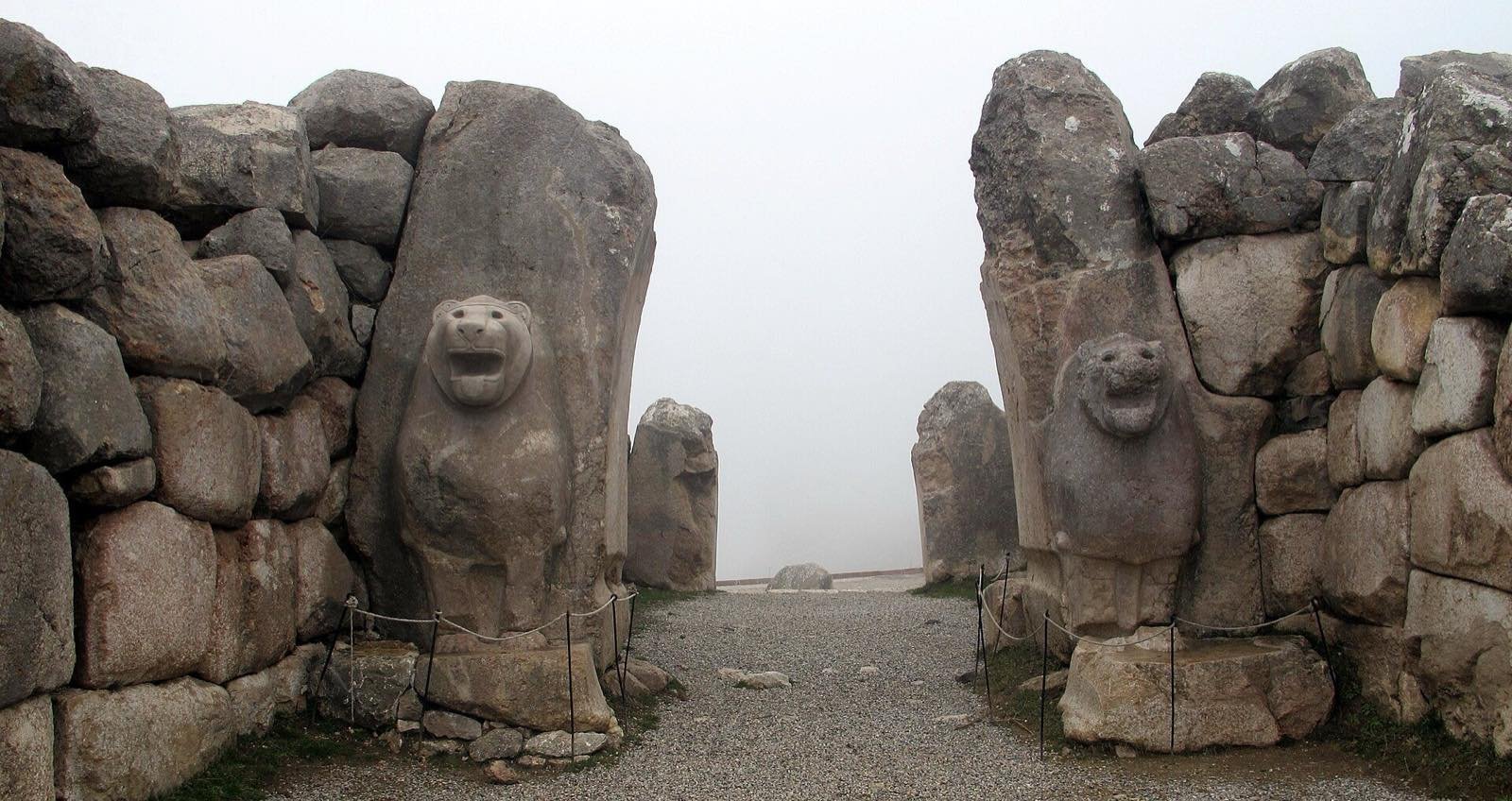
Hattusa, near Boğazkale in Çorum province, was the capital of the Hittite Empire in the second millennium BCE. The city covered a hilltop with 6 km of walls, and what remains is spread over a wide area: the Lion Gate, the King’s Gate and the Sphinx Gate, the foundations of the Great Temple, the citadel of Büyükkale and the rock sanctuary of Yazılıkaya, a short drive away. Thousands of cuneiform tablets from the royal archive, including a version of the treaty with Egypt after the Battle of Kadesh, put it at the centre of ancient diplomacy. It is about 200 km east of Ankara, a long day or an overnight in Çorum, and a car is far easier than public transport. Plan 3 to 4 hours. See UNESCO’s Hattusha record for the full listing; our Ankara guide covers the base city.
Gordion
Gordion, the Phrygian capital near Yassıhöyük about 100 km west of Ankara, is where legend says Alexander cut the Gordian Knot. The main draw is Tumulus MM, a burial mound some 50 m high that is entered through a tunnel to a timber tomb chamber, often attributed to a king of the Midas dynasty. The small site museum holds finds such as pieces from the royal feasting equipment. It is a shorter and quieter stop than Hattusa and suits a half-day from Ankara.
Çatalhöyük
Çatalhöyük, on the Konya plain near Çumra about 50 km from Konya, was inhabited from about 7500 to 5700 BCE and is one of the largest early farming towns known. Its houses were packed together with no streets, and people entered through roof openings by ladder, with walls often plastered and painted. UNESCO listed it in 2012; see the Çatalhöyük record. Today you see a low east mound and a west mound under protective shelters, plus a replica house and an information centre, and many of the best finds are in Ankara’s Museum of Anatolian Civilisations. It suits an easy half-day from Konya, best in spring or autumn because the plain is exposed and hot in summer.
Southeast and East
- Göbekli Tepe: the oldest monumental architecture known, covered in our Göbekli Tepe guide. Book a Şanlıurfa tour if you do not want to arrange a taxi.
- Nemrut Dağ: the stone heads of a Commagene king, see Mount Nemrut.
- Ani: the ruined Armenian medieval capital near Kars, see Kars and Ani. Our five historical sites in Eastern Türkiye guide strings these three together.
- Diyarbakır Fortress and Hevsel Gardens: around 6 km of basalt walls and the green strip along the Tigris, see Diyarbakır.
- Arslantepe: a mound in Malatya province with a Bronze Age palace complex, including among the earliest known metal swords. It is a specialist stop, reached from Malatya, and pairs with Nemrut Dağ in a regional loop.
Anatolian Seljuk and Ottoman towns
Divriği in Sivas province has a mosque and hospital of 1228 and 1229 with some of the most extravagant carved portals in Anatolia; see Sivas. Safranbolu keeps hundreds of Ottoman timber houses; see Safranbolu. The Wooden Hypostyle Mosques listing covers five medieval mosques built on forests of timber columns: Afyonkarahisar Ulu Mosque, Eşrefoğlu Mosque in Beyşehir, Sivrihisar Ulu Mosque, and Ahi Şerafettin and Arslanhane in Ankara. Start with Afyonkarahisar for the first.
Göreme and Cappadocia
Rock-cut churches, cave dwellings and underground cities make up the Göreme listing. Plan around the open-air museum and valley walks in Cappadocia, and see Derinkuyu for the underground city. A guided Cappadocia tour covers the valleys and the underground cities in one day.
Planning a trip around the list
- Aegean loop (5 to 6 days): Troy, Pergamon, Sardis, Ephesus, Aphrodisias, Hierapolis-Pamukkale. Fly into İzmir and out of Dalaman, adding Xanthos-Letoon at the end.
- Central Anatolia (3 to 4 days): Ankara for Gordion, Hattusa overnight in Çorum, then Cappadocia and Çatalhöyük via Konya.
- East (7 to 10 days): Şanlıurfa, Nemrut, Diyarbakır, Van or Kars for Ani. Distances are huge; fly between hubs.
- Timing: April to early June and September to October. July and August are hot on the Aegean and central plateau, so start at opening time. Eastern sites close from late autumn when snow arrives.
- Tickets: see our Museum Pass guide and the Museum Pass answer above, then confirm the individual entry fees on arrival. Prices are in euros or lira, and have risen sharply in recent years.
Photo credit for the Hattusa image: Murat Özsoy 1958 / Wikimedia Commons, CC BY-SA 4.0.