Edirne Travel Guide 2026: Ottoman Architecture, Selimiye
Edirne guide covers the Selimiye Mosque, Kırkpınar oil wrestling, three Ottoman mosques, palace ruins and practical tips for Turkey's westernmost city.
Guides for Edirne
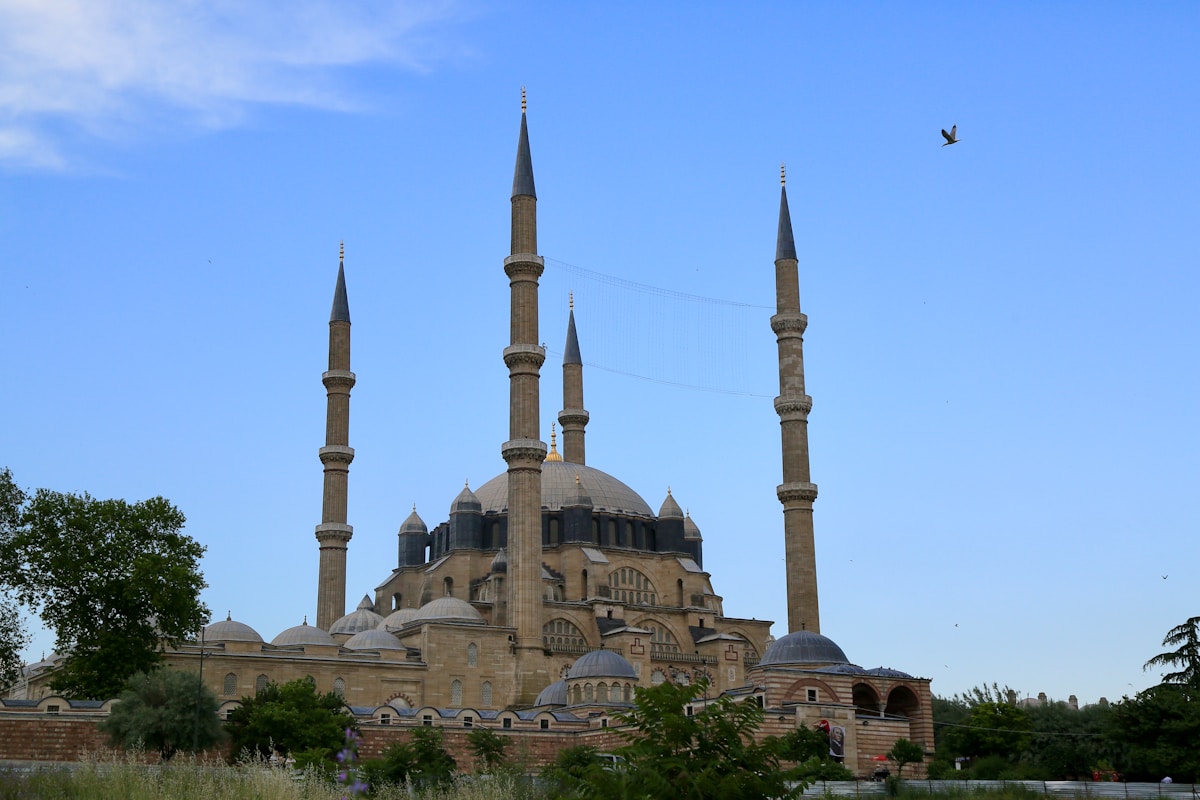
Edirne is Turkey’s westernmost city - on the Thracian plain at the junction of the Tunca and Meriç rivers, 8km from the Greek border and 18km from Bulgaria. It was the second Ottoman capital (after Bursa, before Istanbul), and it contains in the Selimiye Mosque one of the supreme achievements of Islamic architecture in the world.
Edirne is not a large city (population approximately 180,000) and it is not a tourist destination in the conventional sense. What it has is the Selimiye - Mimar Sinan’s masterpiece, built 1569–1575 and considered by Sinan himself to be his finest work - and a supporting cast of other significant Ottoman buildings: the Old Mosque (Eski Cami), the Three-Balconied Mosque (Üç Şerefeli Cami), the ruins of the Edirne Sarayı (Ottoman palace), and the Ali Paşa Covered Bazaar.
What makes Edirne significant
Selimiye Mosque: Commissioned by Sultan Selim II and designed by the imperial architect Mimar Sinan, completed in 1575. The dome (31.28m diameter) surpasses the Hagia Sophia; the four minarets (71m tall, each with three balconies for the muezzin) are the finest in Ottoman architecture. UNESCO World Heritage Site (1993). Entry: free. Open daily; closed to non-worshippers during prayer times.
Edirne Palace (Edirne Sarayı): Ruins of the second-largest Ottoman palace after Topkapı. The surviving Kum Kasrı pavilion and kitchen foundations are open to visit. Entry: approximately ₺100 as of 2026. Open Tuesday–Sunday, 08:00–17:00.
Old Mosque (Eski Cami): The oldest mosque in Edirne, built 1414 CE - notable for the giant calligraphic panels on its interior pillars. Entry: free. Open daily (closed during prayer times).
Ottoman capital 1363–1453: Edirne (Adrianople in its Greek/Byzantine incarnation) was the Ottoman capital for ninety years - from Murad I’s transfer of the seat of government here to Mehmed II’s conquest of Constantinople.
Kırkpınar oil wrestling: The annual oil wrestling (yağlı güreş) festival, held on the plains outside Edirne every June–July. One of the world’s oldest continuously-held sporting events - documented from 1346. Inscribed on UNESCO’s Intangible Cultural Heritage list.
Daily costs
| Category | Budget | Mid-range |
|---|---|---|
| Accommodation | ₺500–1,000 | ₺1,000–2,500 |
| Food | ₺180–350 | ₺350–650 |
| Activities | ₺50–150 | ₺150–300 |
| Transport | ₺30–80 | ₺80–200 |
| Total/day | ₺760–1,580 | ₺1,580–3,650 |
Where to stay in Edirne
Accommodation is concentrated in the old city and around the Selimiye Mosque. Tuna Hotel (2-star, near the covered bazaar) is the reliable budget option at approximately ₺800–1,200 per night as of 2026. Edirne Palace Hotel is the city’s established mid-range choice - comfortable rooms, central location, around ₺1,500–2,500 per night. For an upscale option, Pehlivan Hotel near the wrestling festival grounds has been refurbished to 4-star standard, from approximately ₺2,500–4,000 per night. The covered bazaar quarter is the best base for walkability.
Search hotels in Edirne on Booking.com
Where to eat in Edirne
Ciğerci Niyazi Usta (near the old mosque, Saraçlar Caddesi) is the benchmark for ciğer tava in Edirne - liver fried to order, with flatbread and hot green peppers, around ₺100–150 per portion as of 2026. Lalezar Restaurant serves a broader menu of Ottoman-influenced dishes and Thracian meze, mains ₺150–300. For badem ezmesi and other local sweets, Keçecizade Baklava in the Ali Paşa Bazaar has been making the almond paste since 1869.
Food in Edirne
Edirne has one of the strongest food identities of any Turkish city. The defining dish is ciğer tava - thinly-sliced, flash-fried lamb liver served with hot peppers and flatbread. Every restaurant in the centre does it; quality is consistent and prices are low (₺100–150 for a full portion). The other local specialty is badem ezmesi (almond paste), sold in small tins at every sweets shop in the covered bazaar. Browse Edirne tours and activities on GetYourGuide for guided walking tours of the Selimiye Mosque and food experiences connecting the city’s Ottoman heritage with its distinctive culinary tradition.
When to visit
- June: Kırkpınar oil wrestling festival (exact dates vary; check annually)
- April–May and September–October: Best weather for walking the city; lower accommodation prices than the summer peak
- July–August: Warm but manageable; the mosques are busy with visitors from Istanbul and Europe at weekends
- December–March: Cold; city quiet; Selimiye is less crowded than at any other time
Connections
Edirne is 235km northwest of Istanbul by road (3.5–4 hours by bus; no train). It sits on the D100/E80 highway connecting Istanbul to Europe. The Greek border crossing at Kastanies/Pazarkule is 8km from the centre (used for road crossings to Greece/Alexandroupoli); the Bulgarian border at Kapıkule is 18km north (main road/rail crossing to Sofia).
Buses from Istanbul (Büyük Otogar): metro bus services run throughout the day. Journey: 3.5–4 hours. Cost: ₺250–400 as of 2026.
- Things to do in Edirne
- Where to stay in Edirne
- Best hotels in Edirne
- Best restaurants in Edirne
- Food to try in Edirne
- History of Edirne
- Best cafes to work in Edirne
- Digital nomad in Edirne
- Edirne food guide
- Hiking near Edirne
- Vegan food in Edirne
Getting there: Flights to Turkey connect via Istanbul with most European carriers. For a door-to-door arrival, pre-book an airport transfer for fixed-price, hassle-free pickup. An eSIM for Turkey activates before you land and keeps you connected from the moment you clear arrivals.
Book an experience
Top experiences in Edirne
Explore the best tours and activities in Edirne, with instant confirmation and free cancellation on most bookings.
Find hotels in Edirne
Explore accommodation in Edirne →We earn a small commission at no cost to you.