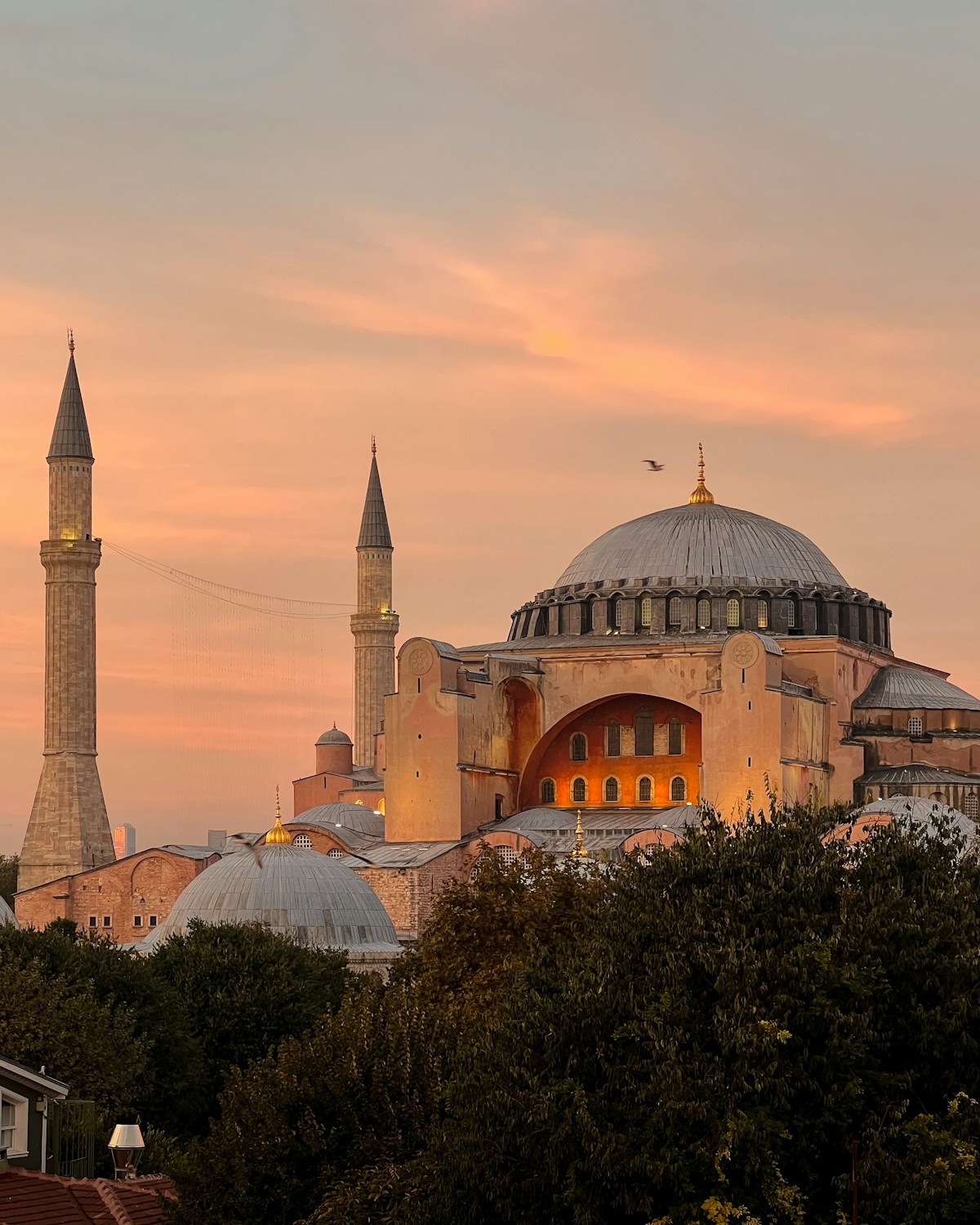
Hagia Sophia - Ayasofya in Turkish - is one of the most visited buildings in the world and the defining landmark of Istanbul’s skyline. Built in 537 AD under Emperor Justinian I, it served as the world’s largest cathedral for nearly a thousand years, then as a mosque after the Ottoman conquest, then as a museum from 1934 until 2020, when it was reconverted into a working mosque. Visiting it today means entering a functioning religious building, which shapes how and when you can go.
Entry and Tickets
Hagia Sophia is free to enter. Since its reconversion to a mosque in July 2020, there is no admission fee. However, mosque upkeep charges have been periodically discussed, so check ahead of your visit.
While entry is free, some sections of the interior are currently inaccessible to non-worshipping visitors, including areas reserved for the faithful during prayers. The main nave - where you will see the famous mosaics, semi-domes, and towering columns - remains open between prayer times.
If you want to see specific mosaics such as the Deësis mosaic or the upper gallery mosaics without time pressure, consider booking a guided visit through Tiqets or GetYourGuide. Guided entry can help you focus on the highlights within the limited non-prayer window.
Opening Hours (as of 2026)
Hagia Sophia is open to visitors daily, from approximately 09:00 to 17:00, outside of prayer times. Prayer times shift throughout the year with sunrise and sunset and close the building to tourists for approximately 90 minutes five times per day. The Friday midday prayer (around 13:00–14:00 depending on season) sees the largest congregation and the longest closure to general visitors.
Check the current prayer schedule at the official Diyanet İşleri Başkanlığı website or ask your accommodation for the day’s times before you head over.
Best visiting windows: Arrive when the doors open (around 09:00) or in the late afternoon (around 15:30–16:30) when post-prayer crowds thin.
What to Expect Inside
Dress code: Hagia Sophia is an active mosque. Both men and women must cover their heads; women must cover their hair. Headscarves are available to borrow at the entrance. Everyone must remove shoes at the entrance - carry a bag to hold them or use the plastic bags provided. Shorts are not permitted; bring a sarong or trousers.
The main nave: The central dome reaches 55.6 metres at its highest point and spans 31 metres across - a structural achievement that remained unsurpassed for nearly a thousand years. The 40 windows at the base of the dome flood the interior with light in a way that appears to make the dome float. The four minarets added by the Ottomans are visible from below as you enter.
Mosaics: Some Byzantine mosaics remain visible, including the Deësis mosaic in the upper gallery - a 13th-century mosaic of Christ flanked by the Virgin Mary and John the Baptist. The gold ground mosaics date from multiple periods and were partly plastered over during the mosque era; many were uncovered during the museum period.
The omphalion: A circular marble medallion inlaid into the main floor marks where Byzantine emperors were crowned. It is roped off but clearly visible.
Upper gallery: When open, the upper gallery provides elevated views across the nave to the main dome and gives closer access to the imperial mosaics. Access is via a sloping stone ramp on the north side of the entrance.
How to Get There
Hagia Sophia sits in Sultanahmet, the historic peninsula of Istanbul, and is walkable from most major sights.
- From Taksim Square: Take the Metro M2 to Vezneciler or the Tram T1 from Kabataş to Sultanahmet (2 stops). Journey time approximately 30–40 minutes.
- From Eminönü: Walk south through Gülhane Park or along the Sea of Marmara waterfront. Approximately 15 minutes on foot.
- From the Grand Bazaar: Walk east along Yeniceriler Caddesi toward Sultanahmet Square. Approximately 10 minutes.
- By taxi: From most central Istanbul hotels, expect approximately ₺100–150 by metered taxi (as of 2026); traffic in Sultanahmet can be heavy midday.
There is no underground parking nearby. Do not attempt to drive to Sultanahmet - the neighbourhood is largely pedestrianised.
Queue Tips and Best Time to Visit
July and August see peak crowds, with queues forming at the entrance from around 10:00. To avoid the worst of it:
- Arrive before 09:30 on summer mornings. The doors open shortly after sunrise and the first 45-minute window before the midmorning prayer is the quietest time of day.
- Visit in shoulder season (April–May or September–October): Significantly fewer crowds and more comfortable temperatures for walking the marble floors in socks.
- Avoid Friday midday: The Friday prayer draws large local congregations. If you visit on a Friday, come in the morning.
- Go independently: Skip the group tour if you want flexibility to move through the space at your own pace. A solo or small-group visit lets you linger in front of specific mosaics without a crowd blocking the view.
Nearby Sites to Combine
Hagia Sophia is positioned at the centre of Istanbul’s most concentrated cluster of historic monuments.
Topkapi Palace (5-minute walk east): The Ottoman sultans’ palace complex. Allow at least 3 hours. Buy tickets there or through Tiqets. See our Topkapi Palace guide.
Blue Mosque (Sultan Ahmed Mosque) (3-minute walk across Sultanahmet Square): Free to enter. Hours align with prayer schedules as at Hagia Sophia. The interior is architecturally distinct - the Iznik tiles lining the upper walls are the main draw.
Basilica Cistern (3-minute walk northwest): Underground Byzantine cistern built in the 6th century. Entrance approximately ₺400 as of 2026. Atmospheric and cool - ideal on hot summer days.
Topkapi Harem and Istanbul Archaeology Museums are both within 10 minutes’ walk. For a full day in Sultanahmet, plan Hagia Sophia first thing, the Blue Mosque mid-morning, and Topkapi in the afternoon.
Practical Notes
- Photography: Permitted throughout, including of the mosaics. Flash is not permitted during prayer times.
- Respectful behaviour: Keep voices low and phones on silent inside. The building is in active religious use; visitors are guests in a mosque, not a museum.
- Baggage check: Large bags and backpacks must be checked at the entrance. There is a free cloakroom.
- Accessibility: The entrance via the main gate involves ramps; the upper gallery is accessible only via the steep stone ramp. Wheelchairs can access the main nave.
- Time needed: Allow 45–90 minutes for a self-guided visit. With the upper gallery and time spent reading the mosaics, two hours is reasonable.
Guided Tours Featuring Hagia Sophia
Hagia Sophia is free to enter, but a guided tour adds context that is genuinely hard to find independently — the mosaics, the structural engineering, and the layered history spanning Byzantine cathedral, Ottoman mosque, and back are best understood with expert commentary. These are the most popular options on GetYourGuide:
| Tour | Duration | From | What’s included |
|---|---|---|---|
| Hagia Sophia & Blue Mosque Half-Day Tour | 3.5 hours | €35/person | Small group; expert guide through the mosaics, architecture, and religious history; Blue Mosque visit included |
| Istanbul Sultanahmet Walking Tour | 3 hours | €25/person | Hagia Sophia, Blue Mosque, Hippodrome, and Basilica Cistern; Basilica Cistern entry included |
| Hagia Sophia + Topkapi Palace Combo | 5 hours | €65/person | Expert guide at both sites; Topkapi skip-the-line tickets included; Harem visit optional add-on |
| Istanbul Old City Full-Day Tour | 8 hours | €80/person | Topkapi, Hagia Sophia, Basilica Cistern, Grand Bazaar, Blue Mosque; skip-the-line tickets; lunch included |
| Istanbul Private Guided Day Tour | 8 hours | €120/person | Private guide; all major Sultanahmet sights; flexible itinerary; hotel pickup and drop-off |
Prices are approximate as of 2026. Small-group tours sell out quickly in peak season — book at least 48 hours ahead in July and August.
Browse Istanbul guided tours on GetYourGuide →
For more on what to see in the area, see our Istanbul city guide and our 3-day Istanbul itinerary for a suggested plan that covers Hagia Sophia, Topkapi, and the Grand Bazaar in sequence.