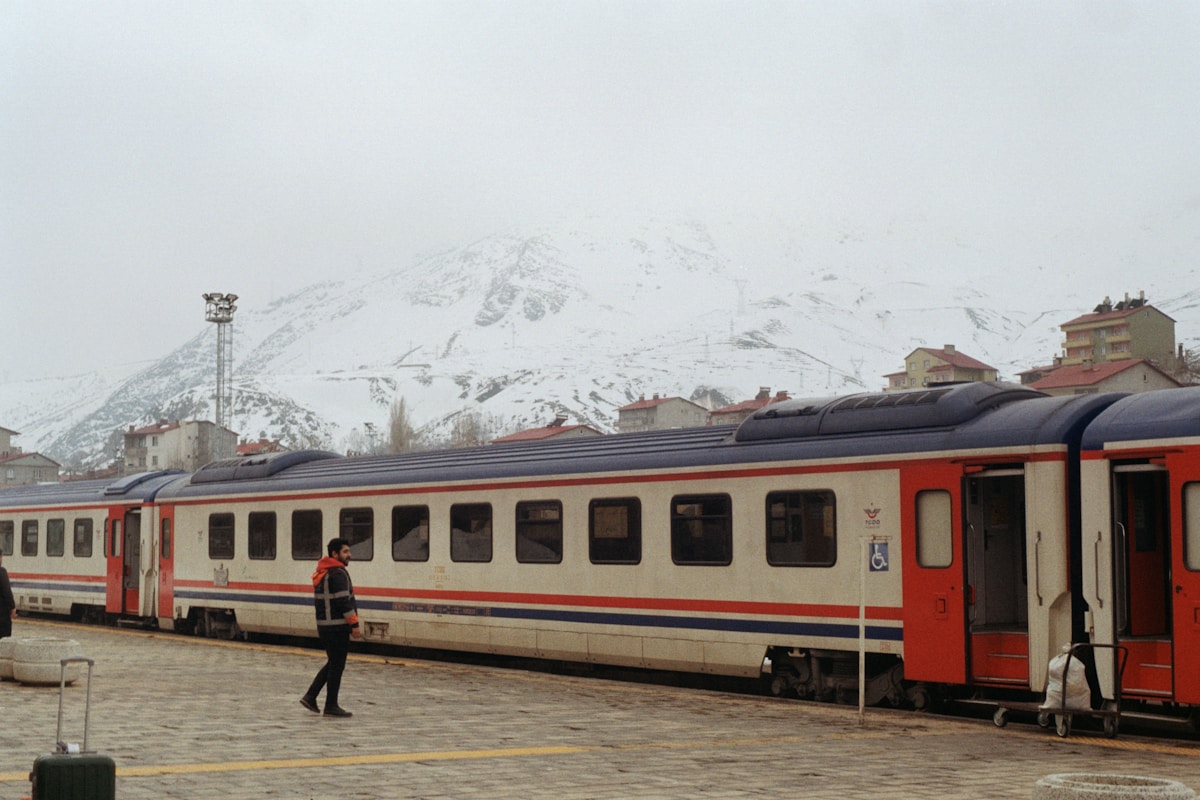
The Eastern Express (Doğu Ekspresi in Turkish) is one of the most talked-about train journeys in Turkey - a 1,310km overnight route from Ankara to Kars in eastern Anatolia that passes through a landscape of snow-covered mountains, river gorges, and remote plateau towns that most visitors to Turkey never see. In recent years the journey has attracted growing attention on social media, particularly for winter travel when the route passes through deep snow. This guide covers how to book, what to expect on board, what you’ll see, and how to make the most of both ends of the journey.
The Route: Ankara to Kars
The Eastern Express departs from Ankara Gar (the main train station) and terminates approximately 24–26 hours later in Kars, in Turkey’s far northeast near the Armenian border. The total distance is approximately 1,310km.
The route passes through some of Turkey’s most varied and dramatic interior terrain:
- Ankara to Kayseri: the central Anatolian plateau - flat, wide, wheat fields and volcanic skylines including Mount Erciyes (3,917m) visible from the train as you approach Kayseri
- Kayseri to Sivas: rolling hills, river valleys; the landscape becomes hillier and greener
- Sivas to Erzincan: the train descends into the Euphrates valley then climbs again through increasingly rugged mountain terrain
- Erzincan to Erzurum: open upland plateau at approximately 1,900m elevation; the Karasu River visible in the valley below
- Erzurum to Kars: the high Sarıkamış plateau; in winter, deep snow covers everything in white for hours at a time
Key Stops
Kayseri (approx 4 hours from Ankara): gateway to Cappadocia (roughly 80km west). The station is in the city centre; the train stop is typically 30–45 minutes. Erciyes ski resort is visible from the train approach in clear weather.
Sivas (approx 7 hours from Ankara): a mid-sized Anatolian city with some of the finest Seljuk architecture in Turkey - the Çifte Minareli Medrese (1271) and Şifaiye Medresesi (1217) are within walking distance of the station. Brief stop; typically 15–30 minutes.
Erzincan (approx 13–14 hours from Ankara): a modern city rebuilt after the devastating 1939 earthquake. The surrounding valley is fertile despite the altitude. Night stop for most passengers - by this point on a morning departure you’re arriving after dark.
Erzurum (approx 16–17 hours from Ankara): the largest city on the route and Turkey’s highest major city at approximately 1,890m. The city has significant Ottoman and Seljuk architecture including the Çifte Minareli Medrese (the model for the Sivas version) and the Yakutiye Medresesi (now a museum). In winter, Palandöken ski resort is 5km from the city centre. Brief stop of 15–30 minutes.
Kars (terminus, approx 24–26 hours from Ankara): the end of the line. Kars is a small city with a grid of Russian-era stone buildings (it was under Russian administration 1878–1921). The main draw from Kars is the Ani ruins - the ruined medieval Armenian capital 45km east - described in detail below.
Ticket Types and Prices
TCDD (Turkish State Railways, T.C. Devlet Demiryolları) sells tickets through its website ebilet.tcdd.gov.tr. The interface is in Turkish and English.
Ticket categories (as of 2026):
- Seat (Koltuk): reclining seat in a shared carriage; approximately ₺500–700 for the full Ankara–Kars route as of 2026
- Compartment (Kuşet): 6-berth sleeping compartment with fold-down bunks; approximately ₺900–1,100 per berth as of 2026
- Private compartment: 2-berth private cabin; approximately ₺1,800–2,400 for two people as of 2026
Note: prices vary by season and demand. Winter weekends (December–February) now sell out weeks in advance due to high demand for the snow scenery.
Booking window: tickets go on sale 30 days before departure. For popular dates - particularly weekends in winter and summer - set a calendar reminder to book on the day the window opens, as seats sell out quickly. The TCDD website is the only official booking channel; third-party resellers charge a premium.
TCDD website issues: the booking site is functional but can be slow and occasionally times out during high-demand periods. Use a laptop rather than a phone for the best experience, have a Visa or Mastercard ready, and try booking in the morning when the site is less busy.
What to Expect on Board
Compartment (kuşet) travel: the standard choice for the full overnight journey. Six bunks in a locked compartment shared with other passengers. Bedding (pillow, blanket) is provided. The lower bunk is the most comfortable; if you book early you can sometimes specify preference, though bunk allocation is generally assigned.
The dining car (restoran vagonu): the Eastern Express has a dining car serving hot meals, tea, Turkish coffee, and snacks. The menu is simple - typically soup, chicken or meat dishes, rice, bread, and soft drinks. Prices are modest (approximately ₺150–350 for a meal as of 2026). The dining car is also the social hub of the train, particularly in the evenings - fellow travellers, photographers, and tour groups gather here.
Fellow passengers: the Eastern Express has become a bucket-list journey, especially popular with Turkish photographers and travellers from Europe and East Asia. Expect a mix of domestic tourists, backpackers, photography enthusiasts, and - on winter routes - tour groups specifically for the snow scenery.
Wi-fi and connectivity: there is no reliable wi-fi on board. Mobile signal is intermittent across much of the route - good near cities, absent in the mountain sections. Download offline maps (maps.me or Google Maps offline) and any entertainment before you board.
Power: power sockets are available in compartments but are inconsistent - bring a power bank.
Temperature: in winter, the train is heated, but the temperature between stations can be very cold if you’re near a door. Bring warm layers regardless of season - even summer nights at altitude can be cold.
Best Season to Travel
Winter (November–February): the most visually spectacular season. The high Anatolian plateau east of Erzincan is blanketed in deep snow for weeks at a time, and the contrast of the red-and-white TCDD carriages against white mountains has produced some of the most widely shared travel photographs of recent years. The downside: the best window scenery is often at night (the Erzincan–Erzurum section in particular).
Summer (June–August): the high plateau is bright green, the valleys are in full leaf, and sunset and sunrise hours are long enough that you can see most of the mountain sections in daylight. Temperatures are comfortable. Less dramatic than winter but easier travel conditions.
Spring (April–May): snowmelt creates waterfalls and rivers running high; wildflowers on the plateau. A good compromise between winter drama and summer comfort.
Autumn (September–October): the valleys east of Sivas show autumn colour; the plateau is dry and golden. Quieter than summer.
Tips for a Good Journey
Book early for winter weekends. The 30-day booking window opens to sold-out compartments within hours for popular winter dates. If your dates are flexible, try a weekday departure.
Bring your own snacks. The dining car is good but limited. A bag of simit, cheese, fruit, and chocolate supplements the carriage menu well and keeps costs down.
Warm layers are essential in any season. The train is heated but station stops involve brief cold blasts. Winter travel east of Erzurum is seriously cold (-15°C or lower is possible at Kars).
Sit on the right side of the train (heading east from Ankara) for mountain views. Between Erzincan and Erzurum, the Karasu River valley is on the right side. Check a map when you board and orient yourself accordingly.
Allow time in Kars. Most travellers arrive in the morning after an overnight journey. A full day in Kars to see the city and the Ani ruins is worth building in, rather than catching the return train the same day.
What to Do in Kars
Kars Castle (Kars Kalesi): Ottoman-era fortress on a hill above the city centre with views across the Kars River valley. Free entry; allow 1 hour.
Kars Museum: small but well-curated collection covering the Bronze Age through to the Russian occupation period (1878–1921). Entry approximately ₺150 as of 2026.
Kars cuisine: the city is known for its dairy products - Kars gravyer (gruyère-style cheese) is the most famous, produced from high-altitude cattle. Buy directly from cheese shops on the main commercial street. Kars honey and local butter are also widely sold.
Ani Ruins (UNESCO World Heritage Site): the ruined medieval city of Ani, the 10th–11th century capital of the Armenian Bagratid kingdom, sits on a plateau 45km east of Kars. At its peak it was one of the largest cities in the world with a population estimated at 100,000–200,000. The site includes the Cathedral of Ani (completed 1001 CE), the Church of the Holy Redeemer, the Church of St Gregory, the remains of the city walls, and a Silk Road caravanserai.
Getting to Ani: the simplest option is a taxi from Kars - approximately ₺600–900 round trip including waiting time (as of 2026); negotiate the fare before you leave. Local tour operators in Kars also run half-day minibus tours to Ani. The site is open daily; entry approximately ₺300 as of 2026. Allow 2–3 hours at the ruins. The nearest facilities are at the entrance gate.
Sarıkamış ski resort: 55km south of Kars, a ski resort popular with Turkish and Russian skiers for its deep powder. Worth considering for a winter trip to Kars if you have extra time.
Returning to Ankara
The return Eastern Express departs Kars in the afternoon (typically around 13:00–15:00; confirm current schedule on the TCDD website) and arrives in Ankara the following morning. Many travellers buy a one-way train ticket in each direction and fly one leg - Turkish Airlines and Pegasus both serve Kars Airport (KSY) from Istanbul and sometimes Ankara direct.
Getting to Ankara Gar
Ankara’s central station is on the Kızılay metro line (M1). From Kızılay square (the central hub) it is two stops; from Atatürk Airport it is approximately 40 minutes by metro. The station has baggage storage, cafés, and ATMs.
Allow at least 30 minutes before departure to collect your ticket from the machine (if you booked online) and find the platform. The Eastern Express typically boards from a designated platform at the eastern end of the station - check the departure boards on arrival.
The train starts in Ankara - see our Ankara guide for where to stay before departure. For combining this journey with broader eastern Turkey exploration, see our 2-week Turkey itinerary and 3-week Turkey itinerary. The Kayseri stop makes this journey an ideal lead-in to Cappadocia - just 80km from the station. The Erzurum section passes close to Palandöken ski resort - worth adding on a winter journey. And the Nemrut connection via Malatya is covered in detail in our Mount Nemrut guide.
Booking in advance: Browse tours and activities in Turkey to compare operators and read recent reviews - booking ahead is strongly recommended in peak season (July–August) as slots fill quickly.
See also: Şanlıurfa travel guide · Mardin travel guide · Turkey in January · Turkey in February