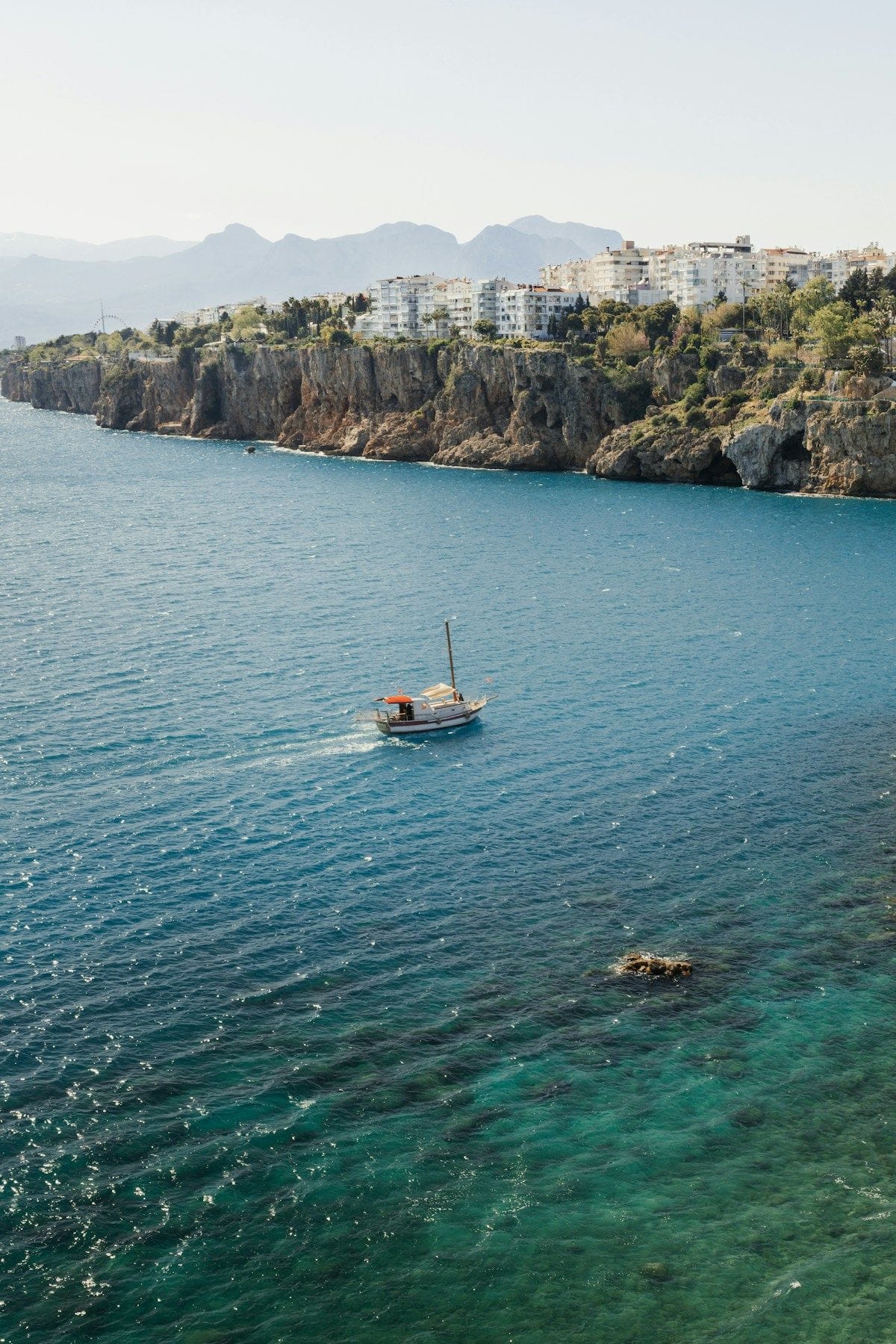
The Turkish blue cruise (mavi yolculuk) sails between anchorages along one of the Mediterranean’s most dramatic stretches of coastline: the Turquoise Coast between Bodrum and Olympos, with its deeply indented fjords, Lycian rock tombs carved into cliffsides, and water clear enough to see ancient city streets submerged below the surface. Understanding the routes is the most practical step toward booking the right cruise.
For costs, what’s included, and packing, see the blue cruise planning guide.
Classic Route 1: Fethiye to Olympos (4 or 7 nights)
The most popular route for first-time blue cruisers. Fethiye is the main departure point for gulets heading south and east along the Lycian coast. Most operators run 4-night and 7-night versions of this route.
Key Stops
Göcek - A small marina town 25km from Fethiye where most gulets provision. The bay has multiple islands and quiet anchorages. Many cruises anchor here the first night to allow late departures from Fethiye without rushing.
Butterfly Valley (Kelebekler Vadisi) - A narrow gorge canyon accessible only by boat, with a waterfall visible from the anchorage. Named after the Jersey Tiger moth that breeds in large numbers in spring. Overnight anchoring in the bay is one of the cruise highlights; the beach fills with day-tripper boats by 10am, but gulets staying overnight have the bay to themselves by evening.
Ölüdeniz - The Blue Lagoon visible from the paragliding routes above is an easy anchorage, with the national park accessible by dinghy. Gulets must anchor outside the protected lagoon zone. Worth the park entry fee for the lagoon colour alone.
Kaş - A small town with Lycian sarcophagi in the streets and Turkey’s best established scuba diving. Some cruises stop for an afternoon and evening in town, allowing time for a dive, dinner, and a walk through the Hellenistic theatre above the waterfront.
Kekova - The most historically significant stop on the route. The sunken city of Simena - a Lycian settlement partially submerged by a 2nd-century AD earthquake - is visible from the gulet deck and by snorkelling, with the outline of streets, staircases, and doorways clear in the shallow water. Scuba diving on the site is prohibited; snorkelling and kayaking from the gulet are permitted.
Ucağız and Kaleköy - Two small villages on Kekova bay accessible only by sea or on foot. Kaleköy has a Crusader castle above the village and a small concentration of Lycian rock tombs carved into the hillside. Worth an hour ashore.
Olympos - The southern terminus. Near the ruins of the ancient city of Olympos and the Chimaera (Yanartaş) - a cluster of natural gas flames burning from the Taurus limestone hillside, best visited after dark when the blue flames are most visible. Some 7-night cruises extend to Antalya from here.
Booking the Fethiye Route
Most gulets depart from Fethiye’s Ece Marina or the town quay. Arrive in Fethiye the night before departure - flights to Dalaman Airport (approximately 45 minutes by road) connect with most European hubs. The Turkish Blue Voyage Association (Mavi Yolculuk Birliği) maintains a list of licensed operators - checking membership provides a basic due-diligence step.
Classic Route 2: Bodrum to Gökova (4 nights)
For those based on the Aegean coast, the Bodrum peninsula and Gökova Bay offer a more sheltered and - outside July/August - significantly quieter alternative to the Lycian coast. Gökova Bay is a long, narrow fjord running 50km east from Bodrum between the mountains, with several islands and well-protected anchorages.
Key Stops
Kara Ada (Black Island) - A dormant volcanic island 8km south of Bodrum containing a sea cave with a warm sulphur spring. Boats anchor offshore and passengers swim to the cave entrance. A popular first-day stop.
English Harbour (İngiliz Limanı) - A quiet anchorage on the south shore of Gökova Bay with a forested backdrop and calm water - well suited to an afternoon swim stop.
Cleopatra Island (Sehir Adası) - An island with an unusually fine white sand beach (the sand is said to have been shipped from Egypt in antiquity, though this is difficult to verify). National park entry fee applies. Water clarity in the surrounding bay is exceptional.
Bozburun - A quiet village where traditional gulets are still built by hand in small boatyards. Well-sheltered anchorage for an overnight stay.
Datça - A town on the long, narrow Datça Peninsula. The old village of Eski Datça, 7km inland, is one of the finest preserved Ottoman stone villages on the Aegean coast. Worth an afternoon ashore.
The Bodrum–Gökova route tends to attract a slightly older, quieter demographic than the busier Fethiye routes. Water clarity in Gökova Bay is exceptional - visibility to 20m in places.
Classic Route 3: Bodrum to Fethiye (7 nights, full route)
Combines both routes into a full week covering the widest range of scenery and anchorages. This is the most logistically complex: it requires a one-way trip, and private charters often charge slightly more per day for one-way routes due to deadhead positioning costs. Budget for the additional charge versus return routes.
For cabin cruises on the full route, Bodrum is typically the departure point and Fethiye the arrival, though some operators run it in reverse. Check which airport is more convenient for your flights - Bodrum/Milas-Bodrum Airport (BJV) and Dalaman Airport (DLM) are both well connected.
Booking Logistics
Timing: Book at least 2–3 months ahead for July–August peak season, particularly for private charters. Cabin cruises can often be booked 2–3 weeks ahead outside peak months.
Where to book: Booking directly with gulet owners or small Fethiye/Bodrum-based agencies is typically less expensive than international booking platforms. Operators cluster around Fethiye’s Ece Marina, Bodrum’s main harbour, and Göcek marina.
Questions to ask before confirming:
- The age and condition of the gulet (newer vessels have better ventilation and generator capacity)
- The size and ventilation of your specific cabin
- Generator schedule - important for air conditioning in July/August
- Whether the cook can accommodate dietary requirements
- Whether the itinerary is fixed or can be adjusted for the group
Practical: Most gulet cruises depart from Bodrum or Fethiye. See those guides for where to stay before embarkation and how to reach the harbours. Marmaris is also a popular starting point. Key overnight stops include Kaş - Turkey’s dive capital - and Ölüdeniz, whose Blue Lagoon is accessible by dinghy from anchored gulets.
Compare gulet cruise tours
Five of the most-booked options — from day boat trips to multi-day gulet voyages along the Turquoise Coast:
| Tour | Duration | From | Best for |
|---|---|---|---|
| Fethiye: Ölüdeniz Speedboat Tour | Half day | €30 | Short visits |
| Fethiye 12 Islands Boat Trip with Lunch | Full day | €35 | Day visitors |
| Butterfly Valley Boat Trip with Buffet Lunch | Full day | €40 | Families |
| Fethiye to Olympos Gulet Blue Cruise (4 days) | 4 days | €250 | Full blue cruise |
| Marmaris–Fethiye 7 Nights Blue Cruise | 7 nights | €450 | Long-haul cruisers |
Booking in advance: Browse tours and activities in Turkey to compare operators and read recent reviews - booking ahead is strongly recommended in peak season (July–August) as slots fill quickly.
See also: Blue cruise planning guide (costs, packing, what to expect) · Paragliding over Ölüdeniz · Kaş travel guide · Bodrum vs Fethiye comparison · Turkish Riviera road trip