The Çeşme Peninsula has been inhabited, contested and traded across for roughly three thousand years. Sitting at the western tip of Anatolia - just 8 km from the Greek island of Chios - it was one of the most navigated stretches of the Aegean in antiquity, and it remained strategically significant through Byzantine, Genoese, Ottoman and modern Turkish history.
Ancient Ionia: Erythrai and the Twelve Cities
The peninsula’s most significant ancient settlement was Erythrai (modern Ildırı), founded during the Mycenaean period and flourishing through the Archaic, Classical and Hellenistic eras. It was one of the twelve cities of the Ionian League - the confederation of Aegean Greek cities that included Ephesus, Miletus and Colophon - and was known in antiquity for its cult of Heracles, its wine and its skilled craftsmen.
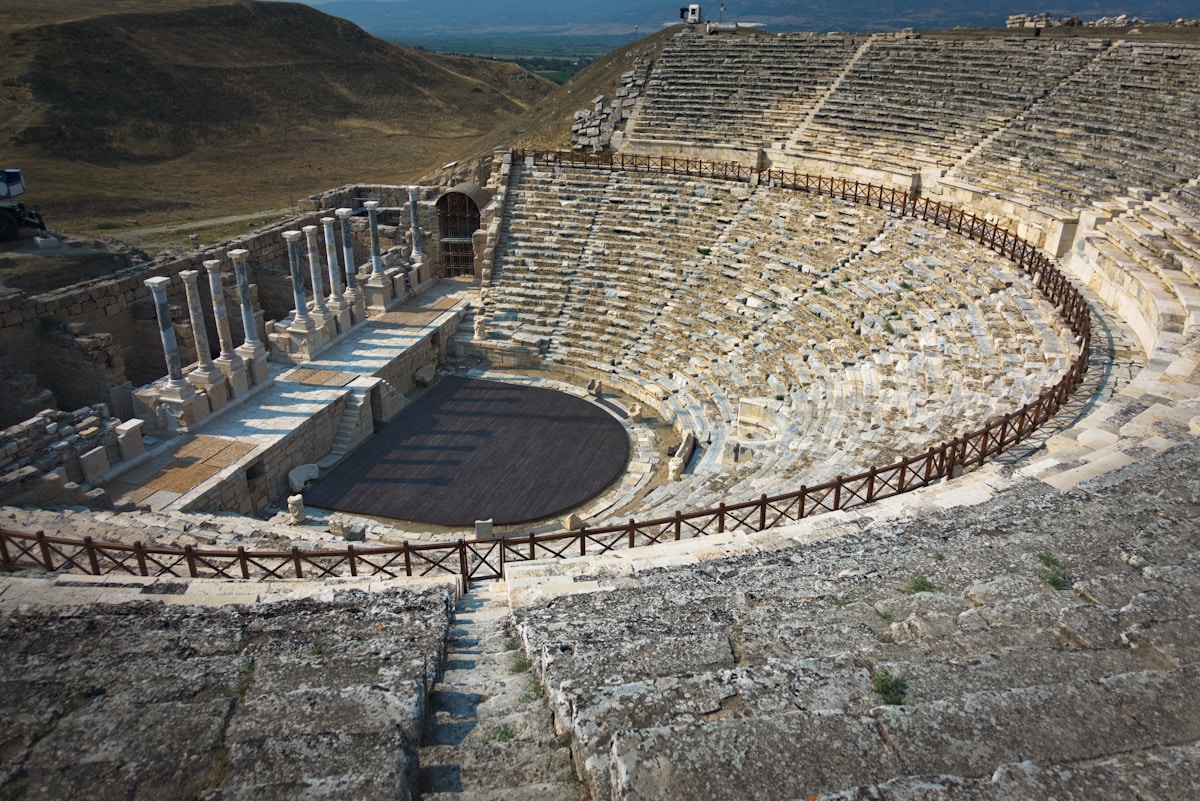
The theatre at Erythrai, carved into the hillside above the village, dates from around the 2nd century BCE and retains much of its stone seating. The city walls, partially intact, trace the hilltop for several hundred metres. The site receives far fewer visitors than Ephesus or Pergamon (both within day-trip range) and is frequently unguarded and unlit - an unusual experience in Turkey.
The city of Teos, further south on the peninsula’s coast, was the birthplace of the lyric poet Anacreon (c. 582–485 BCE) and home to one of antiquity’s most important temples to Dionysus. The ruins at Sığacık, though less well-preserved than Erythrai, include temple platform foundations.
The Genoese and Byzantine Period
By the Byzantine era, the peninsula’s main settlement had shifted to the coastline that is now Çeşme town. The strategic value of the harbour - sheltered, close to Chios and commanding the approach to İzmir - made it important for maritime trade between the eastern Mediterranean and Europe.
The Genoese, who had extensive trading privileges across the Byzantine and later Ottoman Eastern Mediterranean, established a presence at Çeşme in the 14th century. They built or substantially expanded the castle on the low hill above the harbour - the structure visible today - as a fortified trading post. Genoa also controlled the island of Chios across the water, and the Çeşme harbour was the mainland anchorage for their operations.
Ottoman Conquest and Expansion
The Ottomans took control of the Çeşme Peninsula in the late 15th century as they consolidated dominance over western Anatolia. Sultan Bayezid II (r. 1481–1512) used the Çeşme Castle and harbour as a base for expeditions against Venetian-held islands in the Aegean. The castle was strengthened during this period; much of its current form reflects 15th–16th century Ottoman construction built on or around the Genoese foundations.
The peninsula’s Aegean position made it a staging post for Ottoman naval operations - the fleet regularly sheltered in Çeşme Bay when manoeuvring against Venetian or later European powers in the central Aegean.
The Battle of Çeşme (1770)
The most dramatic event in Çeşme’s recorded history took place in July 1770, during the Russo-Turkish War of 1768–1774. Catherine the Great dispatched a Russian Baltic Fleet on a 10,000-km voyage from St. Petersburg around Scandinavia, through the Strait of Gibraltar and into the Mediterranean - a strategic gamble intended to threaten the Ottomans from a direction they did not expect.
The Russian fleet met the main Ottoman navy at Çeşme Bay. After an initial engagement on 5 July, the Ottoman fleet retreated into the bay. On the night of 6–7 July, Russian fire ships set the confined Ottoman fleet alight; the fire spread across most of the Ottoman ships, destroying or capturing the majority of the fleet. Ottoman casualties were enormous; the Russian losses were minimal.
The battle did not immediately end the war but fundamentally shifted its balance. It contributed to the Treaty of Küçük Kaynarca (1774), under which the Ottomans ceded significant Black Sea territories and port rights to Russia. Çeşme Castle’s museum today displays cannons recovered from the battle site and maps of the engagement. The sunken Ottoman warships remain on the seabed of Çeşme Bay; several have been partially excavated.
Alaçatı: The Greek Village and the Exchange
The village of Alaçatı was inhabited primarily by Greek Orthodox Christians throughout the Ottoman period. The stone houses that define its current tourist identity were built by and for this community over the 18th and 19th centuries. The village was prosperous - trading across the Aegean, farming olives and artichokes, and connected culturally to Chios and the wider Greek Aegean.
The Population Exchange of 1923 - agreed under the Treaty of Lausanne following the Turkish-Greek War - resulted in the forced relocation of Greek Orthodox populations from Anatolia to Greece and Muslim populations from Greece to Turkey. Alaçatı’s Greek residents left in 1923, resettling largely in the Athens region. Muslim Turks from Thessaloniki and northern Greece moved into their houses.
The stone houses fell into gradual neglect through the mid-20th century. In the 1990s, the restoration wave began - driven by İzmir professionals seeking weekend escapes and Istanbul investors recognising boutique potential - transforming abandoned Greek houses into the boutique hotels and restaurants that now draw tourists.
The Camel Wrestling Tradition
Camel wrestling (deve güreşi) has a centuries-long history in the Aegean region. The Çeşme camel wrestling festival in January is one of the largest in Turkey, drawing competitors and spectators from across the Aegean. Male camels are brought together during the breeding season, when they naturally compete; the contest ends when one retreats or falls. The event is accompanied by food stalls, folk music and a significant carnival atmosphere - it is as much a social gathering as a sporting event.
Search hotels in Cesme on Booking.com
Exploring the sites: Browse tours and activities in Çeşme for guided historical tours of Çeşme - expert commentary makes a significant difference at layered archaeological sites.
See also: Çeşme travel guide · Things to do in Çeşme · İzmir history guide · Festivals and events in Turkey · Turkey in January