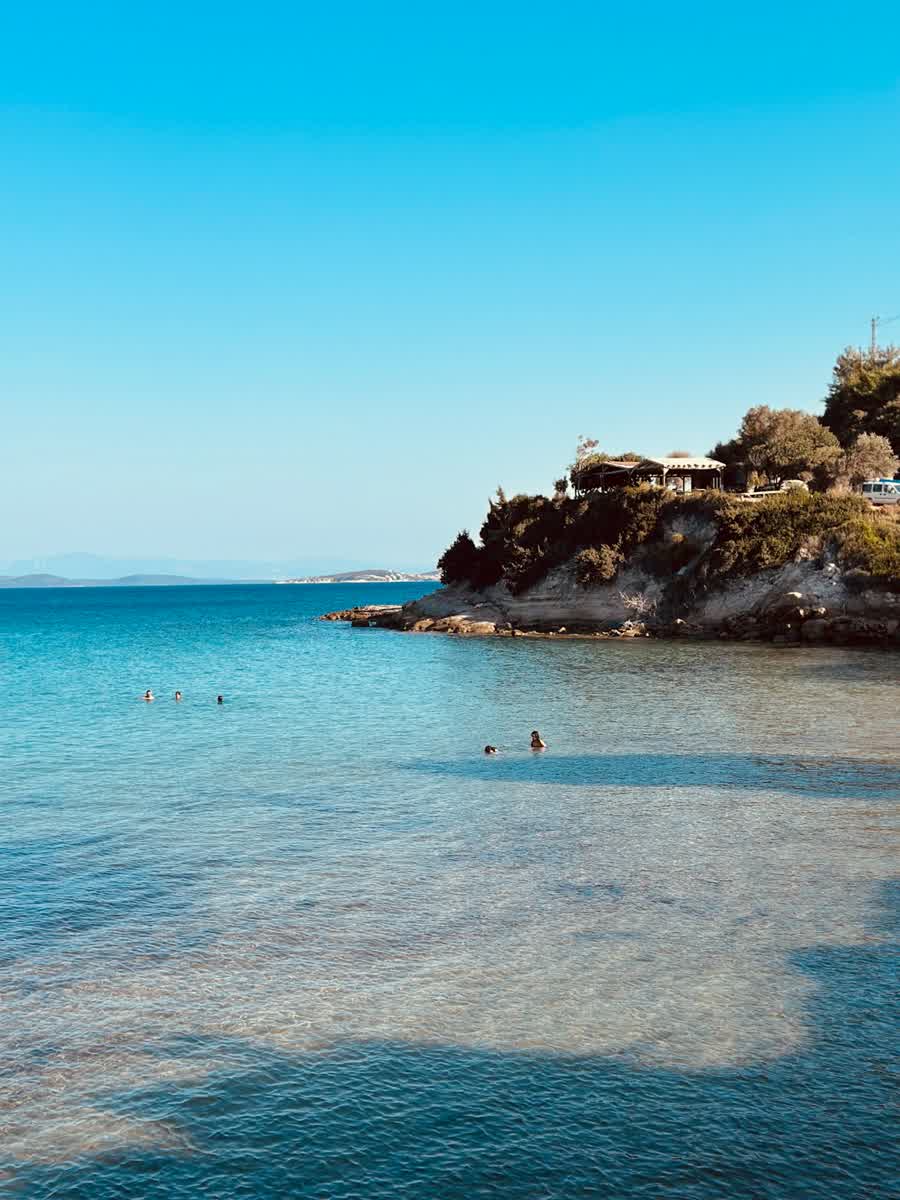
The Çeşme Peninsula has some of the clearest water on the Turkish Aegean coast. The combination of the Aegean’s natural clarity, minimal industrial development on the peninsula and a relatively small number of rivers bringing sediment to the sea means the water here stays a distinctive shade of turquoise that photographs don’t exaggerate. The beaches range from wide sandy family shores to quiet rocky coves that require a boat or a long walk to reach.
Ilıca Beach
The best-known and most popular beach on the peninsula, Ilıca sits 4 km north of Çeşme town. It is a long, wide sandy beach - the most family-friendly on the peninsula - with the unusual feature of natural thermal springs seeping up through the sand at the water’s edge and marginally warming the sea.
The beach is divided between public sections and beach club areas. The beach clubs (plaj) typically charge ₺150–300/day for a sun lounger and umbrella, with some requiring a minimum food/drink spend. The public sections provide access without charge but with fewer facilities.
Water is gently shelving and shallow for 30–50m from the shore - very good for children. Sea temperature reaches 26–28°C in July–August.
Getting there: Dolmuş from Çeşme town (₺20–30, 10 minutes). Plenty of parking if driving, though it fills by 10 am on peak summer days.
Altınkum (Golden Sand Beach)
Adjacent to Ilıca, Altınkum is named for its fine golden sand. It shares the family-friendly character of Ilıca - shallow water, sandy floor, safe for young children. Beach clubs here are slightly less concentrated than at Ilıca, giving easier access to public beach sections.
Altınkum is slightly more sheltered from the prevailing meltemi wind than the Aegean-facing beaches further south, which makes it calmer for young children.
Getting there: Same dolmuş route as Ilıca (₺20–30).
Boyalık
Between Çeşme town and Ilıca, Boyalık is a calmer bay that faces roughly north-northeast. The partial shelter from the full Aegean wind means the water is often calmer than at the southern beaches. Sand is coarser than Ilıca but the water clarity is excellent.
Boyalık is close enough to Çeşme town to walk (approximately 2 km along the coastal road), though the road walk is not scenic. Several mid-range hotels sit directly on the Boyalık beach.
Pırlanta Koyu (Diamond Cove)
One of the better-known coves on the Alaçatı side of the peninsula, Pırlanta Koyu has clearer water than the main beaches to the north, with a mix of fine sand and small pebbles and excellent underwater visibility for snorkelling. It is busier in July–August than it used to be but still noticeably quieter than Ilıca.
Getting there: Car or taxi. The cove is approximately 3 km south of the Alaçatı lagoon road.
Çiftlikköy and the Southern Coves
The southern coast of the peninsula, between Çiftlikköy settlement and Dalyan köyü, contains the peninsula’s most secluded beaches. These coves are either accessible by car on rough tracks, by boat from Çeşme harbour, or on foot on the coastal path from Çiftlikköy.
The water in these coves is the clearest on the peninsula - remote from the main beach crowds, undeveloped and with excellent snorkelling in 2–5m of water over rocks and posidonia sea grass. Facilities are minimal: some coves have no shade, no toilets and no food vendors. Pack everything you need.
Getting there: A car is essential for most of these coves. Some require walking the last 500m to 1km on a track.
The Alaçatı Lagoon
The Alaçatı lagoon - officially called Alaçatı Surf Paradise in the commercial sense - is a wide, shallow bay on the southeast side of the Çeşme Peninsula facing Sığacık Bay. It is protected from the full Aegean chop by the peninsula’s southern arm, creating flat water ideal for wind-powered watersports.
The lagoon is not a conventional beach holiday destination. It is best suited to:
- Windsurfers and kitesurfers (the primary use)
- Families with children who want flat, shallow, calm water
- Those who want to watch the watersports without participating
The sand/shingle shore is modest; the beach clubs here charge for lounger access. The famous meltemi wind makes it breezy even when other areas are calm - welcome in July’s heat, potentially tiring for children who want calm conditions.
Boat Trips to the Coves
Many of the peninsula’s best coves are most easily reached by boat rather than road. Day boat trips from Çeşme harbour visit a circuit of bays including Donkiz, Sığacık and several unnamed coves. Approximately ₺400–600/person for a half-day trip, ₺700–1,000 for a full day including lunch, as of 2026. Private charter boats can be arranged for groups.
Practical Beach Information
Season: Swimming is comfortable May through October. July and August are peak season; spring and autumn are less crowded and slightly cooler.
Wind: The Aegean meltemi winds blow consistently June–September. This keeps the temperature comfortable but can create significant wave action on Aegean-facing beaches. The sheltered beaches (Boyalık, Ilıca, Altınkum, the lagoon) are calmer than the southern coast.
Sun lounger prices (as of 2026): ₺150–350/day per person at beach clubs on Ilıca and Altınkum. Some clubs charge less but require minimum food/drink spend.
Parking: Beach car parks at Ilıca, Altınkum and Boyalık fill by 10:00 on summer weekends. Arrive early or take the dolmuş.
Search hotels in Cesme on Booking.com
Getting around the coast: A rental car is the most flexible way to reach Çeşme’s beaches - compare rates at GetRentacar before booking direct. Alternatively, browse tours and activities in Çeşme for boat trips and excursions that reach spots inaccessible by road.
See also: Çeşme travel guide · Things to do in Çeşme · Coastal towns near Çeşme · İzmir travel guide · Kusadası vs Bodrum comparison