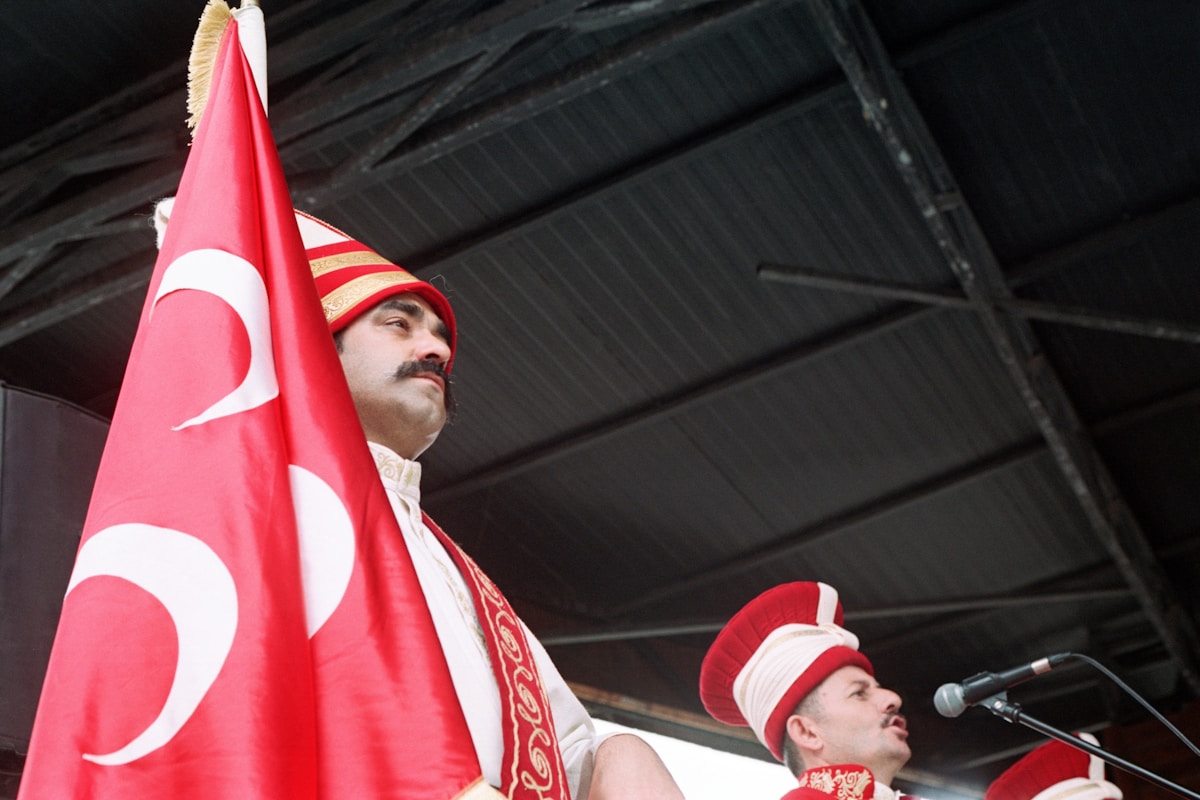
Turkey’s festival calendar spans Olympic-pedigree wrestling, Sufi spiritual ceremonies, Aegean camel events, and Ottoman-era botanical traditions. Many of these events have UNESCO Intangible Cultural Heritage status - not as museum pieces but as living practices with full community participation. Planning around even one or two of them transforms a standard sightseeing trip into something more specific and memorable.
Note: festival dates shift annually based on the Gregorian and Islamic calendars, and local committee decisions. Verify exact dates with official sources before booking travel around specific events.
January–March: Camel Wrestling Season
Selçuk Efes Camel Wrestling Festival (January, Selçuk near İzmir) is the largest camel wrestling event in Turkey, drawing around 20,000–30,000 spectators to the ancient theatre area and main wrestling ground. Male Tülü camels (Bactrian-dromedary crosses) are decorated with elaborate saddle blankets and paraded through town before competing. The wrestling itself is non-lethal - camels push and attempt to trip each other - and the event has the atmosphere of a county fair with tea, food stalls, and folk music running alongside.
Similar events occur at Tire, Kuşadası, Kuyucak (Aydın), and Bodrum between January and March. Entry generally runs ₺100–200.
April: Istanbul Tulip Festival
Istanbul plants approximately 30 million tulip bulbs each April - a number that represents both horticultural ambition and the city’s Ottoman heritage. The tulip (lâle) was cultivated in Ottoman gardens centuries before it reached the Netherlands, and the 18th-century Lâle Devri (Tulip Era) remains a distinct cultural period in Turkish history.
Emirgan Park on the European Bosphorus shore is the festival’s centrepiece, with colour-themed beds, topiary, and weekend events running from early to late April. Entry to Emirgan Park is free. Gülhane Park in Sultanahmet also plants significant displays, as do Maçka Park and the median strips along major boulevards.
The festival has no formal opening ceremony - it begins when the bulbs bloom, which depends on that year’s weather. Follow Istanbul Metropolitan Municipality social media for the precise start, usually between April 1–15.
Late March / April: Mesir Paste Festival, Manisa
The Mesir Macunu Festival in Manisa (75km east of İzmir) celebrates a 16th-century medicinal paste said to contain 41 spices. Hafsa Sultan, mother of Suleiman the Magnificent, commissioned the paste after falling ill; the chief physician Merkez Efendi prepared it and the recipe spread as a civic gift. Today, wrapped sweets made to the traditional spice recipe are thrown from the roof of Manisa’s Sultan Mosque into the crowd below on the festival day.
The event is listed as UNESCO Intangible Cultural Heritage. It attracts large numbers of domestic visitors; accommodation in Manisa books out - stay in İzmir and take the train (40 minutes, ₺40). The sweet paste itself is sold at pharmacies and confectioners throughout the year.
May: Akdamar Church Service (Lake Van)
The Armenian Church of the Holy Cross on Akdamar Island (Lake Van) holds a liturgical service once a year, usually in late May or early September, with the exact date determined by the Armenian Patriarchate of Istanbul. The 10th-century church was restored and reopened for worship in 2007 after 95 years of closure - an event of significant cultural and religious weight.
Boat crossings from Gevaş to the island run year-round (approximately ₺80 per person). On service days the island receives several hundred visitors - the event is open to all, and the surrounding Lake Van scenery, with snow-capped Süphan Dağı visible to the north, makes the trip worthwhile independently.
June/July: Kırkpınar Oil Wrestling, Edirne
Kırkpınar is the world’s oldest continuously held sporting event, documented to 1360 CE. The tournament takes place annually in the Sarayiçi meadow outside Edirne, on land that was once an Ottoman royal palace complex.
Yağlı güreş (oil wrestling) differs from other forms: competitors wear kıspet - tight leather trousers stuffed with oak leaves - and are drenched in olive oil before each bout. The objective is to pin the opponent or lift him horizontally. Bouts can last hours; the final for the başpehlivan (chief wrestler) title typically runs 30–40 minutes.
The three-day tournament opens with a procession and ceremonial drum-and-zurna music. Entry to the main arena costs approximately ₺150–400 depending on seat location. The final day’s başpehlivan match is the must-see event - buy tickets through the Edirne Municipality portal as soon as they open. Kırkpınar is listed as UNESCO Intangible Cultural Heritage.
Tip: Edirne’s accommodation is limited. Book 6–8 weeks ahead for the festival weekend, or stay in İstanbul and travel by coach (2.5 hours, ₺200 from Büyük İstanbul Otogarı).
August: Troy Festival and Archaeology Days (Çanakkale)
The Çanakkale Troy Festival runs for one week in August with theatrical performances and tours inside the Troy archaeological site (Troy IX-era walls visible). The festival is primarily a domestic cultural event, but performances at the wooden horse installation are open to all visitors. The Troy site itself charges approximately ₺350 admission; festival events vary.
September: Grape Harvest Festivals, Cappadocia and Aegean
Several Cappadocian villages hold grape harvest celebrations in September, when the volcanic soil’s volcanic tuff terroir produces the Emir and Öküzgözü grape varieties. Ürgüp, Avanos, and Mustafapaşa have informal harvest events; check with local tourist offices for the year’s schedule.
On the Aegean coast, Şirince near Selçuk hosts a small grape and wine celebration when the village’s fruit-wine production peaks. Şirince fruit wines (made from peaches, strawberries, and grapes) are a local specialty - the village’s cobbled streets fill with stalls.
December: Mevlana Festival, Konya
The most significant cultural-religious festival in Turkey, the International Mevlana Commemoration (Şeb-i Arus) marks the death anniversary of Jalaluddin Rumi (Mevlâna) on December 17, 1273. The festival runs from December 10 to 17 and draws visitors from across the Islamic world and from international cultural tourism.
The Sema ceremony - the whirling meditation performed by Mevlevi dervishes - is held at Konya’s sports arena on the main days, with capacity for several thousand. The ceremony is deeply serious; visitors are asked to observe in silence and not to applaud until directed. Tickets for the main event run approximately ₺300–600 and must be booked weeks in advance through the Konya Metropolitan Municipality website. Free smaller Sema sessions also run in the Mevlana Cultural Centre during the week.
The Mevlana Museum (Rumi’s tomb and the original tekke) is accessible year-round, but the atmosphere during festival week is extraordinary - the museum extends its hours and the entire old city centre feels animated with pilgrims and visitors.
Konya note: The city is conservative; alcohol is difficult to find in the city centre. Dress modestly when visiting the museum complex and mosque areas.
Year-Round: Regional Craft and Agricultural Fairs
Beyond the major named festivals, Turkish towns run market days (pazar) and seasonal agricultural fairs with significant local participation:
- Safranbolu autumn saffron season (September–October): local saffron market with artisan vendors
- Trabzon hamsi season (October–January): Black Sea anchovy festival atmosphere along the waterfront
- Gaziantep baklava harvest (September–November): pistachio harvest and fresh baklava season
- Istanbul book fairs (April and November): TÜYAP Book Fair in November is one of Europe’s largest
Checking local municipality calendars (belediye etkinlikleri) for the specific region you are visiting often surfaces smaller, more authentic events than the nationally promoted ones.
Key destinations with strong festival calendars: Edirne (Kırkpınar oil wrestling), Konya (Mevlana Whirling Dervishes festival in December), Gaziantep (food and pistachio harvest season), Istanbul (Jazz Festival, film festival, theatre season). For visiting Konya for the Sema ceremony: whirling dervishes guide.
Planning your visit: Compare flights to Turkey early if you’re travelling in peak season (July–August) - prices climb steeply in the final weeks. Travel insurance covering cancellation and medical costs is straightforward to arrange at the same time.
See also: Best time to visit Turkey · Turkey in April · Turkey in September · Turkey in December
Plan Your Trip
✈️ Book your flights to Türkiye 🛡️ Get travel insurance 📱 Stay connected with an eSIM 🚗 Rent a car