The Çeşme peninsula extends about 30 km into the Aegean from İzmir, and its appeal lies not just in Çeşme town itself but in the cluster of distinctly different settlements scattered along its coast. Each has its own character: Alaçatı for boutique culture and windsurfing, Ilıca for thermal beaches, Dalyan Köyü for fishing-village quiet, and the Karaburun road for anyone willing to drive past the tourists. This guide covers them all as day trips or alternative bases from Çeşme.
Alaçatı - the Boutique Village
Seven kilometres east of Çeşme town, Alaçatı has transformed from an agricultural settlement into Turkey’s most talked-about boutique destination without entirely losing its identity. The core of the village is a grid of narrow streets paved in stone, lined with 19th-century Greek Orthodox houses built in the local style: thick stone walls, wooden shutters in faded blues and greens, and bougainvillea tumbling over courtyard gates. The windmills on the ridge above - eight surviving from an original twenty-four - have become the symbol of the village, best seen in the late afternoon light.
The village divides clearly into the old quarter (where boutique hotels and meyhanes cluster) and the newer periphery where chains, car parks and the windsurfing lagoon sit. Staying in the old quarter costs significantly more - ₺3,500–8,000/night in July and August for a boutique room - but the experience of eating dinner at a candlelit table in a centuries-old stone courtyard justifies the premium for many visitors.
The windsurfing lagoon at the southern end of Alaçatı is a separate world from the village streets. A long, flat expanse of turquoise water sheltered from the ocean swell by a sandbar, it offers near-perfect conditions for windsurfing and kitesurfing when the Aegean meltemi wind blows, typically from June to September. Operators including Alaçatı Surf Paradise and Club Mistral offer equipment hire and lessons from approximately ₺800/hour as of 2026. Beginners can learn here without fighting ocean waves.
Getting there: ÇEAŞ dolmuşes run every 15–30 minutes from Çeşme otogar to Alaçatı for approximately ₺15–20. Taxis cost around ₺80–100.
Ilıca - Thermal Beaches and Family Resorts
Ilıca sits 5 km east of Çeşme town along the main coast road and offers the peninsula’s longest sandy beach, stretching roughly 2 km with a gently sloping seabed ideal for families. What makes it unusual is the thermal springs that emerge beneath the sand, warming the shallow water in places to 35–38°C. Bathers wade in a few metres from the shore and feel the temperature shift dramatically - cold Aegean on one side, near-bathwater on the other. Turkish families have come here for weekend thermal treatments for decades.
The promenade behind the beach is lined with fish restaurants, ice cream stands and mid-range hotels ranging from ₺1,200–2,500/night, noticeably cheaper than equivalent quality in Alaçatı. This makes Ilıca the most practical base on the peninsula for travellers who want Çeşme access without boutique prices. The Ilıca Thalasso Spa complex (entry approximately ₺150–250 as of 2026) offers formalised thermal treatments for visitors not staying at a hotel with its own spa.
Getting there: Dolmuşes from Çeşme otogar run every 15–20 minutes to Ilıca for around ₺12–15.
Dalyan Köyü - the Fishermen’s Village
Not to be confused with the larger Dalyan near Köyceğiz, the Dalyan Köyü on the Çeşme peninsula is a small fishing settlement 15 km south of Çeşme town along a coast road that winds past pine-covered hillsides. The village has perhaps 500 permanent residents, a small harbour with working fishing boats, a handful of fish restaurants and a quiet beach sheltered by a headland. It is entirely unhurried.
The restaurants along the waterfront specialise in freshly caught fish from the Aegean - sea bass (levrek), gilt-head bream (çipura) and octopus feature most prominently. Expect to pay approximately ₺300–500 for a full fish dinner per person including local wine, at roughly half the price of comparable restaurants in Alaçatı’s centre. Tables on the quay overlook the small harbour; the sunsets over the Aegean facing west toward the Greek island of Chios are a reason to time your visit for early evening.
Cove access beyond the village requires a short walk or a water taxi. Several unnamed coves along the headland have no facilities and are reachable on foot in 20–30 minutes, offering good snorkelling on rocky seabeds.
Getting there: Dolmuşes run roughly hourly from Çeşme otogar in summer for approximately ₺25–30. A taxi one-way is around ₺120–150.
Çeşme Town - the Marina and Castle Quarter
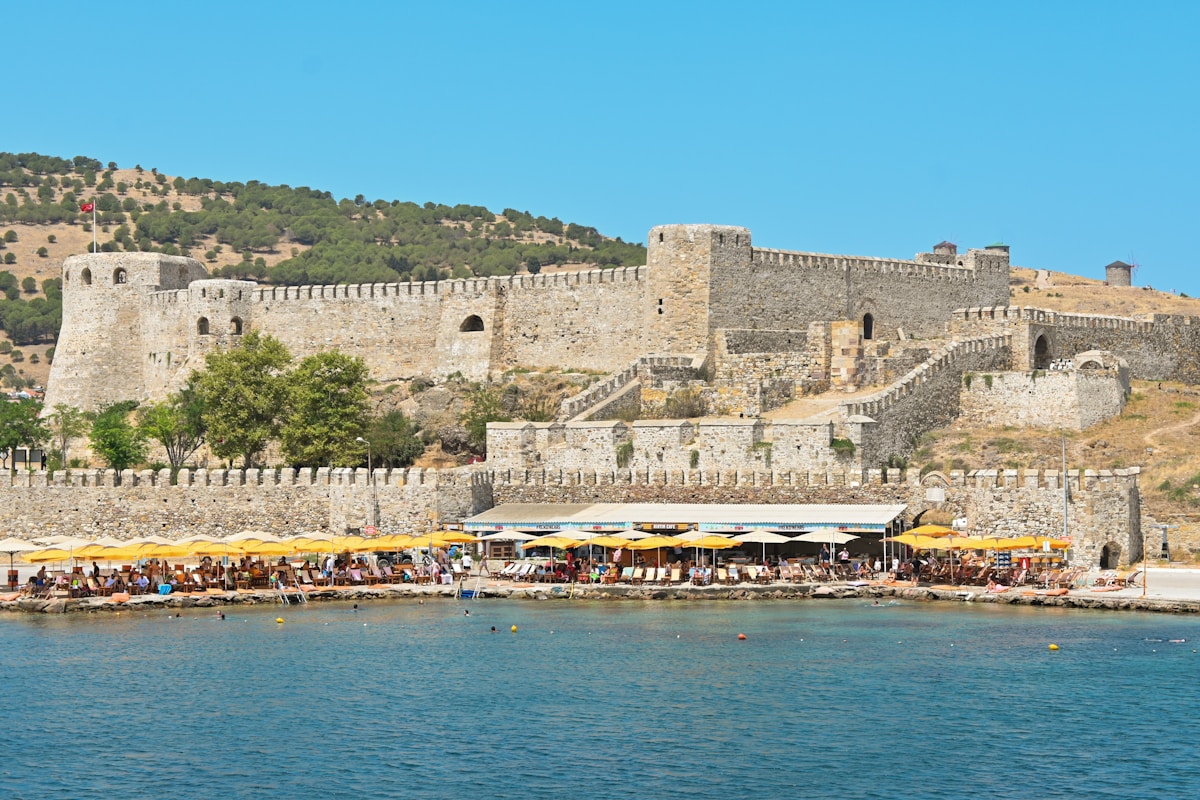
Çeşme town itself is the main hub of the peninsula and worth treating as a destination in its own right rather than just a transit point. The 16th-century Çeşme Castle (entry approximately ₺120 as of 2026, open daily 08:00–17:00) is an Ottoman fortification built during the reign of Bayezid II and later expanded by Suleiman the Magnificent. Its museum covers the 1770 Battle of Çeşme, when the Russian fleet destroyed the Ottoman fleet in these waters - one of the most decisive naval engagements in Eastern Mediterranean history.
The marina below the castle is one of the Aegean’s major yachting hubs, with berths for several hundred boats and ferries running to the Greek island of Chios (approximately 40 minutes, ₺450–600 return as of 2026, check current timetables before booking). The promenade behind the marina connects the castle to the main shopping street and several well-regarded fish restaurants.
The Karaburun Peninsula - Secluded Cliffs and Ancient Erythrai
The Karaburun peninsula branches north from the Çeşme peninsula, extending about 50 km further into the Aegean with dramatically different scenery: white limestone cliffs falling directly into the sea, near-empty roads, and a string of remote coves with no facilities. It is accessible only by car or organised tour.
The main destination at the northern tip is Ildırı, the site of ancient Erythrai - one of the twelve cities of the Ionian League. The ruins include a theatre, temple foundations and city walls in reasonable condition, with free and open access as of 2026. The drive from Çeşme takes approximately 90 minutes each way on a winding coastal road; allow a full day with stops at viewpoints and coves.
Several boat tours from Çeşme marina run the Karaburun coastline in summer, offering access to coves unreachable by road. Prices typically run ₺400–600/person including lunch as of 2026, with 4–6 hour itineraries. Book at the marina or through accommodation.
Day Trip: Mordoğan and Güzelbahçe
Mordoğan is a small resort town on the far side of the Karaburun peninsula, 70 km from Çeşme by road (allow 90–100 minutes). It sees few international visitors and functions largely as a weekend retreat for İzmir residents. The harbour has excellent fish restaurants at local prices, and the town beach is broad and uncluttered in the shoulder season. Güzelbahçe, closer to İzmir at 45 minutes from Çeşme, is another quiet coastal town with a small marina and a beach that avoids the summer peaks.
Neither Mordoğan nor Güzelbahçe is worth a special trip from Çeşme unless you specifically want to see the quieter side of the İzmir coast. As add-ons to a drive along the Karaburun road, they round out a full day well.
Practical Information
| Town | Distance from Çeşme | Dolmuş Fare | Best For |
|---|---|---|---|
| Alaçatı | 7 km | ₺15–20 | Boutique hotels, windsurfing, dining |
| Ilıca | 5 km | ₺12–15 | Families, thermal beaches, value hotels |
| Dalyan Köyü | 15 km | ₺25–30 | Quiet, fresh fish, cove swimming |
| Karaburun/Ildırı | 50–60 km | Car only | Archaeology, empty coves, scenic drives |
Best time to visit: May–June and September–October for cooler temperatures and fewer crowds. July–August is peak season; Alaçatı in particular becomes very busy and prices surge 30–50% above shoulder rates. Ilıca’s thermal springs are available year-round and are busiest at weekends in winter.
Search hotels in Cesme on Booking.com
Getting around the coast: A rental car is the most flexible way to reach Çeşme’s beaches - compare rates at GetRentacar before booking direct. Alternatively, browse tours and activities in Çeşme for boat trips and excursions that reach spots inaccessible by road.
See also: Çeşme travel guide · Çeşme beaches · İzmir travel guide · Turkey in May · Turkey in September