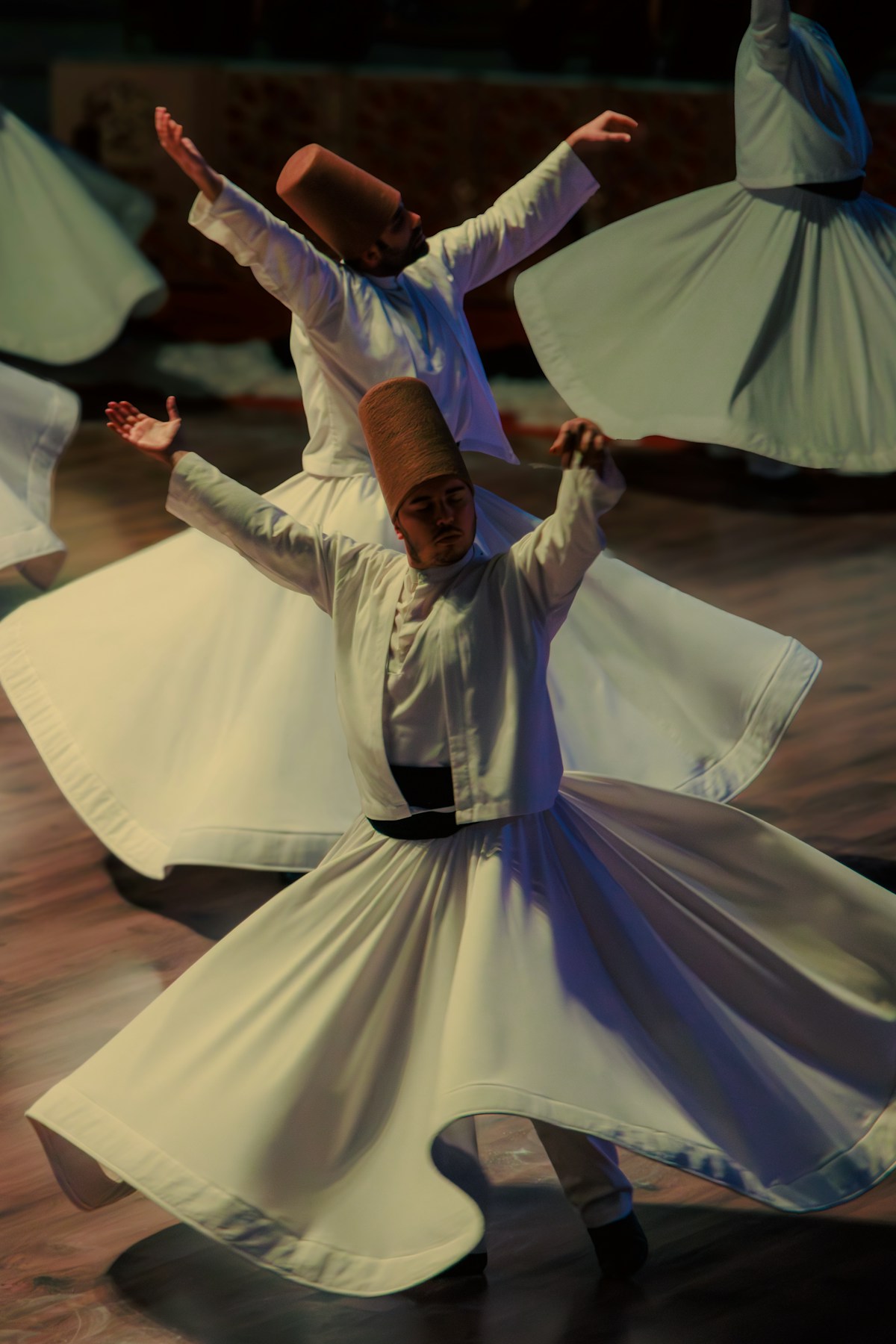
The Sema is one of the most visually arresting rituals in the world: dervishes in white robes and tall brown felt hats begin to spin, arms extended, one palm open to the sky and one facing down - receiving divine grace and channelling it to the earth. The spinning does not stop. It accelerates, then settles into a meditative velocity that seems impossible to sustain. For the Mevlevi order of Sufi mystics, this is not performance. It is prayer.
UNESCO added the Sema ceremony to its Intangible Cultural Heritage list in 2008. It can be watched in Istanbul year-round, in Konya throughout the year (and in an extraordinary festival in December), and at a handful of other sites across Turkey. Here is how to see it properly.
What Is the Sema Ceremony?
The Sema is the central devotional practice of the Mevlevi order of Sufism, founded in Konya in the 13th century by Jalal ad-Din Rumi - known in Turkey as Mevlâna. Rumi’s poetry, collected in works like the Masnavi, describes a spiritual longing for union with the divine. The Sema is the physical enactment of that search.
The ceremony follows a structured sequence. It opens with the naat - a musical praise for the Prophet Muhammad. The taksim (instrumental improvisation on the ney, a reed flute) follows. Then the devr-i veled, a slow circumambulation of the floor by the dervishes. And finally the four selams - the four movements of the spin itself, each representing a stage of the spiritual journey: awareness of creation, surrender to God, ecstasy of devotion, and the return to daily life.
The dervishes wear the sikke (tall felt hat, symbolising the tombstone of the ego), the hırka (black robe over the white tennure, symbolising the tomb), and the tennure (white skirt, symbolising the shroud). When they remove the black robe to begin spinning in white, they are symbolically shedding the ego and preparing for spiritual rebirth.
The music - ney, kudum drum, tanbur - is as important as the movement. Genuine Sema ceremonies include live classical Sufi music throughout.
Istanbul: Where to See Whirling Dervishes
Hodjapasha Culture Center
Hodjapasha is the best-known venue for Sema in Istanbul. It operates in a restored 15th-century hammam adjacent to Sirkeci train station in Sultanahmet - a deeply atmospheric setting with a domed ceiling and stone columns. Performances run approximately 1 hour.
- Frequency: Most days of the week, check the current schedule on their website
- Price: Approximately ₺1,500–₺2,000/person as of 2026 (prices have risen with inflation - verify current pricing before booking)
- Booking: Advance booking strongly recommended for July–September; walk-up usually available in shoulder season
- Location: Hoca Paşa Sokak, Sirkeci, near Sirkeci train station and 5 minutes from Sultanahmet
- Authenticity note: Hodjapasha is a cultural performance venue. The dervishes are trained in the Sema tradition and the ceremony follows the correct ritual structure, but this is a ticketed cultural show rather than an active religious ceremony.
Galata Mevlevi Museum (Galata Mevlevihanesi)
This is the more authentic option in Istanbul. The museum occupies a working 15th-century tekke (Sufi lodge) in Beyoğlu, near Galata Tower. It was the first Mevlevi lodge in Istanbul, founded in 1491, and remained active until the Atatürk-era closure of all tekkes in 1925. It reopened as a museum in the 1970s and reinstated Sema ceremonies.
- Saturday ceremonies: Free Sema performances are held on Saturday afternoons - usually at 3pm, though times vary seasonally. Arrive 30 minutes early as seating is limited.
- Museum entry: Approximately ₺150–₺200 as of 2026 to see the museum (Sema performances on Saturdays are included or held separately depending on scheduling - check current practice before visiting)
- Location: Galip Dede Caddesi, Beyoğlu - walking distance from Galata Tower, accessible from Tünel
- Authenticity: This is the more historically significant venue. The wooden semahane (ceremony hall) is the original space. The atmosphere is more meditative and less theatrical than Hodjapasha.
Konya: The Spiritual Home of the Dervishes
Konya is where Rumi lived, taught, and died in 1273. The Mevlâna Museum, which houses his tomb, is Turkey’s most visited cultural site with millions of pilgrims and visitors annually. The green-tiled dome is the defining image of the city.
Mevlâna Museum
- Hours: Open daily 9am–5pm (extended hours on weekdays in peak season); check for closures during special observances
- Entry: Approximately ₺300–₺400 as of 2026 (it is a museum, not a mosque - entry is ticketed)
- What to see: The tomb of Rumi, the sarcophagi of Mevlâna’s family and companions, the original semahane, Rumi’s personal belongings, the oldest extant Qurans in Turkey, and the ney (reed flute) collections
Sema ceremonies are held regularly in Konya - check the Konya Culture and Tourism Directorate schedule, as times and venues shift seasonally. The full-length ceremony at the Mevlâna Cultural Centre is the most complete version available.
The December Festival
The Şeb-i Aruz (Mevlâna Commemoration Ceremony) takes place on 17 December each year - the anniversary of Rumi’s death, called his “wedding night” (the night of union with God). It draws tens of thousands of visitors to Konya. The outdoor Sema ceremony at the Mevlâna Cultural Centre holds thousands of spectators. Book accommodation in Konya at least 2–3 months ahead for this date - hotels fill completely and prices rise significantly.
The December festival is the most moving version of the Sema most visitors will ever see: held under cold winter stars, preceded by recitation and Sufi music, and attended by an audience that includes genuine pilgrims from across the Islamic world as well as tourists. It is unlike any ticketed cultural show.
Authentic vs Tourist Performances
There is a real distinction in Turkey between:
Authentic Sema (tarikat): Conducted as religious practice within a genuine Mevlevi community. The Galata Mevlevihanesi Saturday ceremony sits closest to this, as does the Konya December festival. These are not performances for an audience - you witness a ritual you are permitted to observe.
Cultural performances (kültür gösterisi): Venues like Hodjapasha present Sema as a professional cultural show. The dervishes are skilled and the ceremony is structurally accurate, but it is produced for tourist audiences with ticketing, seating arrangements, and photography guidelines designed around the visitor experience.
Both are worth attending. The cultural shows are often more accessible (more frequent, easier to book, better lighting for appreciation) and the dervishes are genuinely trained. But if you can attend a free Saturday ceremony at Galata or the December festival in Konya, those experiences are categorically different.
What to Wear and Etiquette
- Shoulders and knees should be covered for women; no requirement for men beyond being respectably dressed
- Shoes are removed at some venues; carry socks if you prefer
- Photography policies vary: Hodjapasha typically allows photography; the Galata Museum Saturday ceremony usually does not allow flash and requests discretion. Follow posted guidance.
- Do not speak during the ceremony
- Do not enter or leave during the selams (spinning movements) - wait for a natural pause
- The ceremony is not interactive. You observe; you do not participate.
Booking Tips
- Hodjapasha: Book directly via their website or through a tour platform. GetYourGuide and Viator both list this venue with guide commentary included in some packages.
- Galata Museum Saturdays: No booking required; arrive early and queue. The ceremony sometimes draws full capacity.
- Konya December festival: Book accommodation months ahead. The ceremony itself is free and ticketless - entry is first-come, first-served at the Mevlâna Cultural Centre outdoor venue.
- Travel from Istanbul to Konya: Turkish Airlines flies in about 1 hour (from approximately ₺800–₺2,500 as of 2026). The YHT high-speed train takes about 4.5 hours from Ankara (change required from Istanbul) or 1.5 hours direct from Ankara.
Frequently Asked Questions
Is the whirling dervishes ceremony religious or cultural? Both, depending on the venue. The Sema is a Sufi Islamic devotional practice - it is genuine religious ceremony when conducted within an active tarikat. At ticketed cultural venues like Hodjapasha, it is presented as a cultural performance by trained practitioners. Both versions have value; the distinction is important context.
How long does the Sema ceremony last? The full ceremony at Galata Mevlevihanesi or in Konya runs approximately 45–90 minutes. Cultural performances at Hodjapasha run approximately 60 minutes, sometimes with a programme booklet or introductory explanation.
Can I photograph whirling dervishes? It depends on the venue. Hodjapasha generally permits photography and video (without flash). The Galata Museum Saturday ceremony requests no photography or limits it to before the spinning begins. The Konya ceremonies vary - some allow it, others request restraint out of respect for the religious character of the event.
Is the Saturday ceremony at Galata Mevlevihanesi free? The ceremony itself is free or included with museum entry (approximately ₺150–₺200 as of 2026 for the museum). Verify current scheduling at the museum website or by calling ahead - times shift seasonally and special events can replace the regular slot.
Where is the best place to see whirling dervishes in Turkey? For convenience and atmosphere: Hodjapasha in Istanbul for a ticketed cultural performance; Galata Mevlevihanesi for the free Saturday ceremony with more authentic character. For the most significant experience: Konya in December during the Şeb-i Aruz festival. All are worthwhile.
Can I see whirling dervishes outside Istanbul and Konya? Yes. Venues in Gaziantep, Bursa (the Mevlevi tradition was strong here), and Edirne hold periodic Sema events. Check local municipality cultural calendars. The Sufi Music Concert and Whirling Dervishes show at various Istanbul concert halls during the International Istanbul Music Festival (June) is another option.
What is the difference between a dervish and a Sufi? Sufism is the broad mystical tradition within Islam. A dervish is a member of a Sufi fraternal order, known in Turkish as a tarikat. The Mevlevi order is one such tarikat, founded on the teachings of Rumi. Dervishes take vows and undergo years of training in the spiritual and musical aspects of the Sema. The white costume is specific to the Mevlevi order - other Sufi orders have different dress and practices.
See the Istanbul travel guide for where to stay and what else to experience in the city around a Sema performance. For a trip that combines Istanbul with a visit to Rumi’s tomb in Konya, the 1-week Turkey itinerary covers both. For other cultural experiences in Istanbul, see our Turkish bath guide and cooking class in Istanbul.
Booking in advance: Browse tours and activities in Turkey to compare operators and read recent reviews - booking ahead is strongly recommended in peak season (July–August) as slots fill quickly.
See also: Konya travel guide · Istanbul things to do · Bursa travel guide · Turkey in December