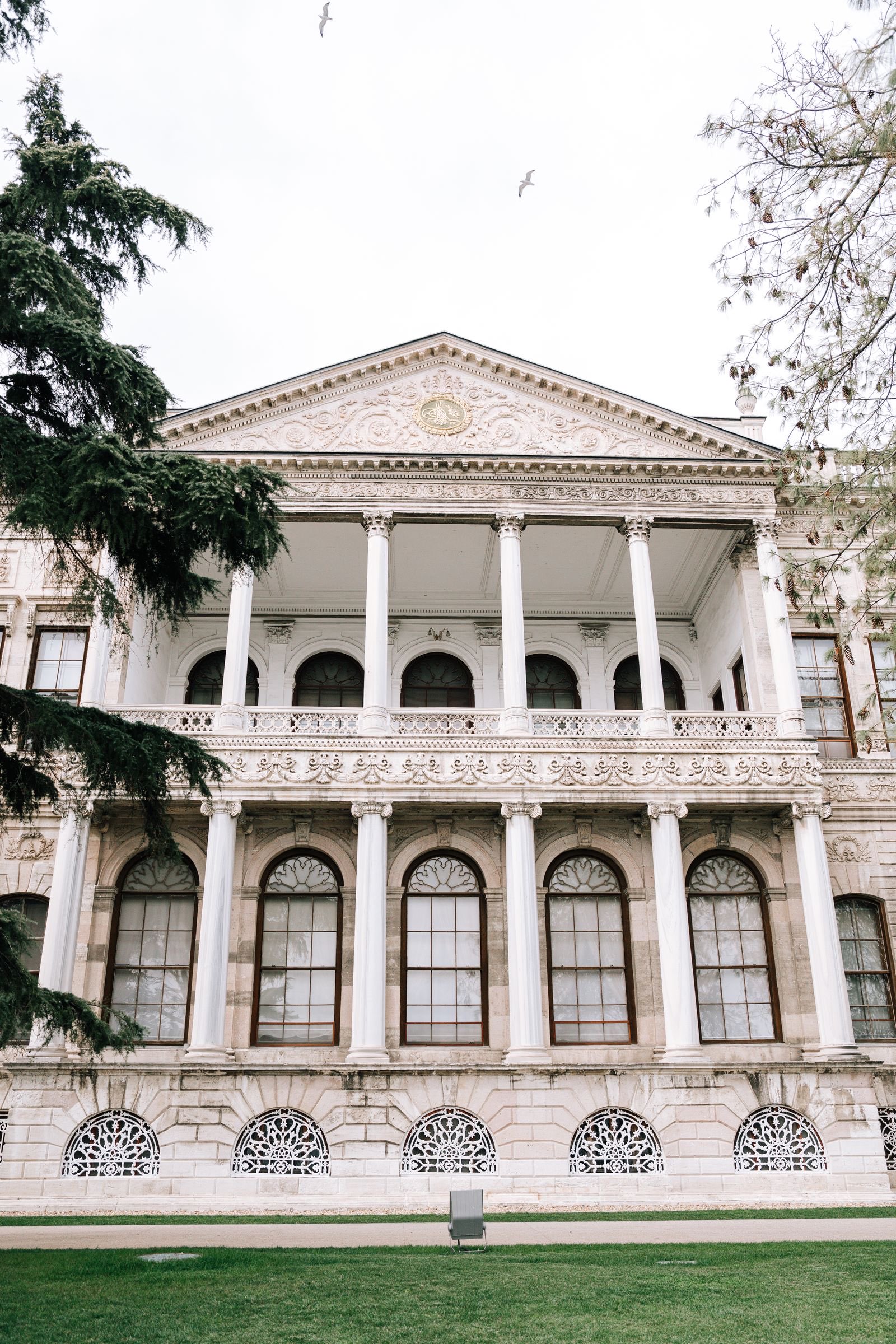
Dolmabahçe Palace is the opposite of Topkapi. Where Topkapi is a sprawl of courtyards and kiosks from the 15th century, Dolmabahçe is a single grand European-style building on the Bosphorus shore, completed in 1856 for Sultan Abdülmecid I. The Ottoman court moved here from Topkapi, and six sultans lived in it until the end of the empire. Mustafa Kemal Atatürk used it as a residence when in Istanbul and died here on 10 November 1938. His room is preserved, and the clocks in the palace are stopped at 09:05, the time of his death.
The architects were Garabet Balyan and his son Nikoğoz Balyan, and the style mixes Baroque, Rococo and Neoclassical elements with Ottoman planning. The palace holds roughly 285 rooms, dozens of halls and several hammams, and it is managed by the National Palaces administration. The official ticketing site is millisaraylar.gov.tr.
Tickets (as of 2026)
The combined ticket for foreign visitors is about ₺2,000 (roughly €40) as of 2026. It covers the Selamlık (state apartments), the Harem (private quarters) and the Painting Museum, and the audio guide is reportedly included. Children under six are free. E-tickets bought from the official seller stay valid for around 90 days, which gives flexibility if the weather turns.
Many third-party websites sell tickets with similar names, and some charge more than the official price. If you want a guide or hotel pickup, use a reputable tour provider and compare. Dolmabahçe Palace guided tours and skip-the-line tickets and Tiqets both list entries, though the official site is cheaper for a self-guided visit. The Museum Pass Istanbul is not accepted.
Opening Hours
The palace is open Tuesday to Sunday, 09:00 to 17:00, and closed on Mondays, on 1 January and on the first days of the religious holidays. Entry is by timed group slot, and the last entry is some time before closing. In busy months the slots fill, so arrive early or book ahead. Photography inside was reported as allowed without flash from early 2026, but rules change, so ask at the entrance.
What to See
- Crystal Staircase: a sweeping staircase with Baccarat crystal and brass balustrades, the first thing you see in the Selamlık.
- Ceremonial Hall (Muayede Salonu): the vast central hall under a dome about 56 metres high, with a four-and-a-half-tonne crystal chandelier reportedly gifted by Queen Victoria. It is the most photographed room and the main reason for the visit.
- Atatürk’s room: a modest bedroom in the Harem section, kept as it was in 1938. Visitors move through in a hush.
- Harem section: the private apartments of the sultan’s mother, wives and children, with different decoration from the state rooms.
- Gardens and gates: the Bosphorus-side gate and the clock tower are free to see from outside without a ticket, if the palace is shut.
- The Painting Museum: Ottoman and European paintings in a separate pavilion that many visitors skip, but worth 20 minutes if you have time.
The Selamlık and Harem are visited as separate guided tours, so allow around 2 to 3 hours for both. The English tour runs at regular intervals, and a guide gives the historical context that makes the gilt less overwhelming.
How to Get There
The nearest tram stop is Kabataş on the T1 line, about a 10-minute walk along the waterfront. From Taksim, take the F1 funicular down to Kabataş, then walk. The Beşiktaş ferry pier and bus routes along the Bosphorus road also pass the palace gate, and an Istanbulkart covers all of them. From Sultanahmet the T1 takes around 20 to 25 minutes.
Planning Your Visit
Dolmabahçe is on the Bosphorus shore, away from the Sultanahmet cluster, so give it its own half day. A sensible plan is the palace in the morning, lunch in Beşiktaş or Ortaköy and a walk along the shore afterwards. The Beşiktaş guide lists what to eat nearby, and a Bosphorus cruise shows the palace from the water. Our best tours in Istanbul guide and the Istanbul things to do guide show how it fits in a multi-day plan. For comparison, read the Topkapi Palace guide.
Practical Tips
- Dress is not strictly enforced, but modest clothing is sensible. Overshoe covers are provided to protect the floors.
- Large bags and tripods go to the cloakroom. Bring only a small bag.
- Cafés inside the grounds are priced for tourists, so eat in Beşiktaş instead.
- Book the earliest slot in summer, since the interior has limited air-conditioning and gets warm.