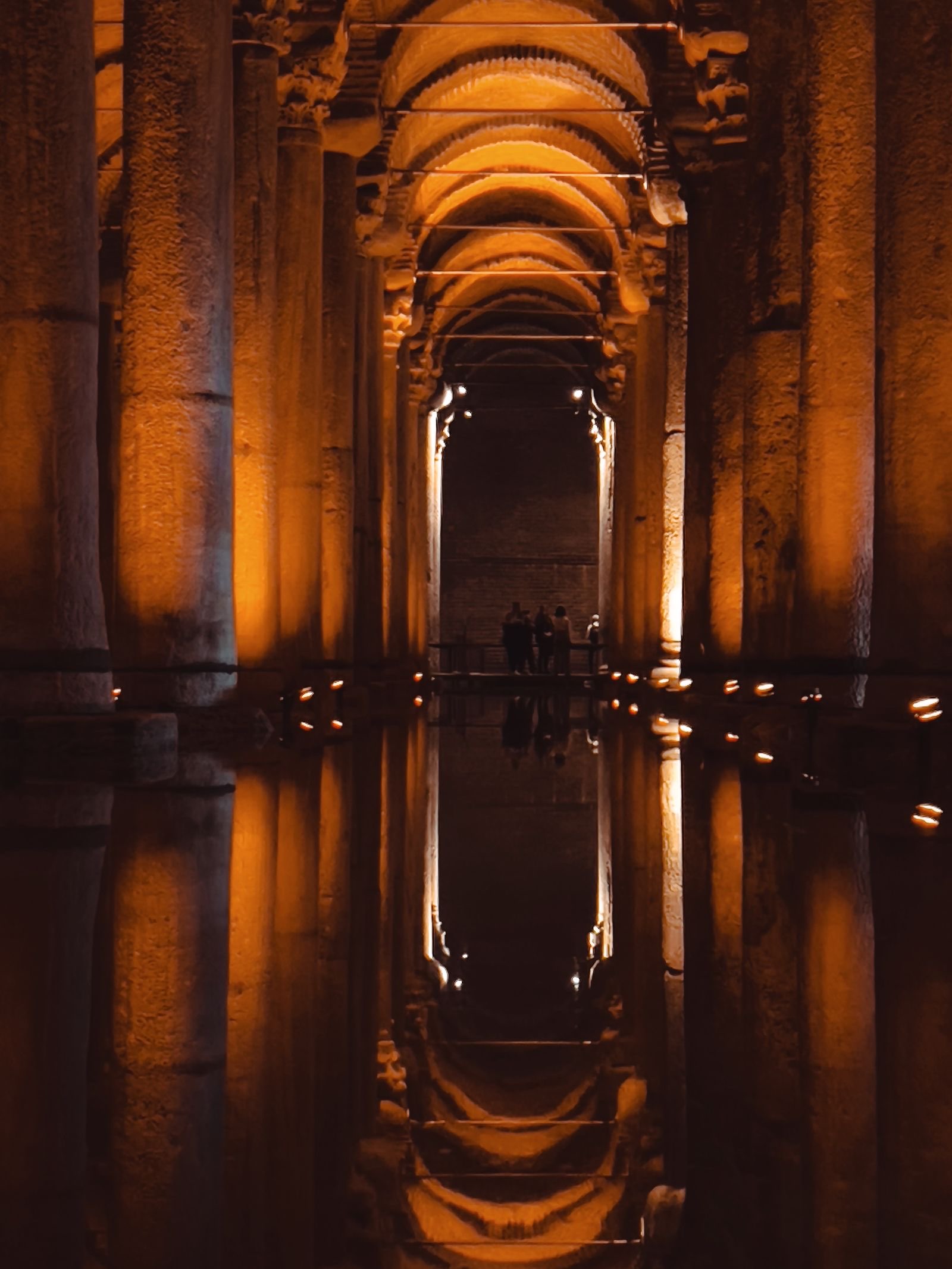
The Basilica Cistern (Yerebatan Sarnıcı, “Sunken Cistern”) is a vast underground reservoir beneath Sultanahmet, built in 532 under Emperor Justinian I to store water for the Great Palace and nearby buildings. It measures roughly 138 by 65 metres and holds 336 marble columns, each about nine metres high, supporting brick vaults above a shallow floor of water. It is dim, cool and atmospheric, and it is one of the most visited sights in the old city.
It stayed largely forgotten until the 16th century, when the scholar Petrus Gyllius noticed locals fishing through holes in their cellar floors. The cistern forms part of the Historic Areas of Istanbul, a UNESCO World Heritage property.
Tickets (as of 2026)
Several 2026 guides list daytime entry at about ₺1,950 (roughly €38), and an evening session at around ₺3,000 that has historically included live music or a themed programme. Prices have risen sharply in recent years, and the old figure of a few hundred lira is out of date.
There is an important caveat. In June 2026 the cistern passed from the city to the state’s General Directorate of Foundations, closed briefly and reopened on 6 June under new management. Prices, hours and whether the evening session continues may change, so treat any online figure as a snapshot and check at the ticket office. The Museum Pass Istanbul is reported as not valid here.
To avoid the queue, buy an advance ticket. Skip-the-line Basilica Cistern tickets and guided tours are sold by tour operators, and Tiqets lists timed-entry options. Compare the final price against the box office, because resellers add a premium.
Opening Hours
Sources conflict, which is typical after a change of management. The most consistent pattern is daytime entry from 09:00 to about 18:30 and an evening session from around 19:30 to 22:00, with some listings showing 09:00 to 22:00 daily. Queues are longest between 10:30 and 14:00. Arriving at opening, or after 17:00, makes the walkways far less crowded and the photos far better.
What to See
The visit is a loop on raised wooden walkways, so you view the columns from above the water rather than walking through it.
- The Medusa heads: two column bases at the far corner carry carved Medusa heads, one sideways and one upside down. They were reused from earlier Roman buildings, and nobody can say with certainty why they were set that way. They are the sight everyone photographs.
- The Weeping Column: a column carved with a pattern of teardrops, believed to honour the slaves who died during construction.
- The mix of columns: many shafts and capitals were recycled from older temples and buildings, so you see Ionic, Corinthian and plain forms side by side.
- The fish: carp swim in the shallow water, a detail that surprises first-time visitors.
- The café: a small café at the far end sells tea and snacks, handy if you need a rest.
Photography is allowed, but tripods and flash are discouraged because of the low light and the crowds. A phone with night mode is enough.
How to Get There
The entrance is across the street from Hagia Sophia, a 3-minute walk. The nearest tram stop is Sultanahmet on the T1 line. From Taksim, take the F1 funicular to Kabataş and change to the T1. An Istanbulkart covers the journey.
Planning Your Visit
The cistern is compact and pairs well with its neighbours. A good morning is the Blue Mosque first, then Hagia Sophia, then the cistern around midday, when the heat above ground is worst and the interior is cool. Topkapi Palace fills the afternoon. Our best tours in Istanbul guide covers combined Sultanahmet tickets, and the Istanbul things to do guide places everything on one map.
Practical Tips
- Wear shoes with grip. The walkways are damp, and drips from the ceiling are common.
- The interior is cool all year, so a light layer helps in summer.
- The walkways are narrow, so strollers and wheelchairs may find parts of the loop difficult. Ask staff about accessible routes.
- Do not drop coins in the water. It harms the fish and the structure.
- Expect a security check on entry, and keep bags small.