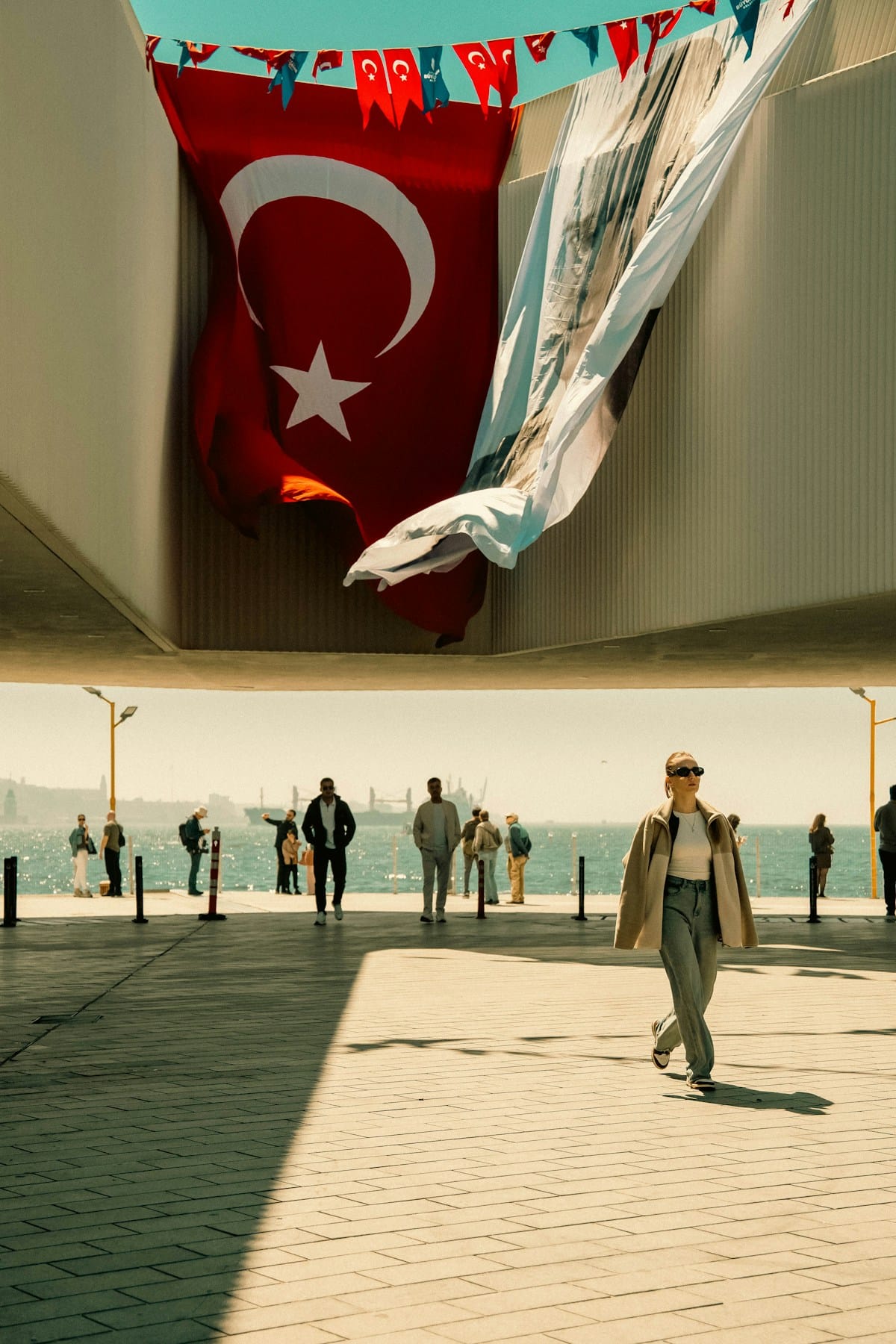
Türkiye is one of the most visited countries in the world, and a significant share of those visitors are women travelling alone. It is not a trouble-free destination - catcalling, persistent vendors, and occasional harassment are real - but with the right preparation, it is absolutely manageable, and most women leave having had a genuinely great time. This guide cuts through the vague reassurances and gives you the specifics.
Safety Overview
The overall risk level for solo women in Türkiye is moderate - comparable to Spain or Italy a generation ago. Most incidents are low-level: unwanted conversation, someone following you briefly in a market, or a restaurant owner being overly “helpful”. Serious incidents do happen but are uncommon relative to tourist volume.
Concrete steps that make a real difference:
- Wear sunglasses. Eye contact is read as an invitation in many parts of the country, particularly in smaller cities. Avoiding direct eye contact with strangers immediately reduces approaches.
- Walk with purpose. Hesitation or map-staring in busy areas draws touts. Know your next direction before you leave a restaurant or attraction.
- Use the female-only carriage on the Istanbul metro. The first carriage of most metro lines is women-only during rush hours (7–9am, 5–8pm). The pink signs are hard to miss. Outside those hours it remains a perfectly fine place to stand.
- Save the local emergency number. Türkiye’s emergency line is 112. Tourist police in Istanbul have an English-speaking line: +90 212 527 4503.
- Trust your read of a situation. If a tea invitation or offer of help feels off, it probably is. A firm “hayır, teşekkürler” (no, thank you) and walking away is always acceptable.
The night-time picture varies by area. In Istanbul’s Beyoğlu and Karaköy, lone women are out until 2am without issue. In smaller eastern cities, being out alone after 10pm as a foreign woman will draw stares even if no one approaches.
Dress Code by Region
There is no national dress code, but local norms shift significantly by area.
Istanbul (European side - Beyoğlu, Karaköy, Cihangir, Kadıköy): Jeans, shorts, sleeveless tops - normal and unremarkable. You will see Turkish women in the same.
Istanbul (conservative areas - Fatih, Eyüp, Üsküdar): Cover shoulders and knees when visiting mosques (you will be given a scarf at the door if you forget), and consider doing the same in the surrounding streets. Not required, but it reduces attention.
Coastal resorts (Bodrum, Antalya, Fethiye, Ölüdeniz): The most relaxed dress norms in the country. Shorts and summer dresses are the local standard. Bikini tops are fine on the beach but not in restaurants on the main strip.
Cappadocia: A steady tourist flow means standards are relaxed, but the local villages around Göreme and Uçhisar are conservative. Cover up when leaving the main tourist strip.
Eastern Türkiye (Gaziantep, Van, Trabzon, Diyarbakır): Dress conservatively here - loose trousers or a long skirt, shoulders covered. A light headscarf in your bag is a practical accessory for mosque visits and for signalling cultural awareness in conservative markets. You will stand out regardless; modest dress at least reduces the type of attention you attract.
Transport Tips
Istanbul metro and tram: Safe, fast, and easy. Women-only carriages are on the front of metro trains during rush hours. The Istanbulkart contactless card covers all metro, tram, funicular, and ferry lines - buy one from any yellow machine at major stations for around 100 TRY (as of 2026). Read more in our Istanbulkart guide.
Dolmuş (shared minibus): The backbone of local transport outside Istanbul. You flag one down, squeeze in, and pay the driver when you reach your stop - shout “inecek var” (someone’s getting off). Fares are fixed and cheap. The main risk is not safety but confusion - ask a local or your accommodation where to catch one going your direction.
Intercity buses: The best way to move between cities. The major operators - Metro Turizm, Pamukkale, Kamil Koç, and Ulusoy - all run modern coaches with reclining seats, on-board snacks, and generally assigned seating. Book at least a day ahead via their websites or Obilet.com. Seats are assigned, so you won’t be placed next to a stranger at random - if you prefer, book a window seat in a row where both seats are reserved by the same company. Night buses save you a hotel night; they are generally safe, though keep your valuables in a bag that stays with you in the cabin rather than in overhead storage.
Taxis: Use only metered, licensed taxis (yellow in Istanbul, usually white elsewhere) or the BiTaksi app, which shows the registration plate and driver details before you get in. BiTaksi is the single biggest safety upgrade for taxi travel in Türkiye. Do not take unmarked cabs at airports or outside tourist sites.
Domestic flights: Turkish Airlines, Pegasus, and AnadoluJet connect Istanbul to most eastern cities for around €40–80 one way (as of 2026), which is often worth it for the time saved over a 12-hour overnight bus.
Accommodation
Hostels: The social atmosphere of a hostel is genuinely useful when you are travelling alone - you meet people, get reliable local tips, and the shared spaces make evenings less isolating. Several Istanbul hostels have female-only dorms:
- World House Hostel (Galata) - well-regarded female dorm, central location
- Cheers Hostel (Sultanahmet) - long-running backpacker favourite with female-only rooms
- Bunk Hostel (Karaköy) - modern, female-only floor option, strong community vibe
In Göreme (Cappadocia), Nomad Cave Hostel and Sultan Cave Suites are frequently mentioned by solo female travellers for their communal atmosphere and helpful staff.
Mid-range hotels: Booking through Booking.com or directly gives you a paper trail. In smaller cities, family-run pensions (pansiyon) are often the most comfortable option - local families watch out for their guests.
Avoid: Very cheap hotels in conservative residential areas where the clientele is entirely male workers. Not dangerous per se, but the breakfast room dynamic can be uncomfortable.
Search hotels in Turkey on Booking.com
City-Specific Tips
Istanbul: The city is big enough that your experience varies hugely by neighbourhood. Kadıköy on the Asian side has a relaxed, bohemian feel with excellent cafés and zero harassment. Karaköy and Cihangir are similarly easy. Sultanahmet has more touts but they are experienced with tourists and rarely aggressive. Take the metro rather than walking alone late at night in Taksim - the area around İstiklal Avenue after midnight can be rowdy. See our full Istanbul guide for neighbourhood detail.
Cappadocia: One of the easiest places to travel solo in the country. The town of Göreme is compact and tourist-oriented. The main hassle is persistent tour-selling, not personal safety. You will want to book your hot air balloon tour and ATV rental in advance rather than accepting street offers, which are often overpriced. Our Cappadocia guide has operator recommendations.
Antalya: The old city (Kaleiçi) is safe and walkable. The tourist strip around Lara Beach is very international and low-hassle. As a regional hub with a major airport, Antalya sees enough solo female travellers that most hotel and restaurant staff are accustomed to it. See our Antalya guide.
Izmir: The most socially liberal major city outside Istanbul. Women in shorts and sleeveless tops are the norm on the Kordon (waterfront promenade) all summer. Street harassment here is notably lower than in Istanbul or Ankara. The city is underrated as a solo travel base for the Aegean coast. More in our Izmir guide.
Solo Dining
Eating alone in Türkiye is genuinely easy in most contexts.
Where it is comfortable: Any restaurant in a tourist area, café, breakfast venue, köfte or döner shop, fish restaurants with a view. In Istanbul, Izmir, Antalya, and Cappadocia, solo dining is unremarkable and you will not be seated in a corner or overlooked.
Where it can feel awkward: Meyhane (traditional tavern) evenings - these are convivial group affairs and a lone diner stands out, though no one will be rude. Some family restaurants in eastern cities seat women and families in a separate section (aile salonu), away from the all-male tables; this is meant as a courtesy, not segregation, and you can decline if you prefer the main room.
Practical tip: Lunchtime is the easiest time to eat alone anywhere in the country. The midday rush means no one is paying attention to your table.
Useful Turkish Phrases
A few words in Turkish defuse situations and earn immediate goodwill:
| Phrase | Pronunciation | Use |
|---|---|---|
| Hayır, teşekkürler | Ha-YIR, teh-sheh-KÜR-ler | No, thank you |
| Lütfen beni rahat bırakın | LÜT-fen be-NI ra-HAT bı-RA-kın | Please leave me alone |
| Yardıma ihtiyacım var | Yar-DI-ma ih-tee-ya-JIM var | I need help |
| Polis | Po-LIS | Police |
| Nerede? | Neh-REH-deh | Where is…? |
| Hesap lütfen | Heh-SAP LÜTT-fen | The bill, please |
The phrase “Lütfen beni rahat bırakın” is more effective than “no” alone - the formality signals you are serious, not just being modest.
Scam Awareness for Solo Women
The friendly local with perfect English: Common around Sultanahmet. A well-dressed man (occasionally a woman) starts a conversation and eventually suggests a bar or carpet shop. Nothing bad happens, but you will be expected to buy something expensive. The rule of thumb: if someone approaches you with conversation that quickly becomes “where are you from?”, the endpoint is a transaction.
The “guided” taxi: A taxi driver offers to take you to a shop “just to look” before your destination. Always say “doğrudan” (directly) when getting in.
Overpriced tea: Accepting an invitation to tea in a shop is fine - but confirm there is no charge before sitting down. In tourist areas, “tea” can appear on a bill for 200 TRY.
Fake tourist police: Occasionally reported in Istanbul - someone shows a laminated “police” card and asks to see your passport. Real tourist police are uniformed. Never hand over your passport; offer to walk to the nearest police station instead.
ATM skimming: Use ATMs attached to banks, not standalone machines in markets or small streets. Cover the keypad when entering your PIN.
For a broader overview of what to expect as a first-time visitor, see our first-time visitor guide. If you want company for day trips or organised activities, our things to do listings include group tours where solo travellers often pair up naturally.
Travel insurance for Türkiye is worth sorting before you depart - a policy with 24/7 emergency support and medical evacuation cover gives extra peace of mind when travelling solo.
Plan Your Trip
✈️ Book your flights to Türkiye 🛡️ Get travel insurance 📱 Stay connected with an eSIM 🚗 Rent a car