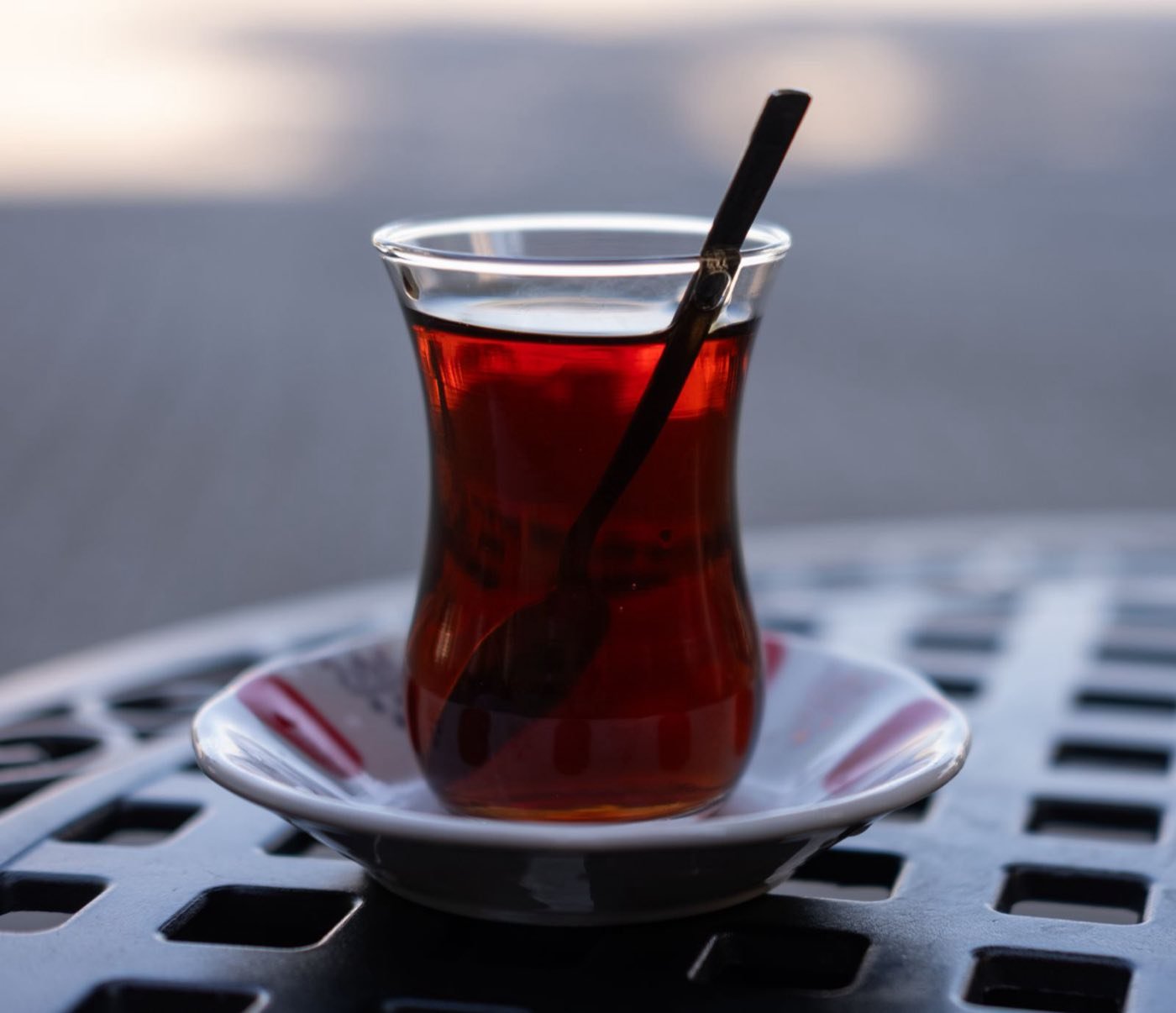
Turkish tea (çay) is strong black tea served without milk in a small tulip-shaped glass, and Turks drink it all day, from breakfast to late evening. Turkey is one of the world’s largest per-person tea drinkers, and offering a glass is the standard first gesture of hospitality in shops, offices and homes. Prices below are approximate, as of 2026.
How Turkish Tea Is Brewed
Tea is made in a çaydanlık, a stacked double teapot. Water boils in the larger bottom pot, while a concentrated brew steeps in the smaller one on top. Each glass is poured from the top pot, then diluted with hot water from below. You can ask for it açık (light) or koyu (dark), and some tea houses also offer tavşan kanı, “rabbit’s blood”, for a deep reddish pour.
Sugar cubes sit on the saucer. Milk is not usual, and asking for it marks you as a visitor. In a tea house the glass is refilled until you stop it: place the spoon across the top of the glass to say you are done.
How to Order
Say “bir çay, lütfen” for one tea. In a bazaar you will likely be offered one without asking. Accepting is polite and does not oblige you to buy anything, though it is good manners to look at what the shop sells. In a tea garden, a waiter walks the floor with a tray of glasses, and a self-service samovar is common. At the Çamlıca Hill gardens and other popular terraces, the view usually puts the price up a little.
Where Turkish Tea Comes From: Rize
Most Turkish tea grows around Rize on the eastern Black Sea coast, on steep terraced slopes between the sea and the mountains. Harvest runs from May to September, and visitors can walk the tea plantations and stop at a family-run tea house for a fresh glass. Our Rize guide covers the city, and our Rize food guide covers local flavours, including the tea paired with Black Sea cornbread and hazelnut.
Other Hot Drinks to Know
- Elma çayı: apple tea, a sweet powdered drink aimed at visitors rather than locals.
- Ada çayı (sage tea): an herbal tea common on the Aegean and Mediterranean coasts, taken for its flavour and thought to settle the stomach.
- Ihlamur: linden-flower tea, common in winter.
- Salep: a hot, milky winter drink thickened with orchid root and dusted with cinnamon, sold in cold-weather months.
Tea Etiquette and Buying Tea
Accept the first glass, and do not rush it. Business and shopping conversations start with tea, and refusing outright can read as cold; a polite “teşekkürler, içtim” (thanks, I have just had one) works if you are full. Tea houses (çay ocağı) run on a runner system: a boy or waiter brings glasses to nearby shops, and you pay the runner or settle at the counter.
To take tea home, buy loose Rize black tea in a paper or tin pack from a supermarket or a spice-bazaar tea seller. A 500 g pack costs roughly 150-400 TRY as of 2026, depending on the grade. Pick an “ince” (fine-leaf) grade for the classic flavour. Tulip glasses and saucers cost from a few hundred lira per set. Wrap them well, since bazaar glass breaks easily in a suitcase.
Where to Drink Tea in Istanbul
- Çamlıca Hill tea gardens, Üsküdar. A hilltop park on the Asian side with wide views across the city. Good for sunset.
- Pierre Loti Hill, Eyüp. A long-standing hilltop tea terrace above the Golden Horn, reached by cable car from Eyüp.
- Ferry decks. The Üsküdar and Kadıköy ferries sell tea from a tray for a few lira. Our Kadıköy guide tells you what to eat when you arrive.
For where to eat in the city, see our Istanbul food guide. A Bosphorus cruise or guided tour is another easy way to drink a glass with a view, and our hotel picks near Karaköy and Galata keep the old-city tea houses close.
Tea and Meals
Tea closes a meal and is often served between courses at breakfast. Our Turkish breakfast guide shows how it fits the kahvaltı table, our Turkish coffee guide covers the after-dinner alternative, and the Turkish food guide places both within the wider cuisine.