Cappadocia’s food scene is built around a single dramatic dish: the testi kebabi (pottery kebab), a slow-cooked lamb or chicken stew sealed inside a clay pot and broken open at the table with a hammer. It is theatrical, genuinely delicious, and entirely specific to this region.
But the food picture is wider than one dish. Cappadocia sits in the centre of an agricultural region — the Nevsehir plateau — that has been producing grain, dried fruit, and cattle since the Bronze Age. Add local volcanic wines from the Urgup and Avanos areas and a growing generation of cave restaurants that take the setting seriously, and you have a food destination worth planning around.
Testi Kebabi: The Essential Cappadocia Dish
The testi kebab is a meat and vegetable stew cooked in an unglazed terracotta pot (testi), sealed with dough and slow-cooked in a wood-fired oven for several hours. The pot is brought to the table whole. The waiter wraps a cloth around the neck and uses a metal hammer to crack it open in one clean tap, releasing a rush of steam and the aroma of slow-braised meat.
The filling is typically lamb or chicken pieces with onion, tomato, capsicum, and regional herbs. The clay walls of the pot impart a subtle earthy note that a standard casserole cannot replicate. The meat is fall-apart tender after three to four hours of sealed cooking.
Price varies by venue: TRY 350-600 per pot at Goreme restaurants as of 2026. Most pots serve one hungry person or are shared as a main between two with side dishes. Reservations are worth making at any restaurant because the pots are prepared in advance and availability is limited each day.
The testi kebabi is specific to the Cappadocia region precisely because the pots themselves come from Avanos, 11km north of Goreme, where potters have worked the local red clay since Hittite times. The unglazed clay is the functional ingredient — it allows slow moisture exchange during cooking in a way that sealed metal pots cannot replicate.
Other Regional Dishes
Beyond testi, Cappadocian cooking draws on Central Anatolian traditions — peasant food developed for high-altitude winters, built from stored grains, dried vegetables, and slow-cooked meat.
Manti is the Turkish equivalent of dumplings: tiny parcels of minced lamb pinched shut, boiled and served with garlic yoghurt, tomato butter, and dried mint. The Kayseri style — from the nearby city that is the food capital of Central Anatolia — produces some of the smallest and most labour-intensive manti in Turkey. A portion at a Goreme lokanta runs TRY 150-220.
Tarhana corbasi is a fermented soup made from dried tarhana (a powder of yoghurt, tomato, and wheat fermented together in summer). It is thick, tangy, and warming — exactly the right soup for a cold Cappadocian morning after a dawn balloon flight. Available at most lokantas for TRY 80-120.
Pastirma is cured and spiced dried beef, originally from the Kayseri region 80km east. The thick coating of fenugreek, garlic, and red pepper (cemen) is pungent and complex. It is eaten thinly sliced on bread at breakfast, added to egg dishes, or used to flavour stews. Buy vacuum-packed pastirma at the Kayseri bazaar (TRY 200-400 per 200g) to take home.
Pekmez (grape molasses) is produced across the Nevsehir plateau from the same grape varieties used for wine. It is thick, dark, and intensely sweet — used as a breakfast spread, stirred into tahini, or poured over fresh yoghurt. Roadside stalls between Urgup and Avanos sell local pekmez for TRY 80-150 per jar.
Cappadocia’s Volcanic Wines
The volcanic soils of Cappadocia — specifically the compressed tuff (soft rock formed from volcanic ash) in which the fairy chimneys and cave houses are carved — give the local wine grapes an unusual mineral quality. Winemaking here stretches back over 4,000 years; the same land that the Hittites farmed still produces grapes today.
The key local grape varieties are Öküzgözü (literally “ox eye”) and Bogazkere — both red, both indigenous to Anatolia, both capable of producing wines with significant tannin and depth when made carefully. Emir is the main white grape, producing dry and aromatic wines that pair well with local meze and fish.
The established producers are concentrated around Urgup and Ortahisar villages. Winery visits with tasting rooms are available at most, with comparative tastings of 4-6 wines running TRY 200-400. By-the-glass options at Goreme and Urgup restaurants are expanding; ordering a carafe of local red with dinner is still the standard approach, and bottles purchased at the cellar door cost significantly less than the same wine in Istanbul shops.
For winery visit details and restaurant recommendations where to drink Cappadocian wine, see our Cappadocia food guide.
Cave Dining: A Cappadocia Food Experience
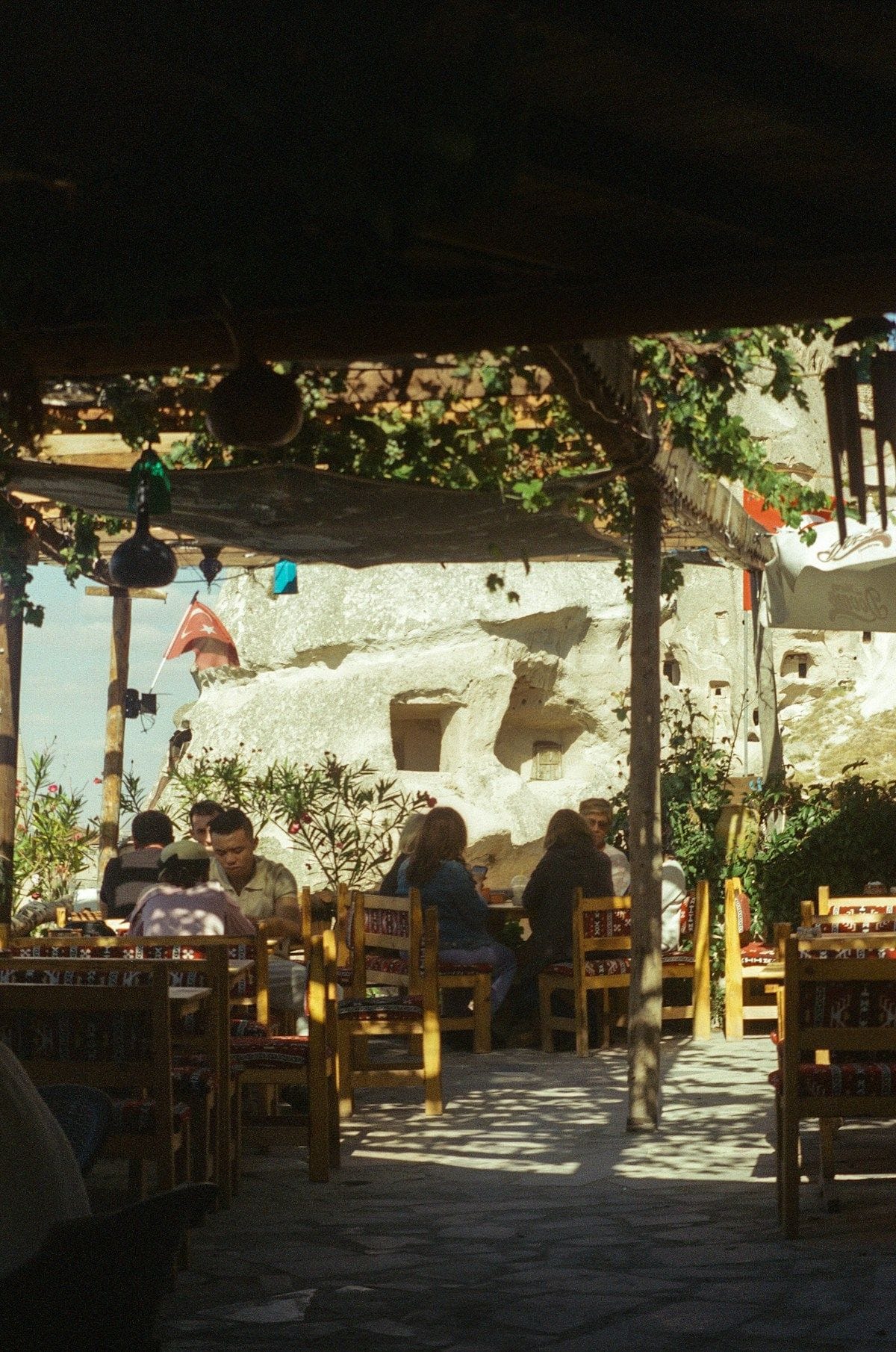
Cave dining — eating inside carved volcanic rock chambers — is a genuine Cappadocia experience. The caves maintain consistent temperatures of around 13-18C year-round, making them naturally insulated against both the summer heat (up to 35-38C outside) and the cold winters (-10C or below). The food tastes differently in a cave not because of atmosphere but because the temperature is consistent and the humidity is controlled.
Goreme has the highest concentration of cave restaurants. Urgup’s options tend to be slightly more expensive and more polished, with better wine lists reflecting the wealthier tourist base that stays there. For budget eating, the lokantas along Goreme’s main street serve tarhana soup, manti, and kebabs for TRY 150-300 per person. For specific cave restaurant recommendations by price range, see our Cappadocia food guide.
Cappadocia’s Food Culture in Context
The food of Cappadocia is inseparable from the landscape. The region sits at altitude (around 1,000m in the valley floors) with a dry, continental climate: summers climb to 35-38C, winters drop to -10C or below. The food reflects this — hearty, warming, built for a landscape with real seasons. The same volcanic soil that produces the fairy chimneys gives the wine its mineral character and the grazing land its particular flavour.
Cappadocian cuisine is Central Anatolian at its core: peasant food developed for high-altitude winters, built from stored grains, dried vegetables, cured meats, and slow-cooked lamb. The testi kebabi is the most theatrical expression of this tradition, but the manti, tarhana soup, and pastirma are equally authentic. The wine industry adds a layer that distinguishes Cappadocia from the rest of Central Anatolia — this is one of the few parts of Turkey where wine culture and food culture are genuinely integrated rather than parallel.
The pottery from Avanos is not merely decorative. The clay vessels that have been made in this valley since Hittite times are functional — used for water storage, for cooking, and specifically for the testi kebabi that defines the region’s cuisine. The dish and the craft are the same tradition.