The best dishes to try in Gaziantep are pistachio baklava, katmer, beyran soup, Antep lahmacun, fresh Antep pistachios, Antep cheese, sücük sausage and isot pepper. UNESCO named the city a Creative City of Gastronomy in 2015, and these eight foods show why. Prices below are approximate, as of 2026.
Gaziantep sits on old Silk Road routes close to the pistachio belt, and its cooking draws on Turkish, Arab and Armenian traditions. We have ordered the list by when you are likely to eat each item, starting with breakfast. For the wider context, see our Gaziantep food guide and the full Gaziantep city guide.
1. Beyran: the breakfast soup
Beyran is lamb shank cooked overnight until the meat falls from the bone, then served in its broth over rice and finished with garlic, butter and dried chilli. It is intensely savoury and spicy, and it is eaten between about 06:00 and 11:00. Expect to pay roughly ₺150-220 a bowl as of 2026.
Local tip: arrive before 09:00. Beyran restaurants typically sell out by mid-morning, and the later you come the more likely the pot is empty.
2. Katmer: pistachio and cream pastry
Katmer is a flaky pastry stretched paper-thin, filled with kaymak (clotted cream) and ground Antep pistachio, then cooked on a griddle until crisp outside and molten inside. It is a breakfast dish, served hot, and it does not improve with waiting. Specialist houses such as Çiğdem Pastanesi and Zekeriya Güllü are known for it. Budget roughly ₺100-180 per katmer as of 2026; some older sources quote less, so check the menu.
Local tip: eat it in the morning, ideally before about 10:00, when katmer houses are working at full speed.
3. Pistachio baklava
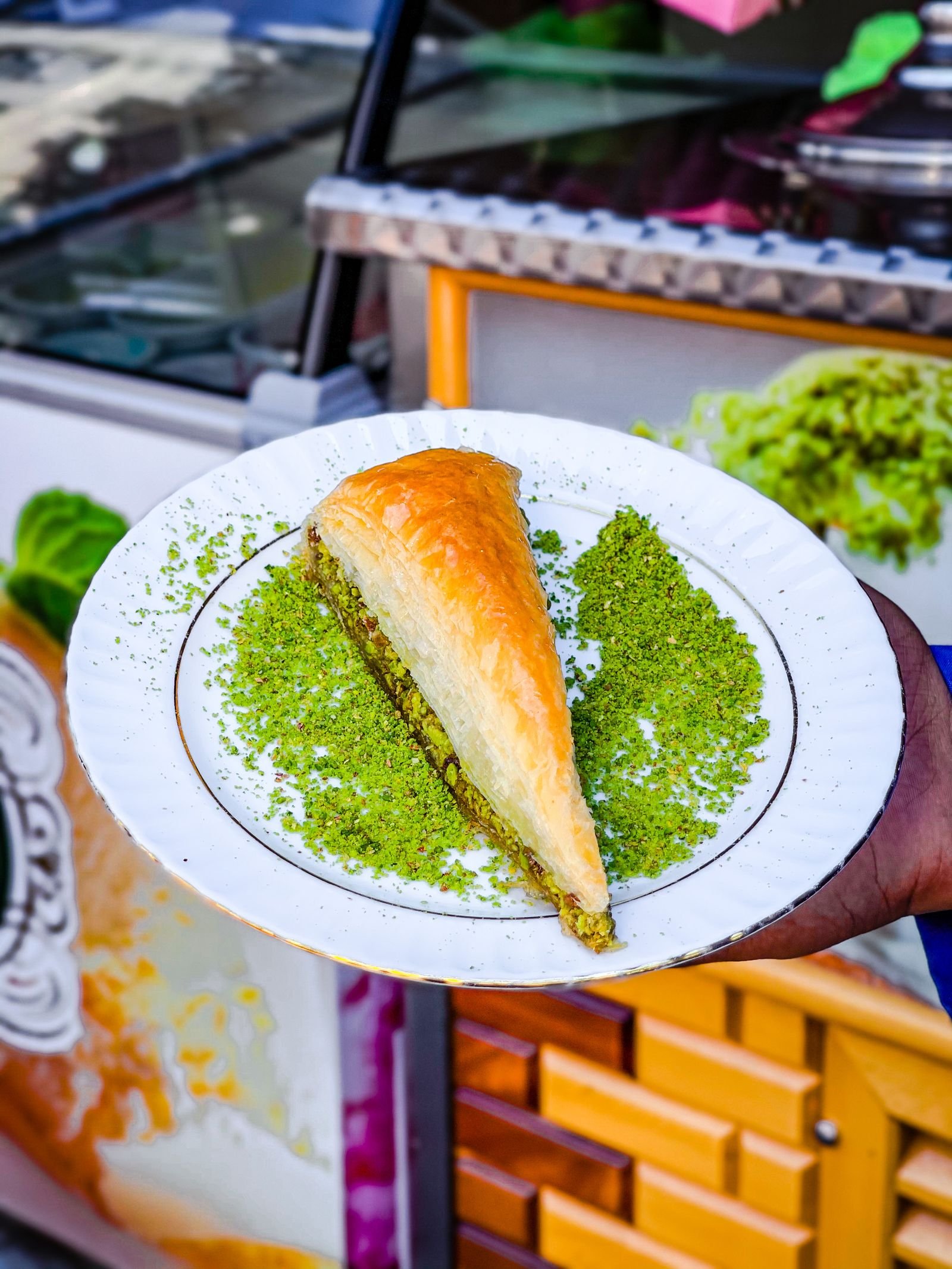
Authentic Antep baklava rests on three things: dough sheets pulled into 15 to 20 near-transparent layers, a filling of bright green Antep pistachio, and clarified sheep’s butter rather than vegetable shortening. The filling should be green without artificial colouring. Varieties include fıstıklı baklava (the reference), şöbiyet (cream-filled), burma (twisted rolls) and saray burma. Quality baklava costs about ₺400-800 per kilo as of 2026.
Local tip: baklava makers bake from roughly 03:00 to 05:00, so morning counters have the freshest trays. Buy by weight and taste before committing to a kilo.
4. Lahmacun, Antep style
Gaziantep lahmacun is thinner and crisper than the Istanbul version. The lamb topping is more heavily spiced with red pepper, pomegranate molasses, local herbs and isot pepper. Roll it around fresh parsley, squeeze lemon over it and eat it as a cylinder. Dedicated lahmacun restaurants charge roughly ₺30-60 each as of 2026, so it is the cheapest dish on this list.
5. Antep pistachios (fıstık)
The Antep pistachio is smaller, greener and more complex in flavour than the pale commercial varieties sold elsewhere. It is the foundation of the local sweet tradition, used in baklava, katmer, pistachio kebab (fıstıklı kebap) and pistachio paste. Harvest runs from September to October, when prices drop to their yearly low: roughly ₺200-350 per kilo for fresh nuts and ₺300-500 per kilo for roasted salted ones as of 2026.
Local tip: buy from bazaar nut shops, ask for the per-kilo price, and taste before you buy. Skip pre-packaged pistachio products sold away from the city.
6. Antep cheese (Antep peyniri)
This white brine cheese is firmer and slightly more acidic than standard beyaz peynir, and it is aged in brine for several months. It is a good picnic item and works well alongside bread, olives and tomatoes at breakfast. Expect roughly ₺200-350 per kilo from the city’s cheese shops and markets as of 2026.
7. Sücük: spiced dried sausage
Gaziantep’s sücük is made from lamb and a local pepper blend that includes isot. Many Turkish food writers rate it among the best in the country. Butcher shops (kasap) and the stalls near the old bazaar sell it for roughly ₺200-400 per kilo as of 2026. It travels well, so it is one of the more practical edible souvenirs.
8. Isot pepper
Isot is the dark red-brown dried pepper of the Gaziantep and Urfa region. It is slowly sun-dried, which produces a smoky, slightly sweet, moderately hot flavour that bright-red Turkish chilli flakes do not have. It appears in lahmacun, kebab marinades and beyran, and it is sold as dried pepper (about ₺80-200 per kilo as of 2026) or flakes at market stalls. It is the most useful spice to bring home.
How to eat your way through the city
The city rewards slow, repeated eating rather than one big meal. Many visitors plan around the sofra tradition, a shared multi-dish table that starts with mezes such as muhammara and hummus, moves to soup and a kebab, and ends with baklava. A full sofra takes two to three hours, so build it into an evening rather than squeezing it in between sights.
A sensible one-day order is beyran at 08:00, katmer or a second breakfast stop, lahmacun for lunch, a walk through the spice market for isot, sücük and cheese, then baklava in the afternoon. If you would rather have a guide, book a Gaziantep food tour to reach the places residents actually use. For sit-down options, see our best restaurants in Gaziantep, and for the history behind the food, read about the Armenian culinary heritage that shaped it.
Vegetarian travellers can still eat well here: our vegan food in Gaziantep guide covers mezes, pistachio sweets and what to ask for. Because the city is also the gateway to Göbekli Tepe and Şanlıurfa, many visitors combine both on a 3 to 4 day trip. Search hotels in Gaziantep on Booking.com, and note that UNESCO’s Creative Cities Network lists Gaziantep as a Gastronomy city.