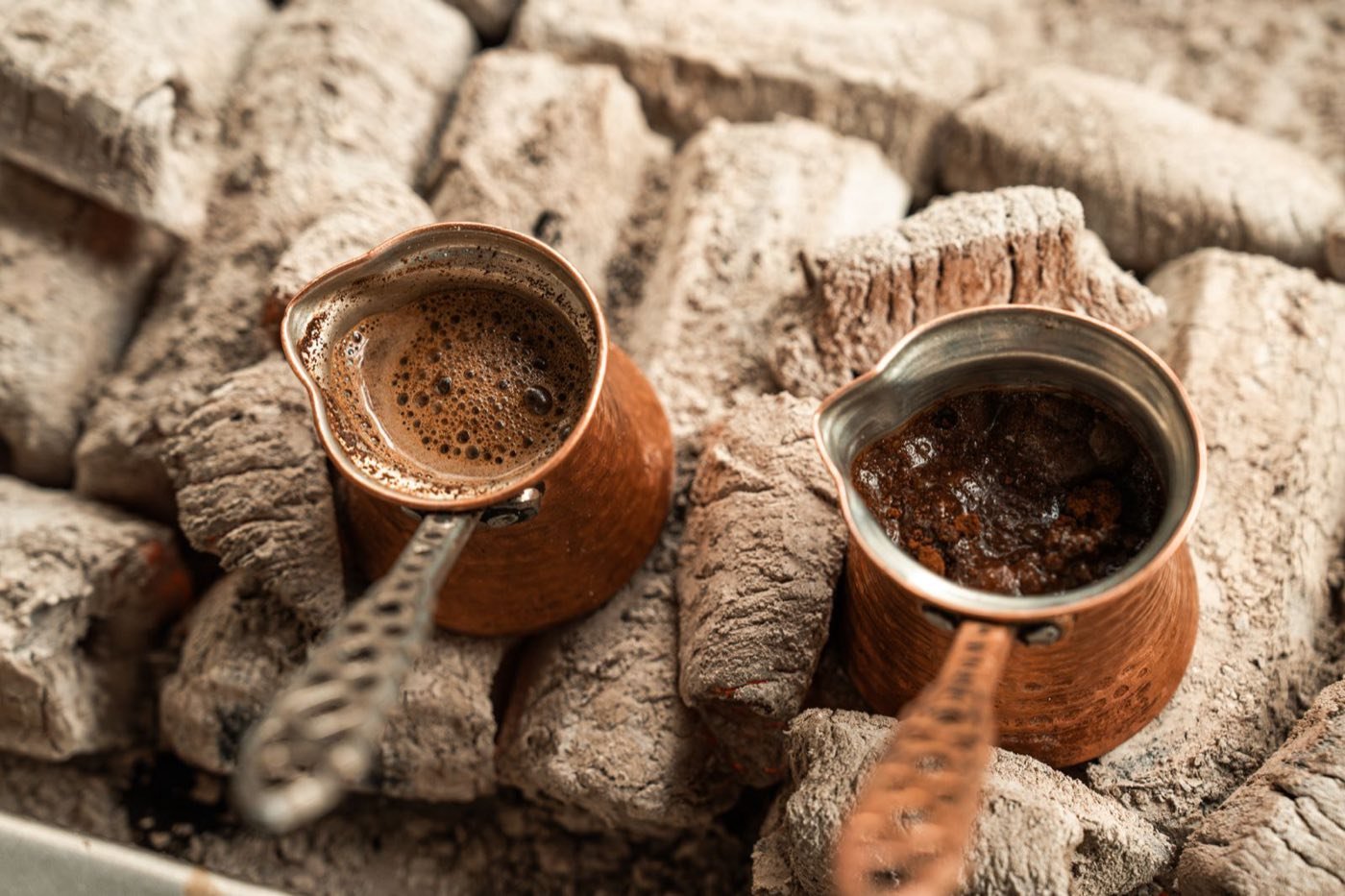
Turkish coffee (Türk kahvesi) is finely ground coffee simmered, never filtered, in a small long-handled pot called a cezve and served in a small cup with the grounds still in it. UNESCO inscribed the tradition on its intangible heritage list in 2013. In Turkey it is less a caffeine hit than a way to sit down with someone for twenty minutes. Prices below are approximate, as of 2026.
How Turkish Coffee Is Made
The grind is powder-fine, much finer than espresso. A cezve (traditionally copper, with a tin lining) takes one heaped teaspoon of coffee and one small cup of cold water per serving, plus sugar if wanted. Everything is stirred once, then heated slowly. The aim is a thick foam (köpük) on top. As the foam rises, the pot comes off the heat, and good makers repeat this two or three times without ever letting it boil hard.
Many traditional cafés still brew on a tray of hot sand, which gives even, gentle heat. In Gaziantep you will also find menengiç kahvesi, a caffeine-free drink made from roasted terebinth nuts, and in Mardin the bitter, cardamom-spiced mırra, served in tiny cups and refilled until you tilt the cup.
How to Order
Ask for “bir Türk kahvesi” and name the sweetness, because sugar goes in the pot:
- Sade: no sugar
- Az şekerli: a little sugar
- Orta: medium
- Şekerli: sweet
It arrives with a glass of water and often a piece of lokum (Turkish delight). Drink the water first to clear your palate. Let the cup rest for a minute so the grounds settle, then sip and stop before the sludge at the bottom. Do not stir. A sweet snack usually follows coffee rather than accompanies it, and a coffee order at the end of a meal is the normal way to close it.
Fortune Reading (Kahve Falı)
Turn the empty cup upside down onto the saucer, make a wish, and wait until the cup cools. The patterns left by the grounds are read by whoever at the table knows how, or by a professional reader in tourist-friendly cafés. Treat it as entertainment: a free reading is common at casual cafés, while dedicated fortune venues in Sultanahmet and Beyoğlu may charge extra.
Where to Drink Turkish Coffee in Istanbul
- Kurukahveci Mehmet Efendi, Eminönü. The roaster behind the famous shop near the Spice Bazaar has sold coffee since 1871. Buy a vacuum pack to take home; this is where locals buy theirs.
- Mandabatmaz, Beyoğlu. A tiny, long-running stand in Olivya Geçidi off İstiklal Avenue, known for thick coffee served in very small cups. Seating is limited, so expect to share a stool.
- Fazıl Bey’in Türk Kahvesi, Kadıköy. A traditional shop on the Asian side, a good stop when you are exploring Kadıköy’s markets. See our Kadıköy guide.
For wider cafe and restaurant ideas, see our best restaurants in Istanbul and Istanbul food guide. If you want the full tasting context, a guided Istanbul tour usually includes a coffee stop, and our Istanbul food tours page compares the main options. Staying near Karaköy or Galata keeps the best coffee within walking distance: browse Istanbul hotels.
Buying and Brewing at Home
Buy ground coffee labelled “Türk kahvesi”, which is milled to powder. Whole beans will not work unless you have a hand mill. A small cezve costs from about 150-400 TRY in bazaars as of 2026, and a hammered copper one is the usual souvenir. Check that the inside is tinned, not bare copper. Pack the coffee airtight and use it within a few weeks.
Coffee and Breakfast
Turkish coffee is a post-meal drink, not a morning one. The Turkish word for breakfast, kahvaltı, literally means “before coffee”. Read how the two fit together in our Turkish breakfast guide, and for the drink Turks actually consume all day, see our Turkish tea guide. For the wider eating picture, start with the Turkish food guide.