Istanbul is not a city where you eat in restaurants and call it done. It is a city where you eat on the street, in ferries, on bridges, in cramped basement meyhanes, in roof gardens with Bosphorus views, and in pastane shops that have been turning out the same borek recipe since the 1930s. The food here is layered, relentless, and often brilliant.
This guide covers the specific dishes, streets, and restaurants worth knowing before you arrive — with prices as of 2026 to help you plan.
The Karaköy Morning Ritual
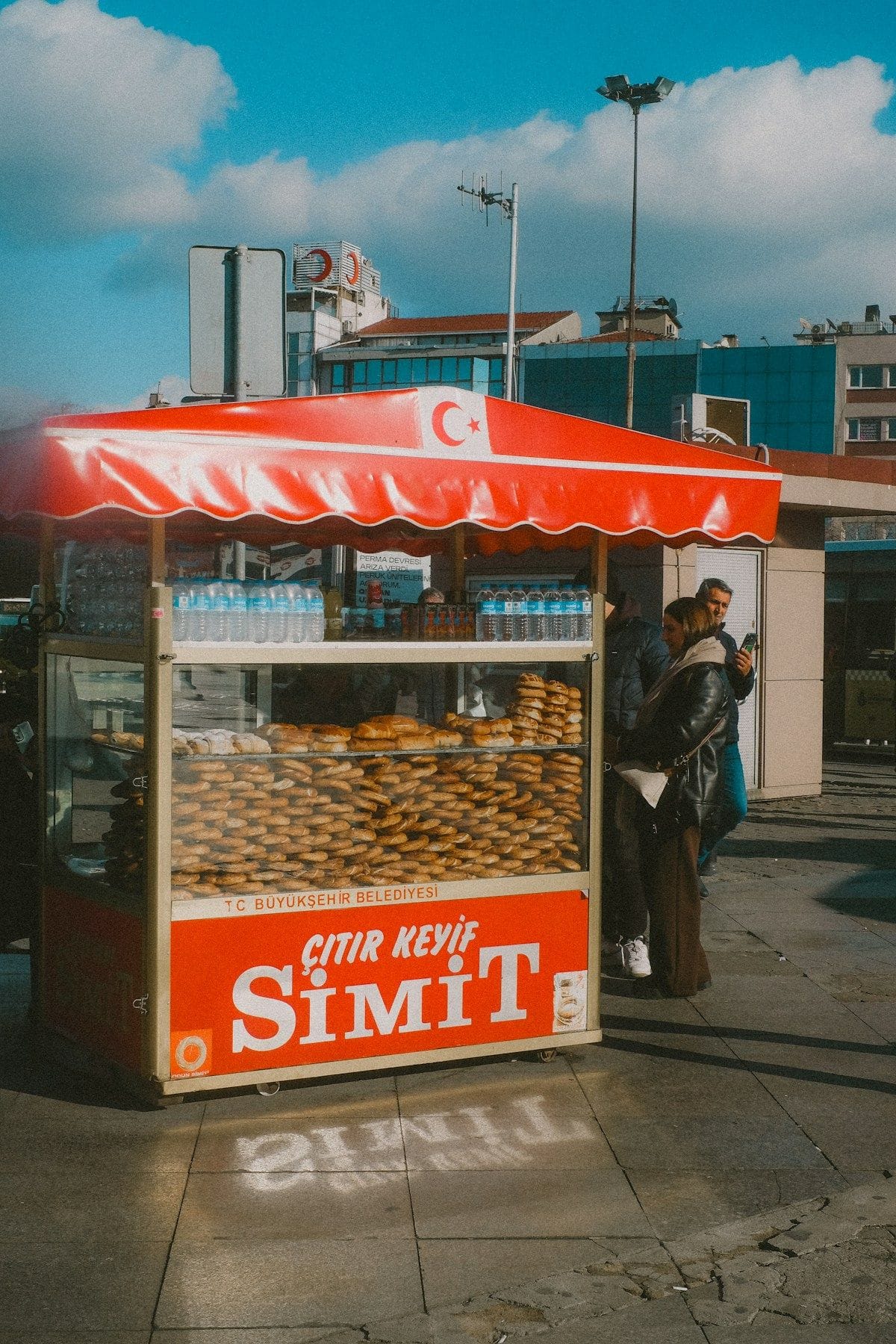
Start early in Karaköy. The neighbourhood on the southern bank of the Golden Horn runs entirely different before 9am than it does at noon. Bakeries pull fresh simit from their ovens from around 6am. The classic Istanbul simit is lighter and crispier than Ankara’s version — a sesame-coated ring of bread that costs TRY 15-25 from the red municipal carts stationed at most major intersections.
Poğaça is the other morning staple: a soft yeasted bun filled with potato, cheese, or olive paste, baked in rotation and eaten on the pavement while watching the ferry traffic. This is the correct Istanbul morning. Karaköy is the best neighbourhood to find both simit and poğaça at their freshest.
The Istanbul breakfast tradition extends well beyond the pastry shop. Turkish kahvaltı (breakfast spread) includes white cheese, olives, butter, honey, kaymak (clotted cream), tomatoes, cucumbers, menemen (scrambled eggs with tomato and pepper), and unlimited çay. It is a meal in itself, not a hospitality formality.
Fish Sandwiches by Galata Bridge
Balik ekmek — literally “fish bread” — is the iconic Istanbul street food. Several boats are permanently moored on the Eminonu side of the Galata Bridge, their grills running all day. The setup is theatrical: a cook in an apron stands at the stern, grilling mackerel fillets over open flame while the boat rocks gently. The fish goes into half a bread loaf with sliced onion, lettuce, and a squeeze of lemon.
The price has risen but it is still reasonable: TRY 100-150 per sandwich as of 2026. Eat it standing on the bridge with a view of the Bosphorus and the minarets of the Old City behind you. This is the most photographed food experience in Turkey for a reason.
The nearby Balik Pazari (Fish Market) in Karakoy runs parallel to the bridge. Buy direct from the fishermen’s stalls — whole sea bass (levrek), bream (cipura), and swordfish (kilic) in season — then have them cleaned and chilled to take back to your accommodation if you have kitchen access. Alternatively, the market restaurants grill to order; a whole sea bass for two costs TRY 500-700.
The Grand Bazaar Spice District
The Misir Carsisi (Spice Bazaar) near Eminonu is the main landmark, but the streets radiating out from it are where serious shoppers go. Hasircilar Caddesi and the surrounding lanes sell Turkish red pepper flakes (pul biber) in three heat levels, sumac, dried morels, candied chestnuts, and pistachio in bulk at prices significantly lower than tourist shops.
Look for Ucuzcular or any of the old-school spice merchants on the western side of the bazaar. A 100g bag of quality pul biber costs TRY 80-150; Turkish saffron from Safranbolu runs TRY 400-600 per gram, which is genuine value compared to what the same product costs elsewhere in Europe.
The Grand Bazaar itself (Kapali Carsi) has food stalls inside the covered lanes: lokum (Turkish delight) shops offering free samples of rose, pomegranate, and pistachio versions, and a handful of places selling fresh gözleme (stuffed flatbread cooked on a griddle, TRY 100-150). The bazaar is crowded and tourist-oriented, but the lokum here is legitimately good.
Meyhane Culture in Beyoglu
A meyhane is a Turkish tavern with meze, fish, raki, and live fasıl music (traditional Turkish chamber music). Beyoglu’s narrow side streets, particularly around Çiçek Pasajı and along Nevizade Sokak, are lined with them shoulder-to-shoulder.
The meyhane format is specific: the meal begins with a cold meze tray carrying forty or more options — fish roe spread (tarama), white bean salad, marinated octopus, fried mussels, braised wild greens — served family-style and eaten slowly. The main course, typically grilled fish or braised lamb, follows. Raki (Turkey’s anise spirit, diluted with water and turned cloudy white) runs throughout the meal.
Hamsi (Black Sea anchovy) is the ingredient meyhane culture revolves around in autumn and winter. When in season, the anchovies arrive so small they are fried whole and eaten by the handful. Out of season, the meyhane shifts to black sea sea bass, bluefish, and mackerel depending on what the boats bring in.
The meyhane dinner typically starts at 8pm and runs until midnight or later. Nobody is in a hurry. Budget TRY 500-1,000 per person with raki; Beyoglu venues at the lower end of the strip, Kadıköy meyhanes slightly less.
Modern Anatolian Cuisine
The most significant development in Istanbul’s food scene over the past two decades is the emergence of modern Anatolian cooking: chefs building menus from regional Turkish ingredients — dried Antep chiles, Aegean capers, Black Sea corn, Cappadocian wines — treated with contemporary technique. This movement reframes Turkish food not as a supporting cuisine to Ottoman palace cooking but as a serious contemporary tradition in its own right.
The movement draws on the same agricultural diversity that defines regional Turkish cooking: each of Turkey’s eight climatic zones produces distinct ingredients, and Istanbul is the city where those ingredients converge. For specific restaurant recommendations in this style, see our best restaurants in Istanbul guide.
The Bosphorus itself remains one of the defining food experiences — not in the expensive waterfront restaurants, but on the ferry between Eminönü and Kadıköy (TRY 25-30, 25 minutes). Tea, simit, and the view of the Old City peninsula form a meal in their own right.
Kadikoy: The Asian Side Food Scene
Kadikoy on the Asian shore has a different energy to Beyoglu: younger, less touristy, and with a stronger local food culture. The Kadikoy Produce Market (Günesli Bahce Sokak) is one of the best in the city — seasonal fruit, vegetables, spices, fresh cheeses, and pickles from small producers, all priced for neighbourhood shoppers rather than tourists.
The food culture here is built around lokanta dining — the Turkish equivalent of a neighbourhood canteen, where a daily rotating menu of braised meats, stewed vegetables, lentil soups, and stuffed dishes is laid out at noon. The lokanta is the format through which Ottoman and Anatolian recipes survive in everyday urban life. A full lokanta lunch (soup, main, salad, bread) costs TRY 200-350 in Kadıköy.
Kadikoy meyhanes are younger and less famous than their Beyoglu counterparts but often better value. The strip around Kadife Sokak and Moda Caddesi runs busiest on Friday and Saturday evenings, with live fasıl music from 9pm.
Sweets and Pastry Traditions
Istanbul’s pastry culture draws on Ottoman imperial traditions and layers in influences from across the former empire — Gaziantep pistachio baklava, Kayseri sutlaç, Black Sea hazelnut lokum. These are not tourist confections but a living daily tradition, sold at pastane shops that have been operating the same recipes for generations.
Baklava is the flagship sweet, and there is a genuine quality difference between baklava made with Antep pistachios flown in fresh and the generic nut-filled versions sold near tourist sites. The Antep pistachio has a different colour — almost green — and a roasted flavour that survives the clarified butter-soaked pastry.
Lokum (Turkish delight) at its best is nothing like the airport gift-shop versions. The traditional pastane produce rose, mastic, pomegranate, and plain versions using natural flavourings and proper Turkish starch; the texture is firm but yielding. Look for it near the Spice Bazaar rather than in Grand Bazaar tourist stalls.
Sütlaç (baked rice pudding) and kazandibi (caramelised milk pudding) represent the Ottoman pudding tradition. Both are eaten cold, sold by the portion at muhallebici (milk pudding shops) throughout the city, and cost TRY 80-150 per serving. Underrated and genuinely excellent.
Understanding Istanbul’s Food Geography
Istanbul’s food is inseparable from its geography. The city straddles two continents and two seas, and its food traditions reflect this: Anatolian grain and meat traditions from the Asian interior, Mediterranean olive oil and seafood from the Aegean coast, Balkan and Caucasian influences absorbed over five centuries of empire. No other city in Turkey has this depth of culinary layering.
The food also maps to neighbourhoods. Karaköy and Eminönü are street food and market districts. Beyoglu is where meyhane culture concentrated under Ottoman rule and where modern restaurants cluster today. Kadıköy on the Asian shore remains the city’s most local food neighbourhood. Beşiktaş and Arnavutköy have the Bosphorus fish restaurants. Understanding this geography makes navigating Istanbul’s food scene considerably easier.
For specific restaurant recommendations by neighbourhood and budget, see our best restaurants in Istanbul guide.