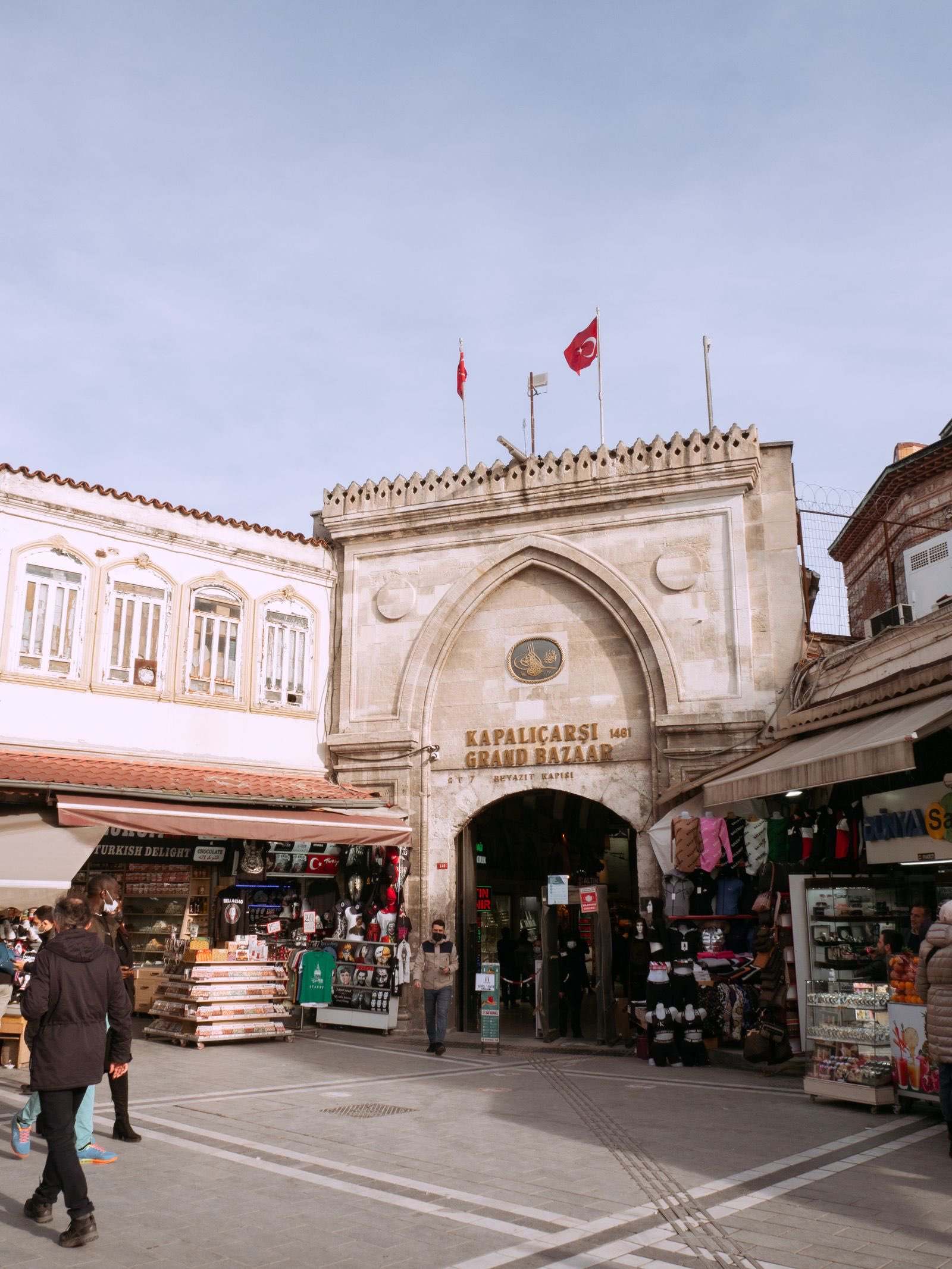
The Grand Bazaar (Kapalıçarşı, “the covered market”) is one of the oldest and largest covered markets in the world. Its core was built from the 1450s under Mehmed II, soon after the conquest of Constantinople, and it grew into a district of around 61 covered streets and more than 4,000 shops across roughly 30,700 square metres. Fires and an 1894 earthquake forced repeated rebuilding, which is why the vaulted halls look more uniform than their age suggests.
Entry is free, there is no dress code, and you can reach it on foot from Sultanahmet in about 10 minutes. It is loud, busy and easy to lose your bearings in, which is part of the appeal. For official visitor information, see Go Türkiye.
Opening Hours (as of 2026)
The bazaar is open Monday to Saturday, roughly 09:00 to 19:00, with some sources giving 08:30 as the start. It is closed on Sundays and on the first days of the religious holidays. Hours are set by the shopkeepers’ association, and individual stalls open and close a little either side. For a quieter walk, arrive at opening on a weekday. Saturdays and the hours after cruise-ship arrivals are the busiest.
The Gates
Around 20 gates lead in, and counts vary by source because some are minor side entrances. The ones you are most likely to use are:
- Beyazıt Gate (Beyazıt Kapısı): the main entrance from Beyazıt Square, marked with a large Kapalıçarşı sign. Closest to the T1 tram.
- Nuruosmaniye Gate: on the Sultanahmet side, past the Nuruosmaniye Mosque, a 10-minute walk from Hagia Sophia.
- Mahmutpaşa Gate: from the street of the same name running down toward the Spice Bazaar.
Layout and What to Look For
The bazaar is organised by trade, and the streets still carry guild names. The Old Bedesten (İç Bedesten) at the centre is the oldest part, a stone-vaulted hall where antiques, silverware and older pieces are sold. Kalpakçılar Caddesi (Furriers’ Street) is the main spine of jewellery and gold shops. The outer lanes are where you find leather jackets, textiles, ceramics, lamps and carpets.
What we would actually buy:
- Ceramics: hand-painted İznik-style and Kütahya tiles and bowls. Look for a signature or workshop mark on the base.
- Textiles: Turkish cotton towels (peştemal), silk scarves and embroidered cushion covers.
- Lamps and glass: mosaic lanterns and evil-eye (nazar boncuğu) pieces, which are cheap and easy to pack.
- Carpets and kilims: buy only if you are ready for a long negotiation, ask where the rug was woven and be wary of any “antique” claim without documents.
- Turkish delight and spices: better value and quality at the Spice Bazaar in Eminönü.
Bargaining and Scams
Haggling is normal. Ask a price, counter with roughly half, and expect to land somewhere in between. Browse several shops for the same item first so you can judge the going rate, and remember the first price is a starting point, not an insult. Never agree to a price you would not be happy with, because it is hard to retract once tea is poured.
Common problems are mild but worth knowing. A friendly stranger offering to walk you to “the real bazaar” or a “closed today” tip is often steering you to a commission shop. Carpet sellers may keep you for tea before talking price, which is fine if you want a rug and a waste of time if you do not. Pickpockets work the crowded main lanes, so keep phones and wallets in front pockets.
How to Get There
The closest tram stop is Beyazıt-Kapalıçarşı on the T1, which drops you at the Beyazıt Gate. Çemberlitaş is the next stop toward Sultanahmet and is a short walk to the Nuruosmaniye side. From Eminönü ferry pier, it is a steep 15-minute uphill walk through the Mahmutpaşa quarter, which is a more interesting approach than the tram. The Istanbulkart covers the tram.
Planning Your Visit
Allow 1.5 to 2 hours for a first lap and longer if you plan to buy. Pair it with Hagia Sophia and the Blue Mosque in the morning, then shop after lunch. If you would rather not navigate alone, a guided bazaar and Old City tour takes the stress out of the maze and gives you a baseline for fair prices. Our best tours in Istanbul guide lists the main options, and the Istanbul things to do guide has more context.
Practical Tips
- Carry small notes in lira. Many shops take cards, but you gain more room to bargain with cash.
- Ask for the total price in writing before agreeing on anything that needs shipping.
- Ask before you photograph a stallholder or their goods.
- Take a mental note of your gate, or save it on a map, since the lanes all look alike after twenty minutes.