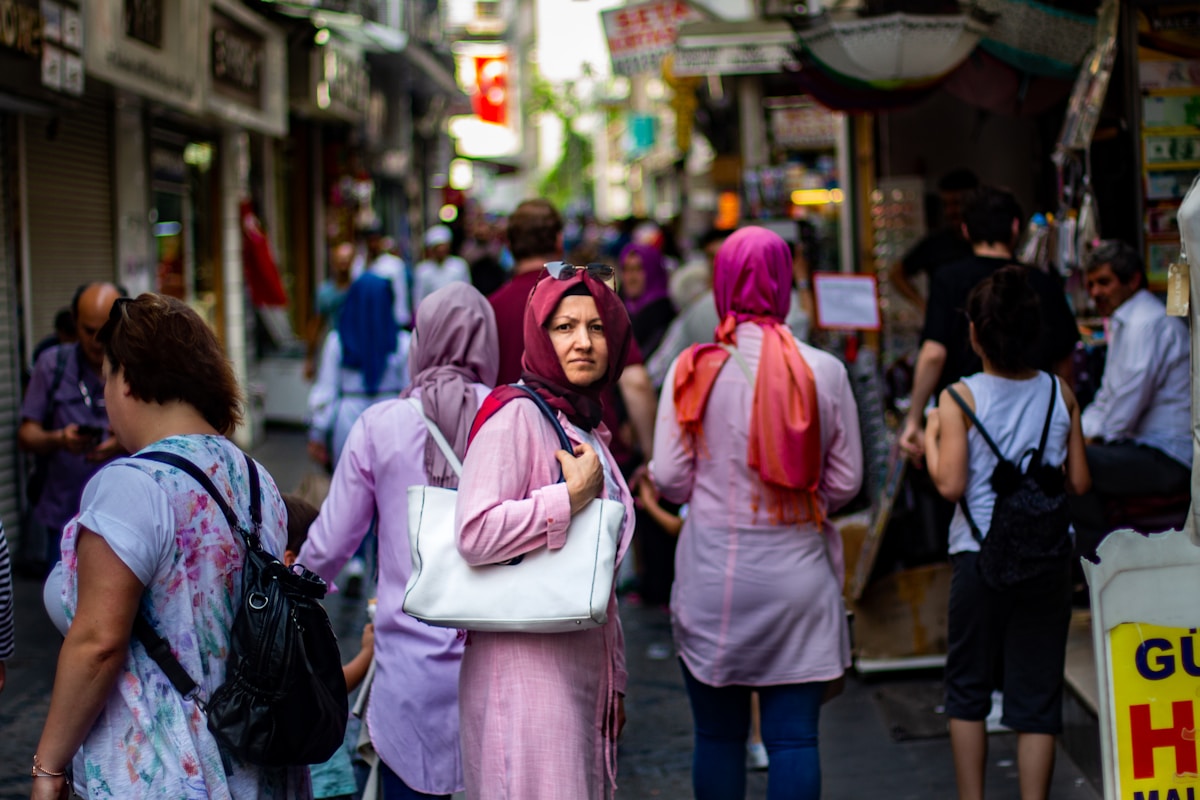
Turkey spans a large geographic area and has a wider range of climates and cultural contexts than most visitors expect. What works in Bodrum in July is wrong for a mosque visit in Konya, and what works for a Cappadocia October morning is very different from an August afternoon. This packing guide organises by context rather than by item type - it’s more useful that way.
Mosque Dress Code
This is the most important packing consideration for Turkey and the one most often underestimated.
For women:
- Head: carry a lightweight scarf - a large bandana or pashmina works - to cover your hair before entering a mosque. You’ll need it at the entrance; attendants sometimes provide loaner scarves but they’re often poor quality.
- Shoulders: covered. A short-sleeved top is usually fine if it covers the shoulders fully; a shawl over a sleeveless top also works.
- Knees: covered. Long trousers or a skirt to the knee minimum. Leggings are generally acceptable.
For men:
- Trousers: must cover the knees. Shorts are not permitted inside mosques. Carry a long pair even if you’re visiting in summer.
- Shoes: removed at the entrance. Slip-on shoes or sandals are more convenient than laced boots.
Specific mosque notes:
- Hagia Sophia (Sultanahmet, Istanbul): now an active mosque. Dress code is strictly enforced at the entrance. Scarves and wraps are available to borrow at the door but queues form in summer. Bring your own.
- Blue Mosque (Sultan Ahmed Camii, Istanbul): same rules. Free entry; the outer courtyard is accessible without covering but the prayer hall requires full dress code.
- Süleymaniye Mosque (Istanbul): slightly less crowded than the Blue Mosque, equally strict on dress. The mosque attendants are thorough.
- Konya (Mevlana Museum/Mosque): Konya is one of Turkey’s most religiously conservative cities. Modest dress is advisable throughout the city centre, not just inside religious sites.
Seasonal Packing
Turkey’s climate varies significantly by region and season.
Spring (March–May)
Istanbul and the northwest can be cool and wet - pack a light waterproof jacket and layers. The Aegean coast is mild and pleasant (18–24°C). Cappadocia mornings can be cold (5–10°C), especially for hot air balloon flights at dawn. Bring a mid-layer.
Key items: light waterproof, layers, long trousers, comfortable walking shoes.
Summer (June–August)
Coastal Turkey (Bodrum, Antalya, Fethiye) is hot and dry, consistently 30–38°C. Istanbul is warm (25–32°C) with humidity. Cappadocia plateaus at 28–32°C during the day.
Key items: lightweight breathable clothing (linen or cotton), wide-brim sun hat, high-SPF sunscreen (50+ for the Mediterranean coast), reef-safe sunscreen for the Aegean and Mediterranean sea, sandals, sunglasses with UV protection. Light layers for air-conditioned transport and restaurants, which are heavily cooled.
Autumn (September–November)
Excellent travel weather. The Aegean coast stays warm into October. Istanbul cools gradually. The Lycian Way is ideal in October and November.
Key items: layers, light jacket, one pair of trousers, trail shoes if hiking.
Winter (December–February)
Istanbul is grey and wet (5–10°C). Eastern Turkey (Erzurum, Kars, Van) can be -15°C with heavy snow. The Mediterranean coast (Antalya, Alanya) stays mild at 12–17°C.
Key items: warm coat, thermal underlayers for eastern Turkey, waterproof boots for Istanbul.
Conservative Areas vs Coastal Resorts
Turkey’s dress norms vary considerably by region.
Coastal resorts (Bodrum, Antalya, Marmaris, Ölüdeniz): International summer resort standards apply. Swimwear on the beach, shorts and casual clothing in town. No adjustments needed.
Istanbul: Cosmopolitan and tolerant. You’ll see every style of dress in Beyoğlu and Beşiktaş. In the old city (Sultanahmet, Fatih), more modest dress is simply more appropriate and comfortable - you’ll be visiting mosques.
Cappadocia: Rural and relaxed. No strict requirements, but covering up in village centres (Göreme, Ürgüp) is respectful.
Konya: Turkey’s most conservative major city. Long sleeves and long trousers or skirts are strongly advisable throughout the city, not just at the Mevlana Museum.
Gaziantep, Şanlıurfa, Mardin: Southeastern Turkey is culturally conservative. Women should cover shoulders and knees in the city centre. A headscarf is not required but will attract less attention in market areas.
Practical Essentials
Power adapter: Type F (European round two-pin, 230V). Essential if coming from the UK, US, Canada, or Australia.
Cash: Turkey is largely card-accepting in tourist areas but cash is needed for bazaar shopping, minibuses (dolmuş), small restaurants, and tipping. Carry Turkish lira; withdrawing from a bank ATM on arrival is better value than airport exchange desks.
Sunscreen: High-SPF sun protection is important and cheaper in Turkey than in many Western countries - but if you’re heading to the Aegean or Mediterranean coast, reef-safe sunscreen is worth the extra cost.
Prescription medication: Bring enough for your trip plus a few days extra. Carry it in original packaging with a doctor’s note if it’s a controlled substance. Turkish customs can be strict with medication not clearly labelled.
Travel documents: Print your e-Visa confirmation and any hotel bookings. Turkish border control sometimes asks to see these. Digital copies on your phone are fine as backup but a printed copy avoids any phone battery/network issues at the border.
Hiking Essentials (Lycian Way and Cappadocia)
If you’re planning to walk any section of the Lycian Way or explore the valleys around Göreme and Ihlara, pack accordingly:
- Footwear: trail shoes or lightweight hiking boots (not sandals - the terrain is sharp limestone in places)
- Water capacity: 3L minimum for sections between villages on the Lycian Way; springs are marked on the Lykia Yolu app but are seasonal
- Sun protection: hat, sunscreen, long-sleeve light shirt for exposed ridgeline sections
- Trekking poles: useful on steep descents (particularly the Ölüdeniz to Kabak section)
- Emergency bivouac layer: even in summer, coastal Lycian Way nights cool quickly
What Not to Bring
Excessive jewellery or visible luxury items. Pickpocketing exists in Istanbul’s tourist-dense areas (Grand Bazaar, Istiklal Avenue). There’s no need to wear watches or jewellery that would make you a target.
Very revealing clothing for inland or southeastern cities. Not a legal issue - but it draws attention and makes your own experience less comfortable.
Checked luggage if only doing Istanbul. Istanbul is a walking city and the metro is efficient. A carry-on sized bag is genuinely easier, especially navigating the Grand Bazaar area or old-city cobblestones.
Luggage for Turkish Airlines Connections
If you’re taking a domestic Turkish Airlines connection (e.g. Istanbul to Kayseri for Cappadocia, or Istanbul to Dalaman for the Lycian Way), carry-on allowance on domestic economy is typically 8kg plus one personal item. Checked baggage allowance depends on your fare class - always verify before check-in. Pegasus, the main budget carrier, charges for checked bags regardless of fare class.
Related guides: Turkey travel costs · Tipping and etiquette · Best time to visit Turkey · Lycian Way hiking guide · Turkey visa guide
Trip essentials: An eSIM for Turkey is worth adding to your packing checklist - activate before departure and you have data from the moment you land. Travel insurance covering medical costs should be sorted before you fly.
Plan Your Trip
✈️ Book your flights to Türkiye 🛡️ Get travel insurance 📱 Stay connected with an eSIM 🚗 Rent a car