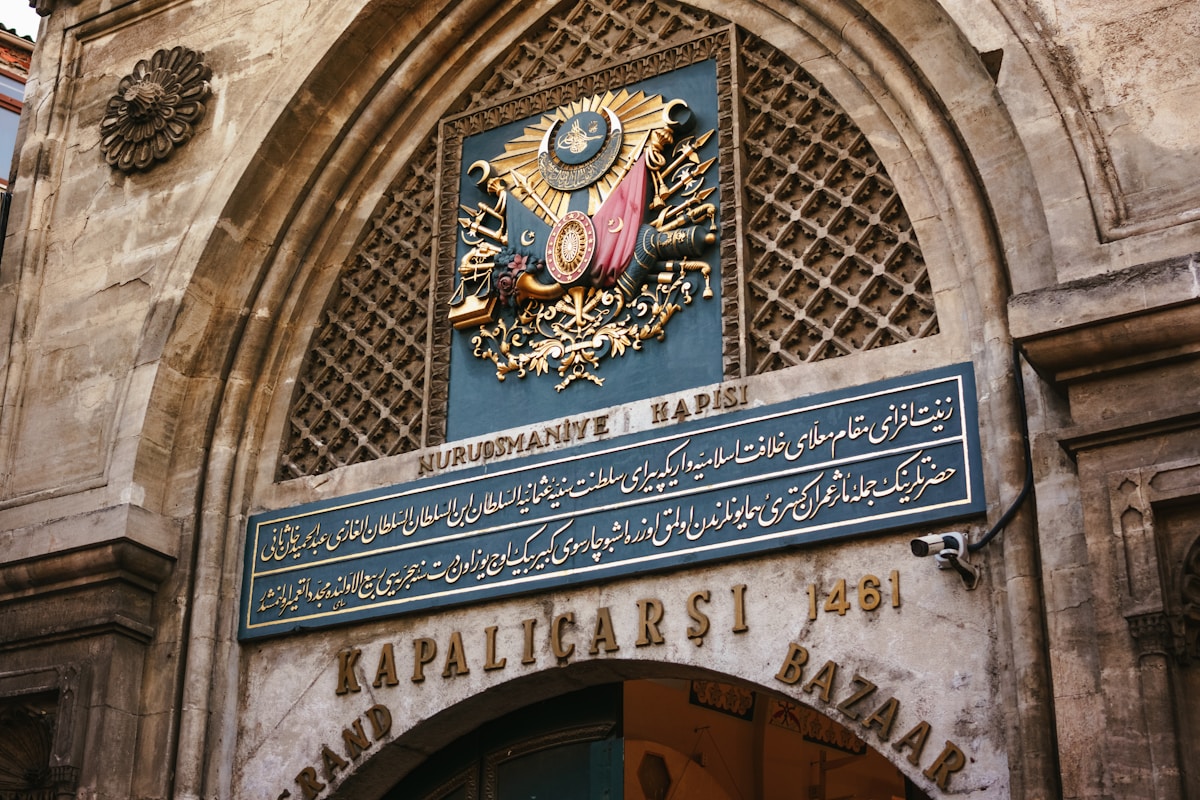
Turkish is the sole official language of Türkiye, spoken natively by around 85 million people. It belongs to the Turkic language family - the same branch as Uzbek, Kazakh and Azerbaijani - and is entirely unrelated to Arabic, Persian or any European language. That means no shortcuts from knowing French or Spanish, but also no reason to be intimidated: Turkish uses a familiar Latin alphabet and every letter makes exactly one sound.
English is widely spoken in Istanbul’s tourist districts, the Aegean and Mediterranean resort towns, and Cappadocia. Hotel staff, restaurant owners on tourist streets, and tour guides will almost always manage in English. Step inland - Konya, Gaziantep, Mardin, the Black Sea coast - and English becomes rare. A handful of practised phrases will open doors that staying silent cannot.
The Turkish Alphabet and Script
Until 1928, Turkish was written in an Ottoman Arabic script that was difficult to learn and poorly suited to Turkish sounds. Atatürk replaced it overnight with a reformed Latin alphabet as part of a broader modernisation drive. The result is one of the most phonetically logical writing systems in use today: 29 letters, no silent letters, no ambiguous vowel sounds. If you can read the letters, you can pronounce any Turkish word correctly - even if you don’t know what it means.
The six letters that differ from the English alphabet are the ones worth learning:
| Letter | Sounds like | Example |
|---|---|---|
| ç | ”ch” in church | çay (CHAI) = tea |
| ş | ”sh” in ship | şehir (she-HEER) = city |
| ğ | Silent; lengthens the vowel before it | dağ (DAH) = mountain |
| ı (undotted) | “uh” - like the sound in about | ışık (uh-SHUK) = light |
| ö | Like “ur” in nurse, lips rounded | köy (KOY) = village |
| ü | Like “ew” in few, lips rounded | üç (EWCH) = three |
Stress pattern: Turkish stress usually falls on the last syllable of a word, though place names often stress the first. When in doubt, say it evenly across syllables and you will usually be understood.
Vowel harmony: Turkish vowels follow a harmony rule - front vowels (e, i, ö, ü) cluster together, back vowels (a, ı, o, u) cluster together. This affects suffixes, but for travellers the main effect is that Turkish words sound unusually musical and rhythmic.
Greetings and Basics
| English | Turkish | Pronunciation |
|---|---|---|
| Hello | Merhaba | mer-HA-ba |
| Good morning | Günaydın | gew-nay-DIN |
| Good evening | İyi akşamlar | i-yi ak-SHAM-lar |
| Goodbye | Hoşça kalın | hosh-CHA ka-LIN |
| Please | Lütfen | LEWT-fen |
| Thank you | Teşekkür ederim | te-shek-KOOR e-de-RIM |
| You’re welcome | Rica ederim | ri-JA e-de-RIM |
| Yes | Evet | e-VET |
| No | Hayır | ha-YIR |
| Excuse me / Pardon | Afedersiniz | af-e-der-si-NIZ |
| Sorry | Özür dilerim | o-ZEWR di-le-RIM |
| How are you? | Nasılsınız? | na-sul-su-NIZ |
| I’m fine, thanks | İyiyim, teşekkür ederim | i-yi-yim, te-shek-KOOR |
| Do you speak English? | İngilizce biliyor musunuz? | in-gi-liz-JE bi-li-YOR mu-su-NUZ |
| I don’t understand | Anlamıyorum | an-la-mi-yo-RUM |
| Please speak slowly | Yavaş konuşur musunuz? | ya-VASH ko-nu-SHUR mu-su-NUZ |
Tip: offline Google Translate still needs data for voice mode, so an eSIM for Turkey activated before you land saves you hunting for a SIM shop.
Getting Around
| English | Turkish | Pronunciation |
|---|---|---|
| Where is…? | …nerede? | ne-RE-de |
| How do I get to…? | …nasıl giderim? | na-SUL gi-de-RIM |
| Left | Sol | SOL |
| Right | Sağ | SAH |
| Straight ahead | Düz gidin | DEWZ gi-DIN |
| Stop here | Burada durun | bu-RA-da du-RUN |
| How much is it? | Ne kadar? | ne ka-DAR |
| Taxi | Taksi | TAK-si |
| Bus station | Otogar | o-to-GAR |
| Airport | Havalimanı | ha-va-li-ma-NI |
| Train station | Tren garı | tren GA-ri |
| Minibus (shared) | Dolmuş | dol-MUSH |
| Ferry | Feribot | fe-ri-BOT |
| Ticket | Bilet | bi-LET |
| One ticket to… please | …için bir bilet lütfen | i-CHIN bir bi-LET lewt-fen |
Accommodation
| English | Turkish | Pronunciation |
|---|---|---|
| Hotel | Otel | o-TEL |
| Do you have a room? | Oda var mı? | o-DA var MI |
| How much per night? | Geceliği ne kadar? | ge-je-LI-i ne ka-DAR |
| Breakfast included? | Kahvaltı dahil mi? | kah-val-TI da-HIL mi |
| WiFi password? | WiFi şifresi nedir? | wi-fi shi-fre-SI ne-DIR |
| Can I check out late? | Geç çıkış yapabilir miyim? | GECH chi-KISH ya-pa-bi-LIR mi-yim |
| My room needs cleaning | Odamın temizlenmesi gerek | o-da-MIN te-miz-len-me-SI ge-REK |
| The air conditioning is broken | Klima bozuk | kli-MA bo-ZUK |
| I have a reservation | Rezervasyonum var | re-zer-vas-yo-NUM var |
Food and Dining
| English | Turkish | Pronunciation |
|---|---|---|
| The menu, please | Menü, lütfen | me-NEW lewt-fen |
| The bill, please | Hesap, lütfen | he-SAP lewt-fen |
| Water | Su | SOO |
| Tap water | Musluk suyu | mus-LUK su-YU |
| Tea | Çay | CHAI |
| Coffee | Kahve | KAH-ve |
| Bread | Ekmek | ek-MEK |
| Delicious! | Çok güzel! | chok gew-ZEL |
| It was delicious | Çok lezzetliydi | chok lez-zet-li-YDI |
| Bon appétit (to others) | Afiyet olsun | a-fi-yet ol-SUN |
| Health to your hands (to the cook) | Elinize sağlık | e-li-ni-ZE sa-LIK |
| Cheers! | Şerefe! | she-re-FE |
| I am vegetarian | Ben vejeteryenim | ben ve-je-ter-YE-nim |
| No meat, please | Etsiz, lütfen | et-SIZ lewt-fen |
| Is this spicy? | Bu acı mı? | BOO a-JI mi |
| Not spicy, please | Acısız, lütfen | a-ji-SIZ lewt-fen |
| I am allergic to… | …alerjim var | a-LER-jim var |
Shopping and Bargaining
| English | Turkish | Pronunciation |
|---|---|---|
| How much? | Ne kadar? | ne ka-DAR |
| Too expensive | Çok pahalı | chok pa-ha-LI |
| Can you lower the price? | Fiyatı indirir misiniz? | fi-ya-TI in-di-RIR mi-si-NIZ |
| I’ll take it | Alıyorum | a-li-YO-rum |
| Do you have another colour? | Başka rengi var mı? | bash-KA ren-GI var MI |
| Cash or card? | Nakit mi kart mı? | na-KIT mi KART mi |
| Receipt, please | Fiş, lütfen | FISH lewt-fen |
Emergencies
| English | Turkish | Pronunciation |
|---|---|---|
| Help! | İmdat! | im-DAT |
| Fire! | Yangın! | yan-GIN |
| Thief! | Hırsız! | hir-SIZ |
| Police | Polis | po-LIS |
| Hospital | Hastane | has-ta-NE |
| Pharmacy | Eczane | ej-ZA-ne |
| I need a doctor | Doktora ihtiyacım var | dok-to-RA ih-ti-ya-JIM var |
| Call an ambulance | Ambulans çağırın | am-bu-LANS cha-gi-RIN |
| I’ve lost my passport | Pasaportumu kaybettim | pa-sa-por-tu-MU kai-bet-TIM |
| I’ve been robbed | Soyuldum | so-yul-DUM |
| I’m lost | Kayboldum | kai-bol-DUM |
| I’m not feeling well | Kendimi iyi hissetmiyorum | ken-di-mi i-yi his-set-mi-yo-RUM |
Emergency numbers: Police 155 · Ambulance 112 · Fire 110
Numbers 1–20
| Number | Turkish | Pronunciation |
|---|---|---|
| 1 | Bir | BEER |
| 2 | İki | i-KI |
| 3 | Üç | EWCH |
| 4 | Dört | DOORT |
| 5 | Beş | BESH |
| 6 | Altı | al-TI |
| 7 | Yedi | ye-DI |
| 8 | Sekiz | se-KIZ |
| 9 | Dokuz | do-KUZ |
| 10 | On | ON |
| 11 | On bir | on BEER |
| 12 | On iki | on i-KI |
| 20 | Yirmi | yir-MI |
| 50 | Elli | el-LI |
| 100 | Yüz | YEWZ |
| 1,000 | Bin | BIN |
Numbers combine logically: 25 is yirmi beş (twenty-five), 350 is üç yüz elli (three hundred fifty). Prices at markets are often shown on a calculator screen - vendors will flip it to face you.
Cultural Etiquette Around Language
Making the effort matters enormously. Turkish hospitality (misafirperverlik) is a deeply held value. Attempting even basic phrases - a “merhaba” to the hotel receptionist, a “teşekkür ederim” when handed change - is received warmly and out of all proportion to the effort involved. It signals respect, which is the basis of most positive interactions in Türkiye.
“İnşallah” (God willing): This is arguably the most frequently heard Turkish expression. Used for future plans (“the bus will arrive at 3 - inşallah”), promises, and any outcome that involves uncertainty. It is not evasive or a polite brush-off; it reflects a genuine belief that outcomes lie partly outside human control. When a Turkish person says it to you, they mean it sincerely.
“Geçmiş olsun” (May it pass): Said to someone who is ill, injured, or has experienced a difficulty - roughly equivalent to “get well soon” but used more broadly. Knowing this phrase and using it genuinely will make an impression.
Saying no to persistent vendors: In bazaars and tourist markets, “hayır teşekkür ederim” (no thank you) delivered with a slight shake of the head and without breaking stride is the clearest signal. Eye contact with a vendor who is mid-pitch is an invitation to negotiate. No eye contact plus a polite phrase ends the exchange cleanly.
Removing shoes: Many Turkish households and some mosques require removing shoes at the entrance. The phrase “ayakkabılarımı çıkarayım mı?” (should I remove my shoes?) - although a mouthful - will mark you out as someone who has done their research.
Titles and forms of address: Older men are often addressed as abi (older brother) by strangers in an informal, respectful tone; older women as abla (older sister). In formal settings, Bey follows a man’s first name (Mehmet Bey) and Hanım follows a woman’s (Ayşe Hanım). You will hear these constantly in shops and offices.
Language across regions: Kurdish is spoken widely in southeastern Türkiye (Diyarbakır, Şırnak, Hakkari) - both Kurmanji and Zaza dialects. Arabic is spoken by communities around Hatay (the province that borders Syria). Laz is spoken in Black Sea coastal villages. In these regions, Turkish is still the common language with strangers, but the linguistic diversity is worth knowing.
Planning Your Trip
With the basics covered, a few more practical guides before you go:
- Tipping and cultural etiquette in Turkey - hammams, mosques, restaurants and more
- Turkey for first-time visitors - what to expect and how to prepare
- Getting around Türkiye - buses, dolmuş, ferries and domestic flights
- Turkey travel costs - daily budgets for every travel style
Essential extras: An eSIM for Turkey from Airalo gives you mobile data from the moment you land - no airport SIM queue, no physical card. Travel insurance for Turkey should cover medical costs; Turkish private hospitals charge full rates for uninsured visitors.
Plan Your Trip
✈️ Book your flights to Türkiye 🛡️ Get travel insurance 📱 Stay connected with an eSIM 🚗 Rent a car