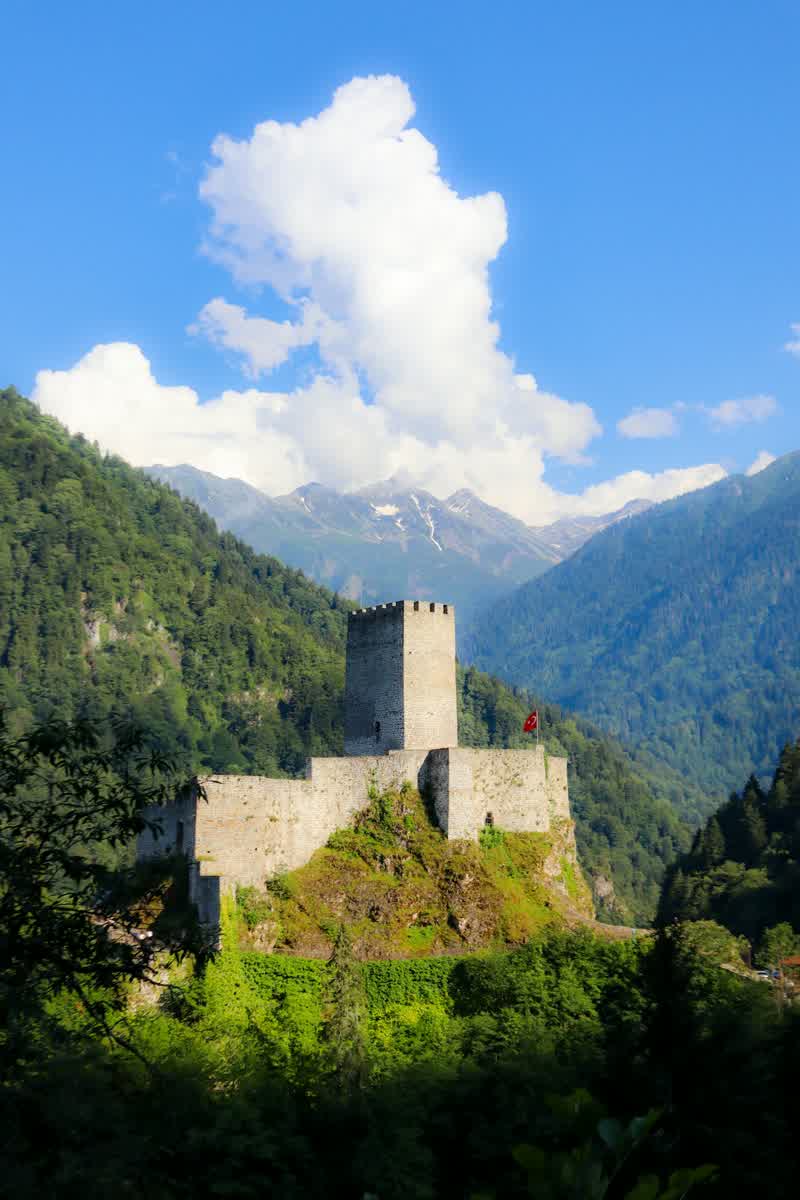
Trabzon and Antalya represent opposite ends of Turkey’s experience - geographically, climatically, and culturally. Antalya is Turkey’s beach capital: Mediterranean, sun-drenched, packed with resorts, and one of the world’s most popular tourist destinations. Trabzon is the gateway to the Black Sea coast: green, rainy, historically rich, and largely off the mainstream tourist circuit. Choosing between them is almost a question of which Turkey you want to visit.
Quick Verdict
| Category | Trabzon | Antalya |
|---|---|---|
| Beaches | Narrow, pebble, Black Sea | Long, sandy, Mediterranean |
| Landscape | Green mountains, tea gardens | Limestone cliffs, turquoise sea |
| Ancient Sites | Byzantine (Sumela, Hagia Sophia) | Roman (Perge, Aspendos, Side) |
| Nightlife | Moderate | Good (beach clubs) |
| All-inclusive | None | Dominant |
| Tourism | Very low (mostly domestic) | Extremely high |
| Cost | Lower | Moderate |
| Best For | Off-the-beaten-path, history | Sun holiday, resort, beach |
Landscape and Setting
The contrast could not be starker.
Trabzon sits on the Black Sea coast where the Pontic Mountains drop dramatically to a narrow coastal strip. The landscape is extraordinary: tea gardens terraced up steep slopes, hazelnut orchards, thick beech and chestnut forests, rushing mountain rivers, and a dozen highland plateaux (yaylas) above 2,000 metres that remain cool all summer. The air smells of salt and tea. The light is softer, greener, and more European than the bleached Mediterranean.
Antalya is classic Mediterranean. Limestone mountains rise behind a sun-baked coast; the water is turquoise and warm from May to October; the old town sits on a cliff above a Roman harbour. It’s beautiful in the way the Turkish Riviera reliably is: clear blue water, terracotta rock, bougainvillea, beach clubs. The Antalya city hub covers the full scope of what the city and surrounding coast offers.
Beaches
Antalya wins beaches categorically. Konyaaltı Beach stretches 7km from the city with the Taurus Mountains rising behind it - one of Turkey’s most iconic views. Lara Beach is long and fine-sand. Day trips from Antalya reach Kaputaş Beach, Patara, Ölüdeniz, and Side.
Trabzon’s Black Sea beaches are a completely different proposition. They are mostly narrow pebble and dark-sand strips, backed immediately by steep terrain. The sea is colder (typically 20–24°C in summer vs Antalya’s 26–28°C). Trabzon’s beaches are modest - Değirmendere and Uzungöl shoreline - but they are not the reason to visit. If beach holidays are the objective, Trabzon is the wrong choice.
History and Culture
Trabzon’s historical interest is concentrated but extraordinary. The Hagia Sophia of Trabzon (not to be confused with Istanbul’s) is a 13th-century Byzantine church with exceptional frescoes - one of the finest examples of Byzantine art in Turkey (entry approximately ₺200 as of 2026). The Trabzon Bazaar area (Uzun Sokak) has a distinctly Central Asian trade character unique on the Turkish coast.
The highlight is the Sumela Monastery (Sümela): a 4th-century Greek Orthodox monastery carved into a sheer cliff face 1,300 metres above sea level in the Altındere Valley. The approach - through thick forest up a mountain stream - is as extraordinary as the monastery itself (entry approximately ₺300 as of 2026). It is one of Turkey’s genuinely great monuments.
Antalya has very good historical depth. The Antalya Archaeological Museum is world-class. The day trip circuit reaches Perge (Roman forum, stadium, baths), Aspendos (finest Roman theatre in Anatolia, entry approximately ₺300 as of 2026), Side (Roman ruins on a beach peninsula), and Termessos (mountain city, virtually unexcavated, stunning views). The Trabzon history and Antalya history guides cover their respective contexts in detail.
Food
Trabzon food is distinct from the rest of Turkey. The Black Sea cuisine is anchored by hamsi (Black Sea anchovy): fried, baked, in soups, made into cornbread. Kuymak is a traditional dish of corn flour and melted kaşar cheese - simple and extraordinary. Trabzon pastries (aklama, laz böreği - a creamy pastry dessert) are famous across Turkey. Dried figs, hazelnuts, and fresh tea from the surrounding gardens fill the bazaar. Eating in Trabzon costs approximately ₺80–200 per person at local restaurants. See our Trabzon food guide.
Antalya food delivers good restaurant variety. Piyazı - white bean salad with tahini - is the regional speciality. The harbour area has tourist-facing fish restaurants at ₺200–400 per head; one or two streets back, pide and kebab run ₺80–140. The Antalya food scene has improved considerably in the last decade.
For genuinely distinctive regional cuisine, Trabzon offers something you can’t get elsewhere in Turkey.
Accommodation
Trabzon hotel options: Novotel Trabzon at approximately ₺2,500–4,500/night, Hotel Zorlu Grand at ₺2,200–4,000/night, Usta Park Hotel at ₺1,500–2,800/night. See our Trabzon hotel guide.
Antalya options at every tier: budget guesthouses in Kaleiçi from ₺800–1,800/night; midrange including Hotel Divan Antalya at ₺3,500–6,000/night; large resort hotels in Belek. See our Antalya hotel guide.
Search hotels in Turkey on Booking.com
Costs
| Expense | Trabzon | Antalya |
|---|---|---|
| Budget accommodation | ₺700–1,500/night | ₺800–1,800/night |
| Midrange hotel | ₺1,800–4,000/night | ₺2,500–5,500/night |
| Restaurant meal | ₺80–200/person | ₺100–250/person |
| Airport taxi | ₺200–400 | ₺400–700 |
Prices approximate as of 2026. See Turkey travel costs.
Trabzon is notably cheaper than Antalya - there is no tourist inflation premium. Domestic Turkish travellers and Arab tourists (particularly from Saudi Arabia, UAE, and Iran) make up the majority of Trabzon’s visitors; international package tourism is minimal.
Getting Around
Trabzon is reasonably compact in the city centre. The city bus system reaches the main sights. Sumela Monastery requires a car or minibus transfer (dolmuş to Maçka, then shared taxi up the valley - approximately ₺80–150). For the highland plateaux (Uzungöl, Ayder, Pokut), a rental car in Turkey or guided day tour is the only practical option. Trabzon Airport (TZX) receives direct flights from Istanbul (55–65 minutes) and several other Turkish cities.
Antalya has a tram (T1 line) and dolmuş covering the main areas. Car hire is recommended for day trips to ancient sites and beaches. Antalya Airport (AYT) is one of Turkey’s busiest, with direct international and domestic connections.
The Black Sea Coast: Trabzon’s Extended Offering
Trabzon’s real draw is not just the city but the surrounding Black Sea coast and highlands. Uzungöl is a mountain lake village in a glacial valley (100km southeast) - extremely popular with Arab tourists and extraordinarily beautiful. Rize is the tea capital - visit tea factories and walk through terraced gardens. Ayder plateau hosts traditional wooden highland houses and hot springs. The Black Sea coast guide covers the full route.
This is entirely different from anything Antalya offers and represents one of Turkey’s least-known treasures for international visitors.
When to Visit
| Season | Trabzon | Antalya |
|---|---|---|
| Spring (Apr–May) | Green, mild (15–22°C), ideal | Warm (22–28°C), low crowds |
| Summer (Jun–Aug) | Warm (22–27°C), sometimes rainy | 30–38°C, beach season, very busy |
| Autumn (Sep–Oct) | Beautiful colours, pleasant | Warm (25–32°C), excellent |
| Winter (Dec–Feb) | Cool, more rain | Mild (12–18°C), quiet |
Trabzon’s summer is mild by Turkish standards - a genuine advantage if you want to escape Antalya’s heat. The highlands stay cool all summer. See our best time to visit Turkey guide.
Which to Choose
Choose Trabzon if:
- You’ve already done the main Turkish tourist circuit and want something completely different
- Sumela Monastery, highland landscapes, and Black Sea cuisine interest you
- You want to travel like a domestic Turkish visitor rather than a package tourist
- Cool, green summer weather suits you better than Mediterranean heat
- Budget is a consideration
Choose Antalya if:
- A beach holiday with warm Mediterranean water is the priority
- All-inclusive resort convenience matters
- You’re visiting Turkey for the first time
- Day trips to major Roman ruins (Aspendos, Perge, Side) are planned
- Summer heat is not a concern
Do both: They are connected by domestic flights (Trabzon TZX to Antalya AYT via Istanbul, approximately 2–3 hours total). A combined Turkey itinerary might run Istanbul → Cappadocia → Antalya (coast) → fly to Trabzon (Black Sea) → return Istanbul.
Frequently Asked Questions
Is Trabzon worth visiting for international tourists? Yes - if you’re going beyond the standard Turkey itinerary. Trabzon delivers things unavailable elsewhere in Turkey: Black Sea cuisine centred on hamsi anchovy, Sumela Monastery (one of Turkey’s most dramatic monuments), the Uzungöl mountain lake, and a genuinely untouristy atmosphere. International visitors are rare compared to domestic and Arab tourism, which means service is not always geared to English speakers - but the authenticity level is high. For a second or third Turkey trip, Trabzon offers real discovery.
What is the best way to get from Antalya to Trabzon? By air via Istanbul is the standard route: Antalya (AYT) to Istanbul (IST or SAW) is 55–65 minutes, then Istanbul to Trabzon (TZX) is another 55–70 minutes. The full journey including connection time runs approximately 4–6 hours. Direct Antalya–Trabzon flights exist seasonally on Turkish Airlines - check availability for your travel dates. By road the distance is approximately 1,400km (15–17 hours) - not practical as a single journey.
Does Trabzon have good beaches? Trabzon has Black Sea shoreline but it is not a beach destination. The coast features narrow pebble and dark sand beaches with cooler water (20–24°C in summer) compared to the warm Mediterranean. The landscape is dramatic and beautiful, but the beach experience is fundamentally different from Antalya. If warm, sandy beaches and a beach-holiday structure are the goal, Trabzon is the wrong destination. If you’re comfortable swimming from pebble and want extraordinary coastal scenery, Trabzon’s coast has its own austere appeal.
Essential extras: An eSIM for Turkey from Airalo gives you mobile data from the moment you land - no airport SIM queue, no physical card. Travel insurance for Turkey should cover medical costs; Turkish private hospitals charge full rates for uninsured visitors.
See also: Trabzon travel guide · Antalya travel guide · Rize travel guide · Black Sea coast guide · Antalya vs Bodrum · Istanbul vs Antalya
Plan Your Trip
✈️ Book your flights to Türkiye 🛡️ Get travel insurance 📱 Stay connected with an eSIM 🚗 Rent a car