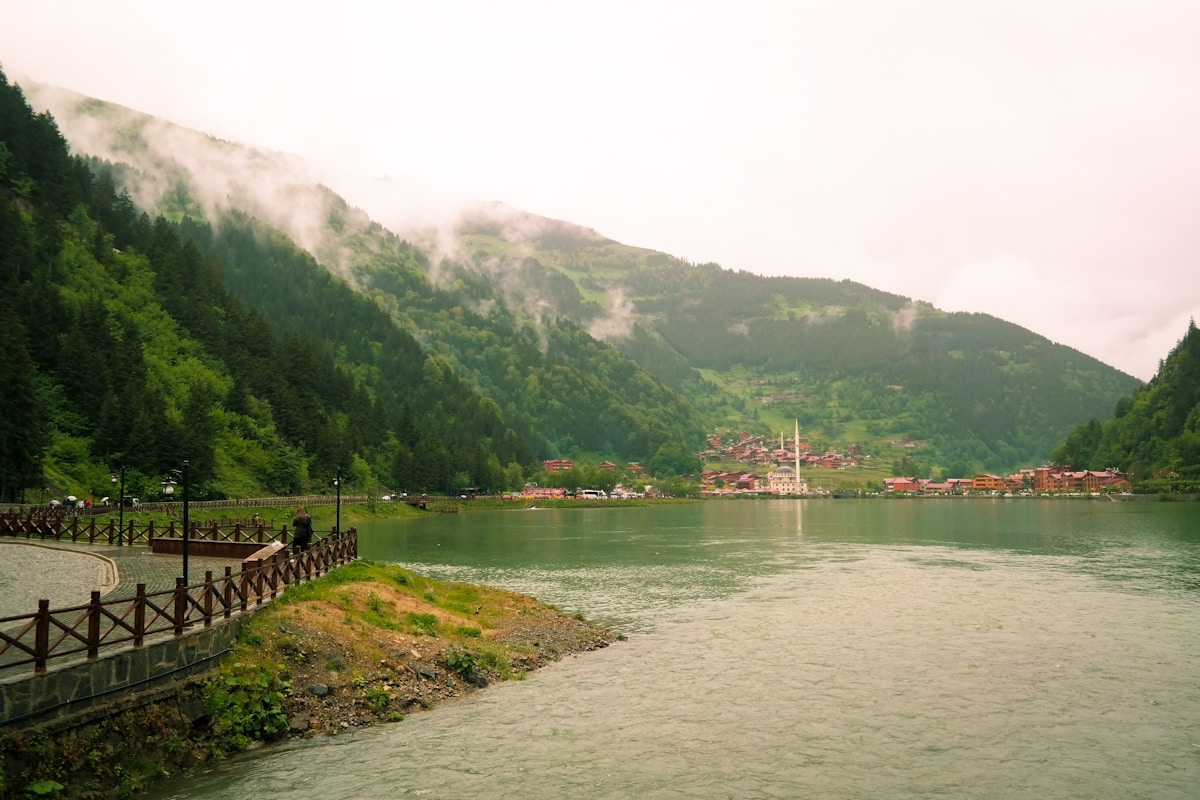
Turkey’s Black Sea coast runs for roughly 1,750km between the Bulgarian border and Georgia, but the stretch from Trabzon east to the Georgian frontier - and inland up into the Pontic Alps - is the section that rewards slow exploration. Misty forests, Byzantine monasteries carved into cliff faces, cloud-draped tea gardens, and highland plateaus with thermal springs: this is a completely different Turkey from the Aegean or Mediterranean, and far less visited.
Trabzon: The Gateway City
Trabzon is the regional capital and the logical base for Black Sea exploration. Most visitors spend a day here before heading into the mountains, but the city itself earns at least two days.
Hagia Sophia of Trabzon (not the Istanbul one) is a 13th-century Byzantine church with remarkably well-preserved frescoes, converted to a mosque in 2013. Entry is approximately ₺100 as of 2026; keep shoulders and knees covered. The building sits above the sea with views across the harbour - arrive in the morning for the best light on the frescoes.
Trabzon Bazaar runs through the lower city and feels more working-market than tourist-market. The covered section sells dried goods, spices, and anchovies (hamsi) - the region’s near-sacred fish - alongside cheap lokanta restaurants doing pide and soup for ₺80–120 per person.
The city’s airport (TZX) makes Trabzon easy to fly into from Istanbul in under two hours on Turkish Airlines or Pegasus. From here, rent a car or negotiate with a local driver for day trips.
Sumela Monastery
Built into a vertical cliff face at 1,200 metres in the Altındere Valley, Sumela is the single most dramatic sight on the Turkish Black Sea. Founded in the 4th century CE (tradition says 386 CE), it clung to Byzantine, Ottoman, Greek Orthodox, and eventually Turkish state ownership before being evacuated in 1923.
The walk up from the car park takes about 40 minutes through pine forest on a well-maintained path. The main rock church has Byzantine frescoes, many damaged by weather and vandalism but still legible. A section of later, more colourful paintings from the 18th-century Ottoman period survives in a side chapel.
Entry approximately ₺350 as of 2026. The site is about 46km south of Trabzon along the Maçka valley - 55 minutes by car. If you are not driving, dolmuş from Trabzon’s Meydan stop run in summer for about ₺60 each way.
Uzungöl Lake
Uzungöl has become the Black Sea’s most photographed spot - a glacial lake ringed by forest and backed by a small mosque, with mountains rising behind. The village has filled up with hotels and tea houses in recent years, but arrive before 08:00 or after 17:00 and it remains genuinely peaceful.
The lake is 99km from Trabzon (about 1.5 hours by car) via the Çaykara valley. There is no public transport direct - shared taxi from Çaykara costs around ₺60. Guesthouses around the lake run ₺800–1,500 for a double room in season, often including breakfast.
Hiking trails run up into the surrounding forest and to a second, smaller lake above. The walk to Uzungöl from the lower parking area takes around 15 minutes; the ridge hike to the upper plateau takes 2–3 hours and offers panoramic views across the Pontic Alps.
Ayder Plateau and Hot Springs
Ayder (Ayder Yaylası) sits at 1,350 metres in the Fırtına Valley above Çamlıhemşin, 90km east of Trabzon. The plateau is famous for its thermal springs and its position as a base for hiking into the Kaçkar Mountains - the peaks here reach 3,932 metres.
The hot spring facilities run year-round. Public bathing pools (ayrı erkek/kadın - separate men’s and women’s) cost approximately ₺80–120 per person. Several hotels and pansiyons have their own thermal pools, priced from ₺1,500 per night for a double including access. The Hemşin people who live here maintain a distinct culture - their hospitality includes a heavy local bread called muhlama (cornmeal cooked with butter and cheese) and herbal teas.
The drive up from Çamlıhemşin on the D010 road passes the Palovit and Fırtına bridges - 16th-century Ottoman stone arches that span the rushing river. Stop at the bridge near Şenyuva village for the best photograph.
The Tea Route: Rize to Çayeli
Turkey produces around 800,000 tonnes of tea annually, making it the world’s fifth-largest producer. Almost all of it comes from a narrow strip of coast between Rize and the Georgian border.
The Rize Tea Museum (Çay Müzesi) is a good first stop - it explains the history of tea introduction in the 1930s under Atatürk’s agricultural reform programme. Entry free; the adjoining tea house serves fresh-brewed local çay for ₺15.
Above Rize, the road climbs through steep terraced gardens. The Ziraat Çay Bahçesi (State Tea Garden) on the hillside above town offers sweeping views over the plantations and the sea - arrive in April or May to see the first flush harvest, when workers use hand clippers and wicker baskets on the younger upper leaves.
The coastal road from Rize east through Çayeli passes dozens of roadside tea sellers. Look for the bright orange and yellow signs of ÇAYKUR (the state producer) alongside smaller family stalls. A 500g tin of quality black tea runs ₺150–300.
Practical Black Sea Logistics
Getting around: A rental car is near-essential. The plateaus and monastery are accessible only by car or expensive private transfer. In Trabzon, Europcar, Avis, and Budget have airport desks; local operators offer manual gearbox cars from around ₺700–800 per day. Compare rates before you fly at GetRentacar.
Accommodation: Trabzon has a full range from budget hotels near the bazaar (₺600–900 for a double) to business hotels above the port (₺1,200–2,000). Uzungöl and Ayder have small guesthouses - book ahead in July and August when domestic tourism peaks heavily.
Food: The Black Sea diet is anchored by hamsi (Black Sea anchovy, October–January season), muhlama (cornmeal and cheese), and kuymak (a Rize version with local yağ tereyağı butter). In Trabzon, try Cemilusta restaurant for proper pide; in Rize, most family-run lokanta serve muhlama for under ₺100.
Language: English is limited outside Trabzon’s city centre. Basic Turkish phrases help substantially in mountain villages - locals appreciate the effort.
For city-level guides to the two main Black Sea hubs, see our Rize travel guide and our Trabzon travel guide.
Weather: The Black Sea receives 2,000–2,500mm of rain per year in the tea-growing zone. Pack waterproofs year-round. The plateau roads above 1,000 metres can be closed by snow from November to April.
See also: Trabzon travel guide · Rize travel guide · Eastern Express train guide · Eastern Turkey guide · Driving in Turkey
Plan Your Trip
✈️ Book your flights to Türkiye 🛡️ Get travel insurance 📱 Stay connected with an eSIM 🚗 Rent a car