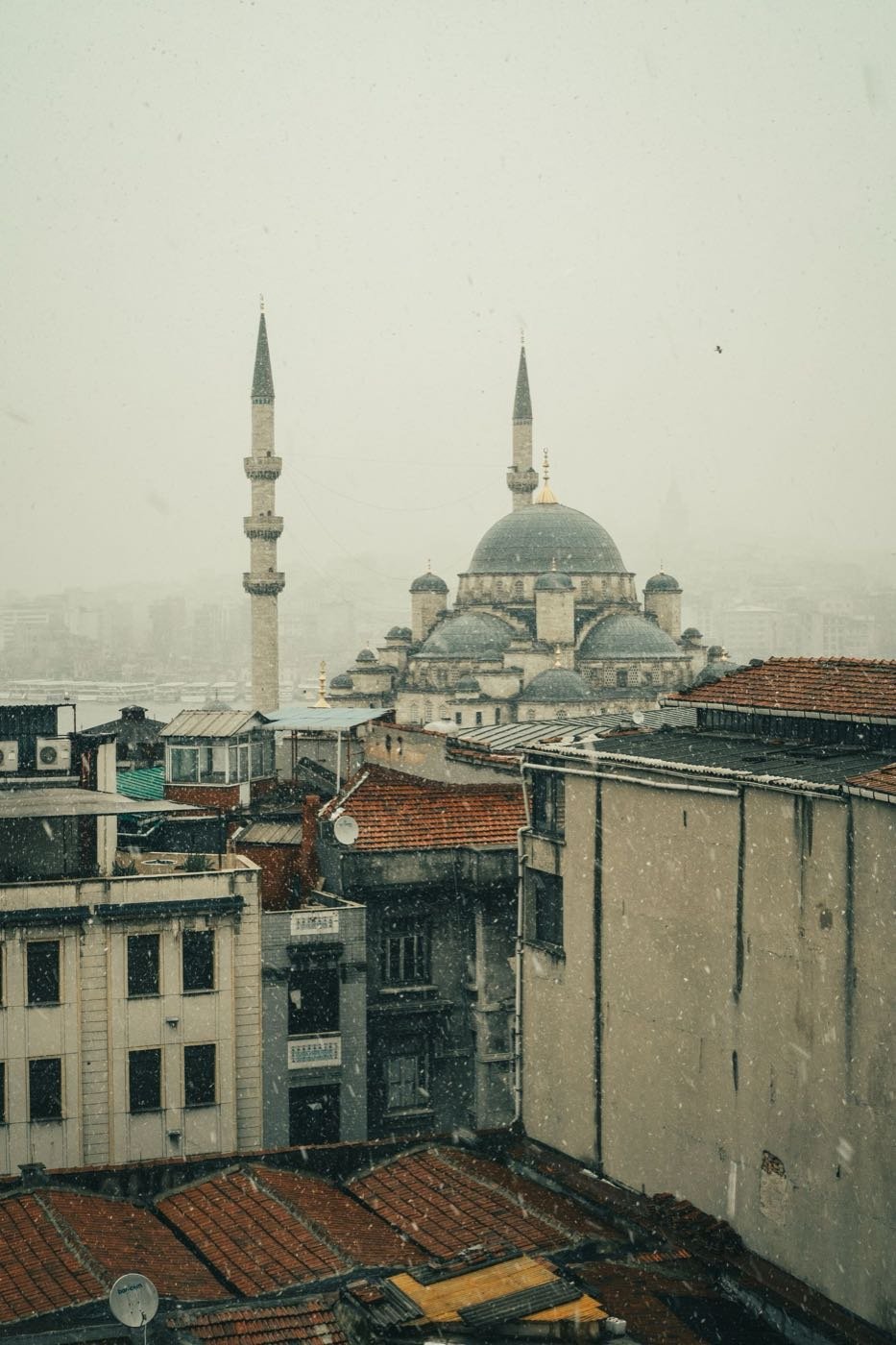
Istanbul in winter means 4-10°C, frequent rain, the occasional snow day and the lowest hotel prices of the year. We think it is the best season for a first city break if you can live with grey weather, because the big sights are nearly empty and the things Istanbul does best, hammams, tea houses, covered markets and long meyhane dinners, are indoor activities. This guide covers December to February; for a wider view see our best time to visit Istanbul guide and the country-wide Turkey in December and Turkey in February pages.
Istanbul Weather by Winter Month
| Month | Daytime high | Night low | Rain days | What to expect |
|---|---|---|---|---|
| December | 9-10°C | 5-6°C | 10-13 | Damp and grey, New Year lights on Istiklal |
| January | 8-9°C | 3-4°C | 12-14 | Coldest month, most likely for snow |
| February | 8-10°C | 3-4°C | 10-12 | Cold but brighter, first clear spells |
Figures are long-run averages; the Turkish State Meteorological Service publishes live forecasts. The wind is the real factor. The Bosphorus funnels it through the city, so a 7°C afternoon on the Galata Bridge feels like 2°C. Snow comes on perhaps two to five days a winter, and ferry services sometimes pause in fog or storms, so keep a metro or tram backup in mind.
Why Go in Winter
Fewer queues. At Hagia Sophia, Topkapi Palace and the Basilica Cistern, weekday mornings between November and mid-March are the easiest of the year. Topkapi is closed on Tuesdays all year, so plan around it. Our Istanbul tours guide lists skip-the-line and small-group options for when you do want a guide.
Lower prices. Outside the New Year window, central hotels typically cost around half their August rates, as of 2026. Boutique stays in Galata, Cihangir and Karakoy are often the best value; see our Istanbul hotel guide for neighbourhoods and our where to stay in Istanbul page for how each area feels in cold weather.
Seasonal food. Winter is hamsi (Black Sea anchovy) season, served fried, baked in a pan or in rice pilaf. Salep, a hot milky drink thickened with orchid root, and roasted chestnuts sold from carts appear on every main street. Our Istanbul food guide covers where to eat them.
What to Do Indoors
- Hagia Sophia and the Blue Mosque. Go early on a weekday. Hagia Sophia operates as a mosque, so visits pause around prayer times.
- Topkapi Palace, Harem and Hagia Irene. Allow three hours. Walk-up entry is usually quick in January and February.
- Basilica Cistern. Warm, dim and dry, and usually a short wait in winter.
- A traditional hammam. Cemberlitas and Kilic Ali Pasa are historic options; a full wash and scrub typically costs from around EUR 50-100 depending on package, so check current rates.
- Grand Bazaar and Spice Bazaar. Closed on Sundays at the Grand Bazaar; the covered halls are a refuge from the rain.
- Museums. The Istanbul Archaeology Museums, Istanbul Modern in Karakoy and the Museum of Turkish and Islamic Arts are all heated and rarely crowded. Check opening hours with the Ministry of Culture museums portal.
- Meyhane dinner. Beyoglu, Karakoy and the backstreets of Kadikoy fill with locals from November onward. See our Kadikoy guide for the Asian-side options.
If the weather clears, take a Bosphorus cruise or a guided walking tour on a dry day; the public Sehir Hatlari ferry from Eminonu to Kadikoy is the cheapest way to see the water and costs only a few lira with an Istanbulkart (see our Istanbulkart guide).
Getting In and Around
Istanbul Airport is about 40 km from Sultanahmet. In winter, fog and snow can delay flights, so build slack into onward connections. A pre-booked airport transfer is more reliable than hunting for a taxi in the rain, and our Istanbul airport transfer guide compares the Havaist bus, metro and taxi options. In the city, trams, the Marmaray rail line and the metro all run normally in winter.
What to Pack
- Waterproof, hooded coat and a warm mid-layer
- Shoes with proper grip for wet cobbles and hills
- Hat, scarf and gloves for ferry decks
- Socks you can change, since mosque visits require removing shoes
- A scarf for women to cover hair in mosques (mosques provide loaners)
- Travel cover that includes cancelled-flight cover, see travel insurance for Turkiye
Day-by-Day Winter Plan (3 Days)
Day 1, Old City: Hagia Sophia at opening, Basilica Cistern, lunch in Sultanahmet, Grand Bazaar in the afternoon, hammam in the evening.
Day 2, Palaces and Bosphorus: Topkapi Palace in the morning (not Tuesday), ferry across to Kadikoy for lunch, tea and the market streets, return by ferry at dusk.
Day 3, Beyoglu and Galata: Galata Tower, the shops of Istiklal Caddesi, a ride on the heritage tram, a meyhane dinner in Karakoy. See how many days in Istanbul if you can stay longer.
Winter Add-Ons: Cappadocia and the Coast
Many visitors pair Istanbul with a snowy Cappadocia trip, and flights take about 1 hour 20 minutes (our Istanbul to Cappadocia guide has the options). Read Cappadocia in winter before you book. For milder weather, Antalya stays at 12-17°C. Skiers can reach Uludag from Istanbul in a few hours; see skiing in Turkey.
Costs and Planning Notes
Prices in this guide are approximate and as of 2026; Turkish lira prices move quickly, so check current rates before booking. Plan your New Year dates early: hotels around Taksim and Sultanahmet fill and cost noticeably more from about 27 December to 2 January. Our related news update, Istanbul winter travel 2026-27, tracks changes in opening hours and fees as the season develops.
Browse Istanbul tours and activities for hammam experiences, food walks and covered-market tours that make the most of the weather.