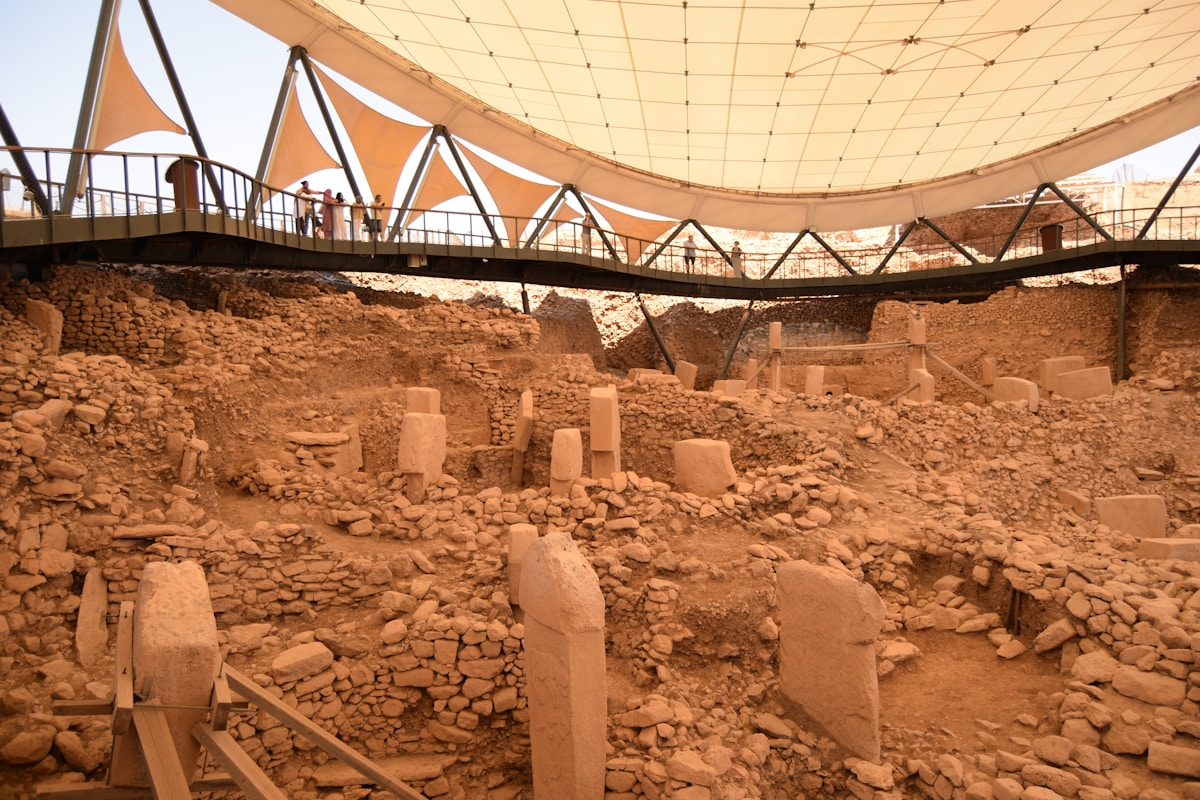
If Göbekli Tepe shattered our assumptions about the origins of monumental architecture, Karahantepe is now rewriting the chapters that followed. Located 46km southeast of Şanlıurfa and part of the same Taş Tepeler (Stone Hills) network of Neolithic sites, Karahantepe has been under systematic excavation since 2019 — and the discoveries emerging from it are forcing archaeologists to revise almost everything they thought they understood about the people who built these places.
What Karahantepe Is
Like Göbekli Tepe, Karahantepe was built by Pre-Pottery Neolithic hunter-gatherers roughly 11,000–12,000 years ago. Both sites belong to the Taş Tepeler project — a Turkish-led initiative cataloguing 12 interconnected Neolithic sites concentrated in the upper Euphrates and Tigris basin around Şanlıurfa. Each site is distinct; none is simply a copy of the others.
What makes Karahantepe significant — and what distinguishes it from the older, more famous site 35km to the northwest — is what has emerged from the bedrock here. Karahantepe’s excavators have found T-shaped pillars bearing carved human faces: realistic, detailed representations with deep-set eye sockets, prominent brow ridges and blunt, forward-protruding noses. At Göbekli Tepe, the T-shape represents a human figure in abstracted form — arms and a belt are carved on some pillars, but the “head” (the horizontal top of the T) is never given facial features. At Karahantepe, someone 12,000 years ago broke that rule.
The site has also yielded a carved phallus emerging from the bedrock in one structure, a life-size human head sculpture, and more than 250 T-shaped pillars distributed across multiple enclosures. Domestic architecture — sunken, clay-plastered rooms built directly into bedrock — appears alongside the ritual enclosures, suggesting that Karahantepe may represent a later and more complex social organisation than the purely ceremonial model proposed for Göbekli Tepe’s earliest phases.
The Human-Face Discovery
In 2025, excavators led by Professor Necmi Karul revealed a T-shaped pillar bearing the clearest human face yet found at any Taş Tepeler site. The face is carved on the shaft of the pillar — not abstracted, not suggested, but rendered with specific anatomy: brow ridges, eye sockets, a nose. The pillar was found inside what appears to be a domestic structure, not a communal ritual space. This changes the interpretive framework: whoever made these objects was not only producing them for public ceremony but bringing them into private life.
The discovery drew immediate international attention from the Smithsonian, Ancient Origins and major archaeology journals. As of 2026, the pillar remains in situ at the site.
What You Can See
Karahantepe’s visitor infrastructure is less developed than Göbekli Tepe’s but functional. A small site entrance, ticket kiosk and basic facilities (toilets, a small shop) have been established. The main viewing area provides elevated walkways — similar in design to Göbekli Tepe’s — overlooking the excavated enclosures.
The main enclosures are the centrepiece: multiple circular and oval structures cut into the limestone bedrock, with T-shaped pillars arranged in concentric configurations. Several pillars carry animal reliefs — snakes, birds and abstract symbols — though the human-face pillar is the focal point for most visitors.
The architectural variety is striking once your eye adjusts. Karahantepe shows evidence of multiple building phases and a wider range of structure types than Göbekli Tepe, including the domestic rooms mentioned above. The site layout suggests a community that was experimenting with different uses of space simultaneously.
The setting — dry limestone plateau, wide sky, near-silence except for wind — has an atmosphere that the more tourist-developed Göbekli Tepe site has partially lost. On a quiet morning in Karahantepe, with excavation equipment parked nearby and scaffolding still in position over active trenches, you are watching archaeology happen.
Getting There
By taxi from Şanlıurfa: The most practical option for independent travellers. The drive takes approximately 45 minutes each way on the D400 highway southeast from the city. Negotiate a round-trip fare with waiting time before you set off — budget approximately ₺600–900 for 3–4 hours at the site. Most taxi drivers near the main hotels are familiar with the route.
By guided tour: Several Şanlıurfa-based agencies offer day trips combining Karahantepe with Göbekli Tepe, usually with an English-speaking guide. This is the recommended option for visitors who want context — the two sites are best understood in relation to each other, and a knowledgeable guide makes a significant difference. Prices vary; expect approximately ₺600–1,000 per person for a combined tour including transport. Browse Şanlıurfa tours and activities for options with free cancellation.
By rental car: If you have a car hire in Turkey, the route from Şanlıurfa is straightforward on the D400. Parking at the site is available.
Public transport: There is no direct public bus service to Karahantepe.
Practical Information
Opening hours: Approximately 08:00–17:00 daily, though these hours may extend in summer and contract during winter or outside the active excavation season (typically April–October). Confirm with the Şanlıurfa Museum or your accommodation before visiting.
Entry fee: Approximately ₺200 as of 2026. Fees are reviewed annually by the Turkish Ministry of Culture.
Time required: 1.5–2.5 hours for a thorough visit, including travel between viewing platforms.
Season: Spring (April–May) and autumn (September–October) are the most comfortable periods. Summer months bring intense heat — the Şanlıurfa plain sits at lower altitude than Göbekli Tepe and can be brutal in July and August. Arrive early if visiting in summer.
Photography: Permitted throughout the outdoor site. Drone flight requires advance permit.
Karahantepe vs Göbekli Tepe
Both sites are worth visiting, and neither makes the other redundant. Göbekli Tepe is older, better excavated, and has more complete infrastructure — if you have one day in Şanlıurfa, go there first. Karahantepe offers something Göbekli Tepe cannot: the sensation of a site still being discovered, and the human-face pillars that represent a genuinely new chapter in our understanding of Neolithic symbolism.
The ideal itinerary is to combine both as a full day: Karahantepe in the morning (it sees fewer visitors), Göbekli Tepe in the early afternoon, and the Şanlıurfa Archaeological Museum in the city that evening. The museum houses original pillars removed during early excavations and the remarkable Urfa Man statue — the full picture requires all three stops.
The Broader Taş Tepeler Network
Karahantepe is one of 12 catalogued Neolithic sites in the region, collectively designated as the Taş Tepeler (Stone Hills) network. Others include Sayburç (an active excavation 19km from Şanlıurfa city centre, where the earliest known narrative stone carving was found), Çakmatepe, Karahan Tepe East, and several more that are currently under study but not yet open to visitors.
The Turkish Ministry of Culture has invested significantly in opening these sites to tourism as a cohesive archaeological destination. The ambition is comparable to Egypt’s Nile antiquities corridor — a region where the concentration of world-class prehistoric sites is itself the draw.
Combining Sites in Şanlıurfa
- Göbekli Tepe — the original Taş Tepeler site, 15km northeast of Şanlıurfa; best combined with Karahantepe on a full-day trip
- Harran — the ancient beehive-house village and Abraham connection, 50km south; a different era and atmosphere, best as a separate half-day
- Şanlıurfa city hub — Balıklıgöl sacred fish pools, the covered bazaar, and the Archaeological Museum with original Göbekli Tepe and Karahantepe finds
Search hotels in Sanliurfa on Booking.com
An eSIM for Turkey is useful for navigation on the plateau roads, and travel insurance provides peace of mind for remote-site visits. Browse guided tours in Şanlıurfa for combined Taş Tepeler day trips with free cancellation.