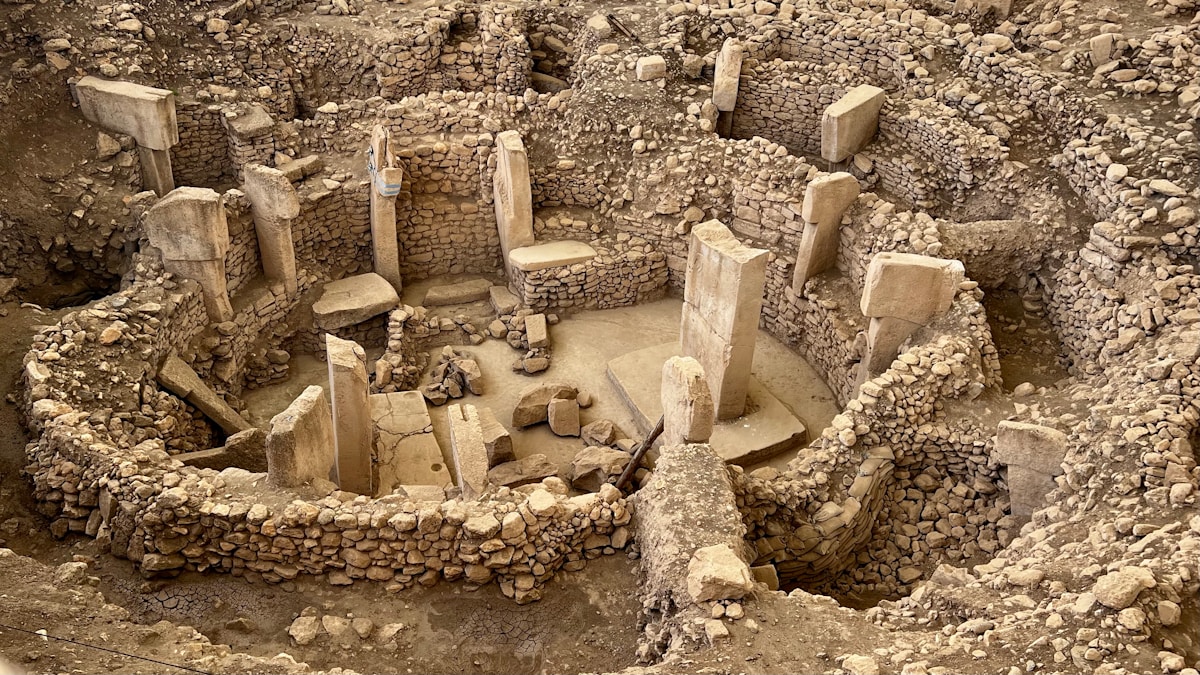
Şanlıurfa rewards the curious traveller with a concentration of historically significant sites found almost nowhere else on earth. The city sits at the intersection of the Neolithic world - via Göbeklitepe and Karahan Tepe - and the religious traditions of Abraham, making it one of the most layered destinations in Turkey. Here is how to make the most of the time you have. For a dedicated guide to the site itself, see Göbekli Tepe.
Göbeklitepe
Göbeklitepe is not merely old - it is the oldest known example of large-scale organised construction by humans, built around 9,600 BCE. That predates Stonehenge by approximately 6,000 years and the Egyptian Pyramids by nearly 7,000 years. The site was granted UNESCO World Heritage status in 2021.
The complex consists of circular stone enclosures containing T-shaped limestone pillars, many carved with detailed reliefs of foxes, boars, snakes, cranes, and other animals. The builders were hunter-gatherers, not farmers - which overturned the long-held assumption that complex communal construction required settled agricultural society. The site has fundamentally changed how archaeologists understand Neolithic human behaviour.
Location: 25km northeast of Şanlıurfa city centre, on a bare limestone ridge.
Getting there: The most practical option is a taxi from Şanlıurfa - agree a return fare with waiting time before leaving, which typically runs approximately ₺200–350 as of 2026. Several tour agencies in the city run guided half-day trips that include transport and a guide. There is no regular public bus to the site.
Entry: Approximately ₺300–500 per person as of 2026 (check current pricing at the ticket office; rates adjust periodically).
What to see: The accessible section of the site includes Enclosures A, B, C, and D - the original excavated circles, now protected beneath a large in-situ roof shelter. Elevated walkways allow visitors to view the pillars without entering the excavated areas. Enclosure D contains some of the most elaborate carvings. A newer section of the site with additional enclosures was opened in recent years; ask your guide or check signage at the entrance for current access.
Practical tips: Arrive when the gates open at 8am. The hillside is completely exposed; sun protection, a hat, and at least 1.5 litres of water per person are essential in any season except winter. Allow a minimum of 2–3 hours. A guided tour adds significant depth - the signage on site is informative but does not convey the full archaeological context.
Karahan Tepe
Approximately 35km from Göbeklitepe (and about 50km southeast of Şanlıurfa), Karahan Tepe is a sister site in the same “Taş Tepeler” (Stone Hills) Neolithic network. Excavations began in earnest after 2019 and the site has already produced remarkable finds: carved human faces, a chamber filled with phallus-topped pillars, and evidence of rituals that archaeologists are still interpreting.
Karahan Tepe receives far fewer visitors than Göbeklitepe and the experience is correspondingly more raw - less infrastructure, more direct contact with the scale of what was built here 11,000 years ago. For anyone spending two full days in the Şanlıurfa region, combining Göbeklitepe and Karahan Tepe is worth the additional travel. A car or taxi for the day is the practical way to do both.
Balikligol - The Pool of Abraham
In the heart of the old city, a large rectangular pool holds hundreds of sacred carp that have been protected here for centuries. The pool is surrounded by the gardens of the Dergah Mosque complex and connects to the smaller adjacent Ayn-Zelha pond. Entry to the park is free.
The carp are considered sacred and strictly cannot be touched, fed (without using the official food sold in the park), or harmed. The tradition stems from the Islamic account of Abraham being thrown into fire by King Nimrod at this spot - with God turning the fire to water and the firewood to fish. The site is an active place of pilgrimage for Turkish and Arab Muslim visitors, and the atmosphere around the pools at dusk, when the mosques call the evening prayer, is genuinely moving even for non-religious visitors.
Allow 30–45 minutes to walk the park, visit both pools, and sit with a tea at one of the garden teahouses.
Şanlıurfa Archaeological Museum
Opened in 2015 in a purpose-built building near the city centre, this is one of the most important provincial museums in Turkey and essential preparation (or follow-up) for a Göbeklitepe visit.
The highlight is the Urfa Man - a 1.87-metre life-size limestone statue dating to approximately 9,000 BCE, considered the world’s oldest known life-size human statue. It was found in the Balıklıgöl area of the city and stands in its own dedicated gallery. Also on display: T-shaped pillars from Göbeklitepe, Neolithic flint and obsidian tools, ceramics from Bronze Age settlements, and an extensive collection from Harran and other regional sites.
Entry is approximately ₺200 as of 2026. Allow two hours minimum; the signage is in Turkish and English. Purchasing a guide booklet at the entrance adds context that the wall panels alone do not provide.
The Şanlıurfa Bazaar
The old covered bazaar system extending north and northeast of Gölbaşı is one of the least tourist-oriented bazaars in Turkey - which is precisely what makes it worth exploring. The lanes are organised by trade: coppersmiths work alongside each other in one section, spice merchants in another, fabric sellers in another. The smell of isot pepper and dried herbs is pervasive in the spice corridor.
Gümrük Hanı (the Customs Inn) is the traditional centre of the textile and carpet trade, a large Ottoman caravanserai that still functions as a commercial space. Several lanes lead from here into the deeper covered sections.
Visiting without a purchase agenda is perfectly acceptable; most traders are accustomed to browsers. The bazaar is most active on weekday mornings.
Harran
50km south of Şanlıurfa, close to the Syrian border, Harran is one of the oldest continuously inhabited settlements in recorded history - mentioned in Assyrian texts and in the Book of Genesis as the place where Abraham lived before continuing to Canaan.
The most visually distinctive feature is the cluster of beehive houses - conical mudbrick dwellings with domed roofs that provide natural insulation against the extreme heat. Some are still occupied. The ruins of Harran University (an important medieval Islamic centre of learning, 8th–13th century CE), the Ulu Cami (one of the earliest mosques in Anatolia), and the ancient city walls stretch across the flat plain.
Getting there: Minibuses from Şanlıurfa’s otogar run to Harran; the fare is approximately ₺30–40 each way as of 2026 and the journey takes around one hour. A taxi from Şanlıurfa can also be hired for a half-day trip combining Harran with other sites; agree the fare and waiting time in advance.
Allow 2–3 hours to walk the site, including the beehive house area, the mosque ruins, and the city walls. There is a small entry fee for the main ruins area (approximately ₺50–100 as of 2026).
Urfa Fortress
The hilltop fortress above the city dates to Roman-Byzantine construction with subsequent additions. Two tall Corinthian columns on the hill - the Throne of Nimrod - are associated in local tradition with the story of Abraham. The walk up takes around 20 minutes from the Dergah Mosque gardens and rewards with one of the best panoramic views in the city: the fish pools directly below, the minarets of the old city, and the flat Harran plain extending south toward Syria.
Entry to the fortress is free and the site is open during daylight hours.
Eating in Şanlıurfa
The city’s food culture is distinct enough to justify a separate visit. Key dishes to seek out:
Cig köfte (original version): In most of Turkey, cig köfte is now sold as a vegetarian dish. In Urfa, some traditional restaurants still serve the original version made with raw minced meat, bulgur wheat, isot pepper, and spices. Ask locally for where to find it; it is not universally available.
Urfa kebap: Slightly hotter than Adana kebap, distinguished by isot (a smoky, dark chilli grown around Urfa) and served with raw onions dressed in fresh sumac. Widely available throughout the city.
Lahmacun: The Urfa version is thinner and spicier than the Istanbul variety.
Katmer: A layered pastry typically eaten at breakfast or as a sweet snack, filled with cream and crushed pistachios.
Tea culture in Şanlıurfa is strong - the gardens around Balikligol have several teahouses where locals spend hours over glasses of çay. Budget roughly ₺100–200 for a full traditional meal at a lokanta (local restaurant); the city is considerably cheaper to eat in than the tourist-facing coast. For those combining Şanlıurfa with southeast Turkey, Gaziantep is an easy 1.5-hour bus ride and one of Turkey’s great food cities. Our Turkish food guide also covers the regional dishes you will encounter here.
Search hotels in Sanliurfa on Booking.com
Booking in advance: Browse tours and activities in Şanlıurfa - guided walks, skip-the-line tickets, and day tours are bookable ahead with free cancellation.