July is Turkey at full intensity. The Mediterranean and Aegean coasts are packed with European holidaymakers, Istanbul bakes under 30°C heat, and Cappadocia balloon flights launch into cloudless skies at dawn. This is peak season in every sense - highest prices, biggest crowds, longest days - and it rewards travellers who plan around the heat rather than fight it.
Weather by Region
Istanbul: 25–30°C with high humidity from the Bosphorus. Nights stay warm at 20–22°C. Rain is almost nonexistent - July averages two to three rainy days at most. The heat is sticky rather than dry, and the city’s hilly topography makes walking more tiring than the thermometer suggests.
Cappadocia: 25–35°C with bone-dry air. Mornings are comfortable (18–22°C at dawn), making the 5am balloon launch window pleasant. By noon, exposed valley trails are punishing. The clear skies mean balloon flights operate on roughly 90% of mornings - the highest reliability of any month.
Aegean coast (Bodrum, Cesme, Kusadasi): 30–35°C. Sea temperature reaches 24–25°C, fully warm for swimming. The meltemi wind picks up in July, offering some relief on the Aegean side - Bodrum and Cesme benefit from afternoon breezes that the Mediterranean coast lacks entirely.
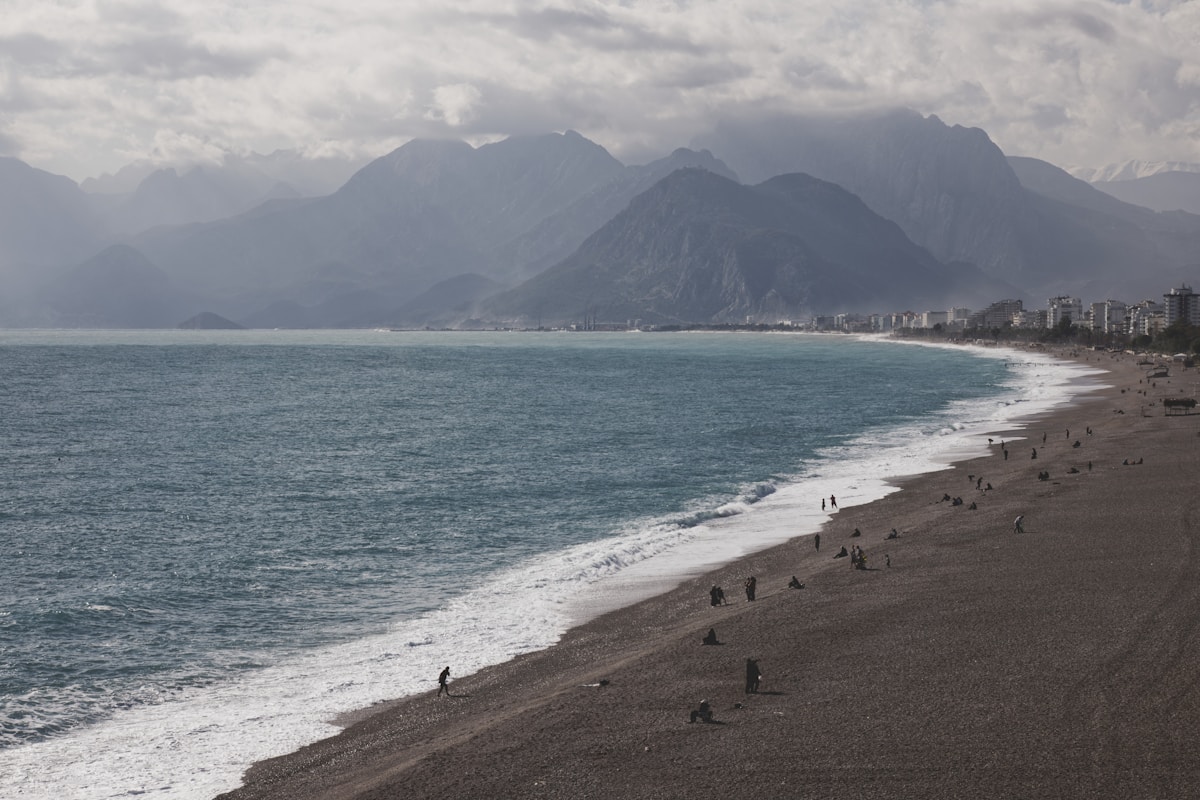
Mediterranean coast (Antalya, Kas, Alanya): 32–38°C. Sea temperature 26–28°C. This is the heart of the Turkish Riviera yacht season, which runs from May through October. Gulet sailing trips along the Lycian coast are at full capacity, and private yacht charters out of Gocek and Fethiye command peak-season rates.
Eastern Turkey: Hot at lower altitudes (Diyarbakir can exceed 40°C), but the high plateaus around Erzurum (1,900m) and Kars stay at a manageable 22–28°C. This is the best window for exploring eastern Anatolia’s Armenian churches and Kurdish highlands without winter access issues.
Istanbul in July
The main attractions - Hagia Sophia, Topkapi Palace, the Grand Bazaar, Basilica Cistern - operate year-round, but July tests your stamina. Queue times at Hagia Sophia stretch beyond an hour. The solution: arrive at opening time, then retreat to air-conditioned museums or the underground Basilica Cistern (a natural cool refuge at 15°C regardless of surface temperature) by midday.
The Grand Bazaar and Spice Bazaar are covered and partially shaded, making them tolerable shopping environments even in peak heat. Ramadan timing shifts annually - when it falls in summer months, tourist-area restaurants remain open, but some neighbourhood eateries close during daylight hours. The traditional hammam (Turkish bath) is worth prioritising in July: the Cagaloglu Hamam and Ayasofya Hurrem Sultan Hamam offer a restorative break from the heat that doubles as a cultural experience.
Bosphorus dinner cruises are at their best in July - warm evenings, sunset at 8:30pm, and the illuminated shoreline mosques reflected in still water.
Cappadocia in July
Balloon flights are the headline, and July delivers near-guaranteed launches. Book at least four to six weeks ahead - operators fill their baskets months in advance for July dates. The Rose Valley, Love Valley, and Pigeon Valley hiking trails are best tackled at sunrise (6–8am) or in the final hour before sunset. Midday exploration should shift to underground cities (Derinkuyu, Kaymakli), which maintain cool temperatures year-round.
Cave hotels - the converted tufa-stone properties in Goreme, Uchisar, and Ortahisar - are natural insulators, staying cooler inside than modern buildings. This is one practical reason to choose a genuine cave room over a standard hotel in July.
The Turkish Coast in July
The swim season is at its peak. From the Aegean (Bodrum, Alacati, Cesme) through the Mediterranean (Fethiye, Kas, Antalya, Alanya), every beach is operational. July marks the midpoint of the Turkish Riviera yacht season, and the blue-voyage gulet trips between Fethiye and Olympos are fully booked.
Pamukkale’s travertine pools remain open in July, but the experience is intensely hot - the white calcium terraces reflect sunlight and there is no shade. Visit at 7am when gates open, or after 5pm when the angle of light drops. The Antique Pool (Cleopatra’s Pool) inside the Hierapolis compound offers warm thermal water with submerged Roman columns - a genuine highlight, but crowded in July.
Festivals and Events
Kurban Bayrami (Eid al-Adha) dates shift with the Islamic calendar. When it falls in July, domestic travel surges for four to five days as Turkish families return to home towns. Domestic flight prices spike, intercity buses sell out, and coastal resort occupancy reaches absolute maximum. Book transport well ahead if your dates overlap.
The Istanbul Jazz Festival typically runs in the first half of July, with performances across venues including the historic Hagia Irene church in the Topkapi Palace grounds.
Costs and Crowds
July is peak pricing across the board. Istanbul hotels run 30–50% above shoulder-season rates. Mediterranean all-inclusive resorts are at their annual maximum. Cappadocia balloon flights cost more than in spring or autumn. The only budget-friendly strategy is eastern Turkey, where accommodation and transport remain relatively cheap even in high summer. Domestic tourists dominate the coast; international visitors concentrate in Istanbul and Cappadocia.
For destination-specific guidance: Istanbul, Antalya, Bodrum, Marmaris, Mardin. Full year comparison: best time to visit Turkey.
Adjacent months: Turkey in June · Turkey in August · Turkey all-inclusive resorts · Blue cruise guide
Planning your visit: Compare flights to Turkey early if you’re travelling in peak season (July–August) - prices climb steeply in the final weeks. Travel insurance covering cancellation and medical costs is straightforward to arrange at the same time.
Plan Your Trip
✈️ Book your flights to Türkiye 🛡️ Get travel insurance 📱 Stay connected with an eSIM 🚗 Rent a car