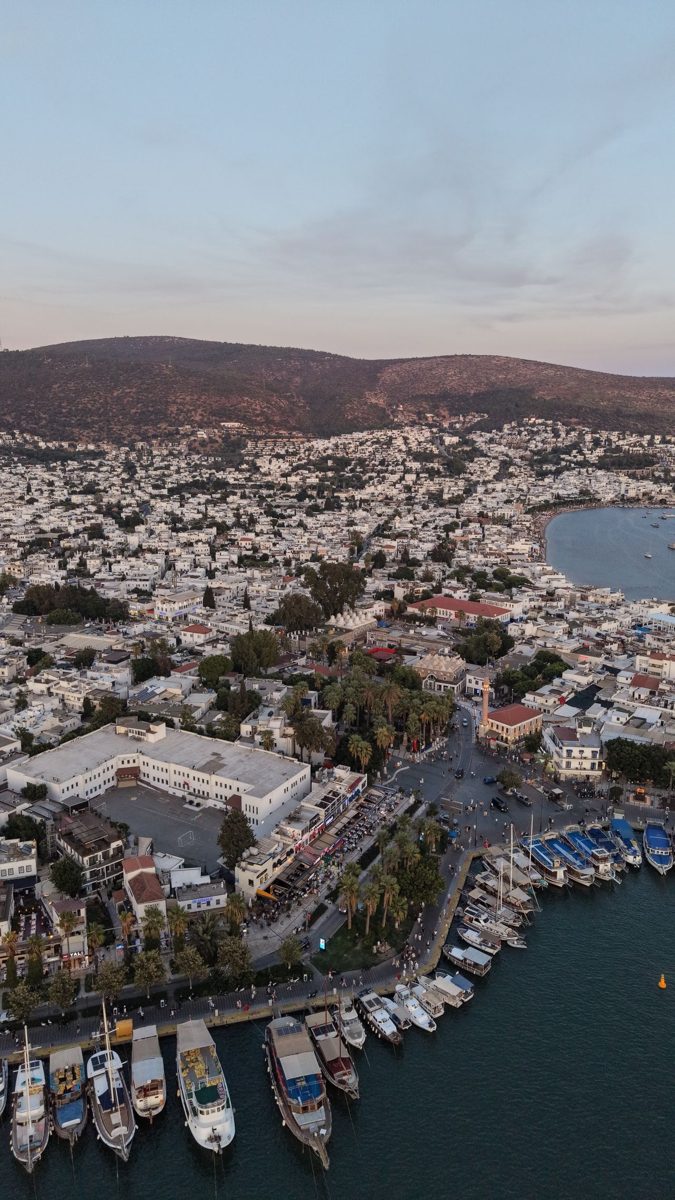
Bodrum occupies a different tier of Turkish resort town. The castle, the white-cube architecture, the Aegean light at sunset - it all holds up. But Bodrum in August is also traffic, boat-party bass at 3am, and restaurant bills that feel like Istanbul business district prices. The same town in September is a completely different experience: still warm, still social, just quieter and cheaper.
Quick Summary: When to Go
| Season | Months | Weather | Crowds | Budget |
|---|---|---|---|---|
| Spring | Apr–May | 18–25°C | Low–Moderate | ★★★★☆ |
| Early Summer | Jun | 25–30°C | High | ★★★☆☆ |
| Peak Summer | Jul–Aug | 28–35°C | Peak | ★★☆☆☆ |
| Autumn | Sep–Oct | 22–27°C | Moderate–Low | ★★★★☆ |
| Winter | Nov–Mar | 8–16°C | Very low | ★★★★★ |
Month-by-Month Breakdown
January
Average temperature: 8–13°C. Rainfall: 12 days. Crowds: 1/5.
Bodrum in January is quiet in the way only resort towns can be - shutters on half the bars, locals having the harbour back to themselves. The Castle of St. Peter (Bodrum Castle) is open year-round and far more accessible without summer queues. Entry is approximately TRY 320 (around £8). The Underwater Archaeology Museum inside the castle is among the finest in the Mediterranean.
February
Average temperature: 8–14°C. Rainfall: 10 days. Crowds: 1/5.
Similar to January but with occasional warm dry spells by mid-February. The tangerine trees along the Bodrum Peninsula roads are in fruit. Low-season boutique hotel rates - waterfront properties that charge TRY 8,000+ per night in July often drop to TRY 2,500–3,500 (approximately £65–90).
March
Average temperature: 11–17°C. Rainfall: 8 days. Crowds: 2/5.
The peninsula starts to stir. Some bars reopen, boat captains prep their gulets for the season, and the first tour groups arrive. The surrounding villages - Gümüşlük, Yalıkavak, Göltürkbükü - are completely peaceful in March and worth exploring by bike or rental car.
April
Average temperature: 14–22°C. Rainfall: 5 days. Crowds: 2/5.
An excellent month. The sea reaches 18–19°C (chilly, but some people swim). Day trips to Karaada (Black Island) thermal springs are worth the short boat ride, and the hot springs are at their most enjoyable when the ambient temperature isn’t already 35°C. Wildflowers across the Bodrum hills.
May
Average temperature: 18–26°C. Rainfall: 3 days. Crowds: 3/5.
The sea tips to 21–22°C and beach season genuinely begins. May is widely considered Bodrum’s best month: warm enough for everything, not yet overwhelmed. The gulet sailing scene starts operating in earnest - a Blue Voyage around the peninsula to Göcek or Marmaris remains one of the best ways to experience the Aegean coast. Book at least 3–4 weeks ahead for May departures.
Yalıkavak Marina - Bodrum’s glitzier neighbour - is at its most photogenic in May before the superyachts crowd out the views.
June
Average temperature: 22–30°C. Rainfall: 1 day. Crowds: 4/5.
Hot, dry, and increasingly crowded. Charter flights from central and northern Europe arrive in force. The beach clubs along Gümbet and Bitez begin charging entry or minimum spend. Still better value than July: hotels are running at high but not peak occupancy.
The International Bodrum Ballet Festival runs in June, using the harbour as backdrop - worth checking dates in advance.
July
Average temperature: 24–33°C. Rainfall: under 1 day. Crowds: 5/5.
Peak season. The harbour front is standing-room-only on weekend evenings. The main streets of Bodrum town fill with traffic. The famous DJ-venue scene around the marina operates at full volume. If this is the experience you’re here for, it delivers - but it is not a relaxed trip. The sea temperature is ideal at 26–27°C.
Hotel prices are at their annual peak. A good waterfront room in Bodrum town runs TRY 8,000–15,000 per night (approximately £200–390 as of 2026). Booking 2–3 months ahead is not excessive.
August
Average temperature: 24–33°C. Rainfall: under 1 day. Crowds: 5/5.
Slightly cheaper than July for international flights but identical in terms of crowd levels and local accommodation prices. The Meltemi wind (a reliable north wind across the Aegean) keeps temperatures from feeling unbearable most days - this is the same wind that makes Bodrum a good windsurfing destination in August.
September
Average temperature: 20–29°C. Rainfall: 2 days. Crowds: 3/5.
The best month for most visitors. Temperatures are perfect (highs around 28–30°C), the sea stays 25°C or above until mid-month, and the crowds thin noticeably after the first week. Hotels drop prices 25–35% versus August, and restaurants return to something resembling normal bill levels. The nightlife still runs, but at a less frenetic pace.
Day trips by boat to Kos (Greek island, 20 minutes by ferry) are still running daily in September.
October
Average temperature: 16–24°C. Rainfall: 5 days. Crowds: 2/5.
The season wind-down. Some beach clubs close by mid-October. The sea is still 22–23°C for much of the month. Bodrum Castle and the Museum of Underwater Archaeology are excellent in October - properly cool inside, minimal queues.
Good month for cycling the Bodrum Peninsula road that links the main bays. Hire a bike from the central harbour area.
November
Average temperature: 12–17°C. Rainfall: 8 days. Crowds: 1/5.
Most of the bar and beach-club infrastructure closes. The town reverts to its off-season rhythm - genuinely worth experiencing if you want to understand Bodrum beyond the resort layer. The Thursday market in Bodrum town is one of the best in the region.
December
Average temperature: 9–14°C. Rainfall: 10 days. Crowds: 1/5.
Very quiet, best rates of the year. The peninsula villages like Gümüşlük (where the ancient ruins extend into the sea) are at their most serene. A few good restaurants stay open year-round.
Festivals and Events
- International Bodrum Ballet Festival - June (open-air harbour setting)
- Bodrum Cup Regatta - October, one of the largest gulet regattas in the Mediterranean
- Bodrum Biennial - alternating years, contemporary art installations across the peninsula
- International Bodrum Music Festival - August
Budget Tips by Season
- Peak (Jul–Aug): Budget 50–80% more on accommodation versus April. Add minimum spends at beach clubs. Consider Gümbet or Bitez over central Bodrum for lower-cost accommodation with easy access by minibus (dolmuş).
- Shoulder (May–Jun, Sep): The value window. Full programme of tours, boat trips, and beach clubs at significantly lower prices than peak.
- Off-peak (Nov–Apr): Deep discounts - boutique hotels at 30–40% of summer rates. Most boat trips don’t run, but the castle, museum, and peninsula driving are excellent.
Our Verdict
May and September are Bodrum at its best for most visitors. The sea is warm, the town is lively but not overwhelmed, and prices are significantly below peak. June is a decent compromise for those who want beach culture without full July crowds.
July and August are excellent if you want the full Mediterranean party-resort experience - but plan and budget for it accordingly. Winter (November–March) rewards cultural visitors willing to trade beaches for an eerily calm Aegean town at very low cost.
Frequently Asked Questions
What’s the sea temperature in Bodrum by month? The sea is around 16–17°C in January, rises to 21°C by May, peaks at 27–28°C in August, and cools to 22°C by October. Comfortable swimming is generally May through October.
Is Bodrum good for a quiet holiday? The town has two distinct personalities. July–August is unambiguously loud and crowded. Outside those months - especially May, September, and October - it’s calm. The peninsula villages (Gümüşlük, Türkbükü, Yalıkavak) are quieter even in peak season.
How far in advance should I book Bodrum in summer? For July and August, book 2–3 months ahead for good mid-range properties. The top waterfront boutique hotels sell out further in advance. September bookings are more flexible.
Can I visit Bodrum year-round? Yes. The castle and museum are open all year. The beach and nightlife infrastructure largely closes November–March, but the town itself remains open and worth visiting for the architecture, food, and off-season atmosphere.