Turkey has roughly 8,000 km of coastline across three distinct seas - the Aegean, the Mediterranean, and the Black Sea. The quality, character, and crowd levels differ enormously between them. The Aegean coast is the most visited, with calm water, pine-covered hills, and good infrastructure. The Mediterranean coast (especially the Turquoise Coast west of Antalya) offers some of the most dramatic scenery in Europe. The Black Sea is the outlier: greener, cooler, and less developed, with its own appeal for travellers who want to skip the package-holiday crowds.
Below are the eleven beaches we consistently recommend, organised by region.
Aegean Coast
1. Ölüdeniz Blue Lagoon (Fethiye)
Ölüdeniz is Turkey’s most iconic beach image - a calm, shallow lagoon of improbable turquoise backed by pine mountains, with Babadag Mountain looming overhead. The lagoon section is a protected national park (entry approximately 100–130 TL); the main beach alongside it is free and slightly busier.
Water quality: Excellent. The lagoon is sheltered and very clear; Blue Flag certified.
Best months: May–June and September–October. July–August brings peak crowds and sunbed shortages by 9am.
Nearest town: Ölüdeniz village, 15 minutes from Fethiye town centre by minibus (dolmuş, approximately 15–20 TL). Fethiye is the main hub with a bus station connecting to Bodrum, Antalya, and Marmaris.
How to get there: Fly to Dalaman Airport (DLM), then take a transfer to Fethiye (approximately 45 minutes, from 300 TL by shared shuttle). Dolmuş runs every 30 minutes in season.
Costs: Sunbeds approximately 150–300 TL per pair. Lagoon entry approximately 100–130 TL. Accommodation in Ölüdeniz village from approximately 1,200 TL/night mid-range.
2. Kaputaş Beach (Kaş / Kalkan)
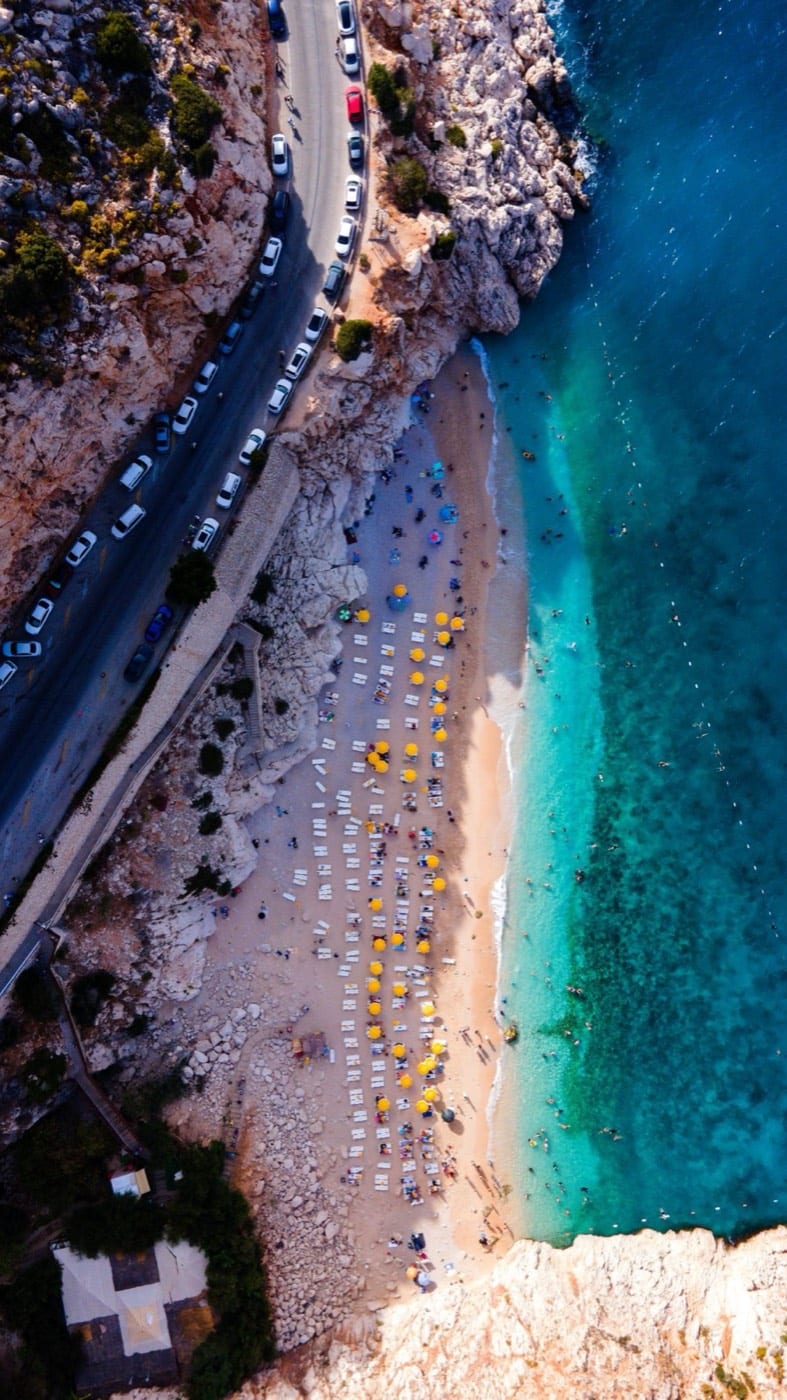
Kaputaş is a small beach wedged between limestone cliffs at the foot of a narrow gorge - 192 steps from the road above. The water is deep blue and very clear, and the cliffs shade the beach in the morning, making afternoon the prime time. The beach is only about 100 metres wide, so it fills quickly in summer.
Water quality: Outstanding. One of the clearest water beaches in Turkey; the blue-green colour is the result of depth and the creek running through the canyon.
Best months: June, September, and early October. July–August is genuinely crowded by mid-morning.
Nearest town: Kalkan (8 km west) and Kaş (18 km east) are both good bases. Kalkan has a better dining scene; Kaş has more budget accommodation and a livelier backpacker atmosphere.
How to get there: Fly to Dalaman or Antalya Airport. From Kaş: shared dolmuş towards Kalkan stops at the Kaputaş turnoff (approximately 25–35 TL). Taxis from Kaş approximately 250–350 TL one-way.
Costs: No entry fee. Sunbeds approximately 200–350 TL per pair from the single beach operator. Limited parking above (fills by 10am in peak season).
3. Çeşme Beaches (İzmir Province)
Çeşme peninsula has the best-developed beach scene on the northern Aegean - a cluster of coves within 30 km of each other. Ilıca Beach has warm thermal springs that mix into the sea, making it unusually warm (water temperature 28–30°C at peak). Altınkum and Pırlanta beaches attract a younger crowd; Ayayorgi is quieter and favoured by families.
Water quality: Good. Ilıca is sandy-bottomed and calm; Blue Flag at main Ilıca beach.
Best months: June–September. The Aegean wind (meltemi) is strongest July–August, which is annoying for sunbathing but popular with windsurfers and kitesurfers.
Nearest town: Çeşme town, 80 km west of İzmir. Well-connected by IZBAN train to Konak in İzmir (approximately 50 minutes, 25 TL), then bus or taxi to Çeşme.
How to get there: Fly to İzmir Adnan Menderes Airport (ADB), then bus to İzmir centre and onwards to Çeşme, or direct airport transfer (approximately 90 minutes, from 600 TL shared).
Costs: Ilıca town beach is free. Resort beach clubs charge 300–800 TL entry (usually redeemable against food/drink). Accommodation in Çeşme from approximately 2,000 TL/night mid-range.
4. Bodrum Beaches (Muğla)
Bodrum is split into several distinct beach areas. The main town beaches (Gümbet, Bardakçı) are convenient but busy. Bitez Bay, a 15-minute dolmuş from Bodrum, is calmer and better for windsurfing. Yalıkavak, on the northern tip, has developed into a marina-focused resort with higher-end beach clubs. Türkbükü on the north coast is the upmarket enclave - less beach, more pool, and the place to spot Turkish celebrities.
Water quality: Good in Bitez and the northern bays; the main Bodrum town beaches can get busier. Blue Flag at Bitez.
Best months: May–June and September. Bodrum is the most fashionable Turkish resort and prices in July–August reflect that.
Nearest town: Bodrum town, with its own airport (BJV) receiving direct flights from many European cities.
Costs: Bodrum beach clubs charge 500–2,000+ TL for a sunbed. Bitez and Ortakent public beaches are free. Mid-range accommodation in Bodrum from approximately 3,000 TL/night in peak season.
Mediterranean / Turquoise Coast
5. Patara Beach (Antalya Province)
Patara is 18 km of unbroken sand - the longest beach in Turkey - backed by dunes and ancient Lycian ruins. Because the beach is a protected nesting site for loggerhead turtles (Caretta caretta), sunbeds are limited and the beach closes at night during nesting season (May–September). Entry to the archaeological site is approximately 80–100 TL; the beach is included.
Water quality: Very good. Waves can be stronger than on sheltered bays, which is better for bodysurfing. No Blue Flag (designation not sought due to protected status).
Best months: May and October for space and mild temperatures. September is a good middle ground - fewer crowds than July–August, sea still warm.
Nearest town: Gelemiş village (also called Patara), a quiet settlement 1 km from the site gate. Kaş is 45 km east (taxi approximately 300–400 TL or dolmuş in season).
How to get there: Fly to Dalaman or Antalya, then bus to Kaş or Fethiye, then dolmuş to Gelemiş. Seasonal minibuses run directly from Kaş.
Costs: Archaeological site entry approximately 80–100 TL (includes beach). No sunbed rental permitted in the central section. Accommodation in Gelemiş from approximately 1,000 TL/night guesthouse.
6. Kaş Beaches (Kaputaş area)
Kaş town itself has no sand beach - it’s a rocky Aegean-style harbour - but the surrounding area is excellent for swimmers. Küçük Çakıl and Büyük Çakıl are small pebble beaches within walking distance of town. The real draw is the boat trips departing daily to sea caves, the sunken city of Kekova, and hidden coves reachable only by water.
Best months: May–October. Kaş has a relaxed, non-package-holiday character that persists even in August.
Costs: Boat day trips from approximately 500–800 TL per person. Kayak rental from approximately 300 TL/half day. Accommodation in Kaş from approximately 1,200 TL/night mid-range.
7. Cleopatra Beach (Alanya)
Cleopatra Beach (Kleopatra Plajı) is Alanya’s main beach - 2 km of golden sand with calm, warm water and the dramatic Alanya castle visible on the headland above. The name comes from a local legend that Cleopatra swam here; the sand is unusually fine. The beach has full facilities: sunbeds, showers, lifeguards, and cafes.
Water quality: Good. Warm and calm, particularly in the western section near the marina. Blue Flag certified.
Best months: April–November. Alanya has the longest swimming season in Turkey thanks to its sheltered position and warm eastern Mediterranean water.
Nearest town: Alanya town centre, directly behind the beach. Alanya is 130 km east of Antalya, accessible by bus (approximately 2 hours, from 80 TL).
How to get there: Fly to Gazipaşa-Alanya Airport (GZP), which receives direct seasonal flights from many European cities (35 km from the beach). Alternatively, fly to Antalya (AYT) and take a bus east.
Costs: Public beach sections are free. Sunbeds from approximately 200–400 TL per pair. Mid-range hotel directly on the beach from approximately 2,500 TL/night in July.
8. Konyaaltı Beach (Antalya)
Konyaaltı is Antalya’s urban beach - 7 km of grey-blue pebble along the western edge of the city, backed by the Taurus Mountains. It’s not as photogenic as the resort beaches further west, but the mountain backdrop is distinctive and it’s exceptionally easy to reach from the city. The eastern section (closer to the Rock Tombs area) is quieter.
Water quality: Good. Blue Flag on the organised section. Water temperature reaches 28–29°C in August.
Best months: May–June and September are best for uncrowded conditions. The beach is walkable year-round as a sundown promenade.
Nearest town: Antalya city centre, 10 minutes by tram (line T1 to Konyaaltı stop, approximately 5 TL).
How to get there: Fly to Antalya Airport (AYT), Turkey’s busiest resort airport. Direct flights from most European cities May–October.
Costs: Public beach free. Sunbed-and-umbrella rental approximately 150–300 TL. Accommodation in Antalya from approximately 1,500 TL/night mid-range.
9. Butterfly Valley (Fethiye, accessible by boat)
Butterfly Valley (Kelebek Vadisi) is a secluded cove at the base of a canyon, reachable only by boat from Ölüdeniz or Faralya village above. Named after the Tiger butterfly that breeds in the gorge, it has a small sandy beach, a freshwater cascade, and a basic campsite. There are no roads in.
Water quality: Crystal clear. One of the least-developed coves on the entire Turquoise Coast.
Best months: May–September (boats run April–November). It’s genuinely remote - plan accommodation or know the boat timetable back.
How to get there: Boat from Ölüdeniz Blue Lagoon dock, approximately 100–150 TL return per person. Boats typically run morning and afternoon with a return in the evening. Hiking down from Faralya is possible but steep (1–2 hours).
Costs: Camping approximately 200–400 TL/night (basic facilities). Day-tripper boat approximately 100–150 TL return.
Black Sea Coast
10. Amasra Beaches (Bartın Province)
Amasra is a small historic peninsula town on the Black Sea with two beaches - Küçük Liman and Büyük Liman - either side of the headland. The town itself is genuinely pretty, with Byzantine walls and Ottoman houses, and the beaches, while small, are well-maintained. The Black Sea means cooler water (18–22°C in summer) and a greener, more overcast climate than the Aegean.
Water quality: Good - less saline than the Mediterranean, which some swimmers prefer. No strong currents near Amasra.
Best months: July–August are the warmest; June and September are quieter. The Black Sea coast doesn’t have the dry summers of the Aegean - expect occasional showers.
Nearest town: Amasra itself; 210 km from Ankara (approximately 3.5 hours by car or bus). No direct airport - closest is Zonguldak Airport (90 km, limited flights) or fly to Ankara and travel overland.
Costs: Public beaches free. Accommodation in Amasra from approximately 1,000 TL/night.
11. Uzungöl and Rize Coastal Villages
Uzungöl is an inland lake rather than a sea beach, but the Rize coastal strip between Trabzon and Artvin has several small pebble coves used by local swimmers. The Black Sea coast here is dramatic - narrow coastal roads, tea plantations on the slopes, and misty mountains above. It’s not a beach holiday destination but a genuinely different experience from the Aegean resorts.
Best months: July–August for warmth and less rain. This area gets significant rainfall year-round.
How to get there: Fly to Trabzon Airport (TZX), Turkey’s main Black Sea hub, with frequent flights from Istanbul (approximately 1 hour 20 minutes, from 1,000 TL). Rize is 75 km east of Trabzon by road.
How to choose
| If you want… | Go to… |
|---|---|
| Famous turquoise lagoon | Ölüdeniz |
| Wild, dramatic scenery | Kaputaş or Butterfly Valley |
| Long empty sand | Patara |
| Easy city beach | Konyaaltı (Antalya) or Çeşme (İzmir) |
| Lively resort atmosphere | Cleopatra Beach (Alanya) or Bodrum |
| Boat trips and coves | Kaş or Fethiye region |
| Off-the-beaten-track | Amasra (Black Sea) |
The Aegean and Mediterranean coasts are swimmable from late April through October. Peak season (July–August) brings higher prices, larger crowds, and early arrival being essential for a good sunbed. Late May, June, and September consistently offer the best combination of warm water, reasonable prices, and manageable crowds across all regions.
Most beach regions are served by Dalaman (DLM), Antalya (AYT), İzmir (ADB), or Bodrum (BJV) airports. Search flights to Turkey to compare routes, and pre-book an airport transfer in peak season when taxis fill quickly outside major resorts.
Plan Your Trip
✈️ Book your flights to Türkiye 🛡️ Get travel insurance 📱 Stay connected with an eSIM 🚗 Rent a car