Turkey is one of the world’s top five geothermal countries - sitting on a fault line where African and Eurasian tectonic plates meet, the Anatolian plateau is riddled with hot springs, mineral pools, and thermal spa traditions stretching back to Roman times. Pamukkale is the headline act internationally, but the country has thermal destinations for every type of visitor: purpose-built hotel spa complexes in Afyon, city-edge hot spring districts in Bursa, accessible day-trip baths from Istanbul in Yalova, and the genuinely unusual fish therapy pools of Kangal near Sivas.
Pamukkale, Denizli: The Travertine Terraces
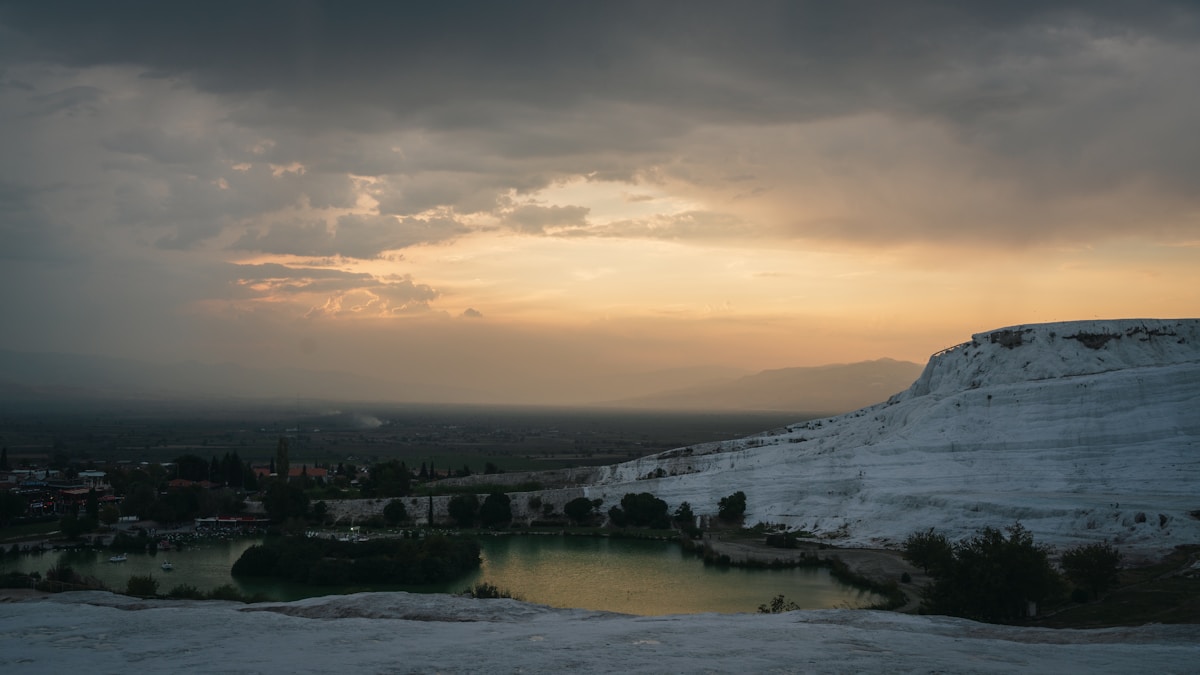
Pamukkale - meaning “cotton castle” in Turkish - is the most visually dramatic thermal site in Turkey and one of the most photographed natural landscapes in the world. The white travertine terraces, formed by calcium carbonate deposits from the thermal spring water as it flows down the hillside, stack like a series of shallow white bowls, often filled with turquoise mineral-rich water. The site is a UNESCO World Heritage Site and sits adjacent to the ancient Greco-Roman city of Hierapolis.
Visiting the terraces: Entry to Pamukkale (including Hierapolis) costs approximately ₺600–700 per person as of 2026. The site opens daily at approximately 06:00–21:00 in summer, shorter hours in winter - confirm current times at the gate. Shoes must be removed before walking on the terraces. Visitor numbers are managed; early morning and late afternoon are the least crowded times.
Antique Pool (Cleopatra’s Pool): A separate ticket (approximately ₺700–900 as of 2026) admits you to the Antique Pool, a geothermally heated swimming pool at 35°C littered with sunken Roman column fragments. It’s the only place at Pamukkale where you can fully swim in thermal water. Towel rental is available on site.
Hierapolis archaeological site: Included in the main Pamukkale entry fee. The ancient city includes a well-preserved Roman theatre (2nd century AD), a necropolis, basilicas, and the Hierapolis Museum. Allow 2–3 hours alongside the terraces.
Where to stay: Several mid-range hotels in Pamukkale village, directly below the terraces, have their own thermal pools fed by the same spring system. The Cotton Castle Hotel (approximately ₺3,500–5,500 per night as of 2026) and Venus Hotel (approximately ₺2,000–3,500 per night) both have thermal pools and are within walking distance of the site entrance. Booking ahead is recommended in spring and summer.
Getting there from Denizli: Pamukkale is 20km from Denizli, the nearest city with a train and bus station. Dolmuş minibuses run frequently from Denizli otogar (bus station) to Pamukkale village - journey approximately 30–40 minutes, fare approximately ₺30–50 as of 2026. Alternatively, taxis from Denizli cost approximately ₺250–400. From Istanbul, Turkish Airlines and Pegasus fly to Denizli Çardak Airport (DNZ) in approximately 1 hour 10 minutes; fares from approximately ₺800–2,500 return depending on timing.
Afyon (Afyonkarahisar): Thermal Hotel District
Afyonkarahisar - usually shortened to Afyon - is Turkey’s premier purpose-built thermal spa destination, and for serious thermal hotel stays, it surpasses Pamukkale. The city sits in western Anatolia approximately 250km south of Ankara, and the surrounding area has been developed into a dense cluster of thermal hotel complexes, most of them built in the last 25 years specifically around the geothermal springs.
The Afyon thermal hotels are large, all-inclusive or half-board properties with indoor and outdoor pools fed directly from geothermal springs at temperatures typically between 38°C and 44°C. The water is rich in sodium, calcium, and magnesium and is marketed for conditions including rheumatism, joint pain, and skin disorders.
Recommended thermal hotels:
- Ikbal Thermal Hotel & Spa (Sandıklı, 35km from Afyon city): A large resort-style property with multiple indoor thermal pools, outdoor pool, sauna, and hammam. Room rates approximately ₺3,500–6,500 per night as of 2026, typically half-board.
- Grand Deniz Hotel (Sandıklı): Smaller and more affordable than Ikbal, approximately ₺2,500–4,500 per night. Thermal pools are available to guests around the clock.
- Afyon Thermal Kervansaray Hotel (Afyon city outskirts): City-adjacent, good for those wanting to combine thermal bathing with visits to Afyon’s old city and opium poppy fields. Rates approximately ₺3,000–5,500 per night as of 2026.
Most Afyon thermal hotels allow day-use access to thermal pools for non-staying guests - day passes typically cost approximately ₺500–900 per person. Call ahead to confirm availability as day passes are often limited on weekends.
Getting there: Afyon is approximately 4–4.5 hours by bus from Istanbul (served by Pamukkale Turizm, Kamil Koç, and Metro Turizm from Istanbul otogar; fare approximately ₺350–600). From Ankara, it’s approximately 3 hours by bus (₺200–350). There is no direct train from Istanbul to Afyon; intercity buses are the standard option. The Sandıklı thermal hotel cluster is 35km beyond Afyon city - most hotels run shuttle transfers from the bus station.
Best season: Afyon thermal hotels operate year-round. Winter weekends (December–February) are particularly popular with domestic Turkish tourists; book 3–4 weeks ahead for January and February. Spring and autumn have good availability and slightly lower rates.
Yalova: Thermal Baths Near Istanbul
Yalova, on the southern shore of the Marmara Sea directly opposite Istanbul, has been associated with thermal bathing since the Byzantine era. Atatürk himself had a summer house here (now a museum), and the tradition of Istanbulites taking the ferry to Yalova for a weekend of thermal bathing continues today.
The main thermal facilities are concentrated in the Termal district, 12km from Yalova city centre. The Yalova Termal facilities include the historic Grand Hotel Termal (government-operated), the Çınar Hotel, and several independent bathhouses. Water temperatures at Termal range from approximately 58°C (raw spring temperature) to 38–42°C in the pools after cooling.
Yalova Termal entry: The historic bathhouses (Valide Sultans’ Bath, Kurşunlu Bath) within the Termal complex charge entry of approximately ₺250–450 as of 2026. The Grand Hotel Termal’s pools can be accessed by day visitors for approximately ₺600–900.
Getting there from Istanbul: Fast catamaran ferries (IDO) run from Yenikapı terminal (European side) to Yalova in approximately 65–75 minutes; fares approximately ₺80–150 each way as of 2026. Ferries operate multiple times daily. From Yalova ferry terminal to Termal district: dolmuş minibuses run regularly (approximately ₺30–40, 20–25 minutes). The ferry route makes this an excellent Istanbul day trip or weekend escape.
Bursa Çekirge: Ottoman Spa Tradition
Bursa, the first Ottoman capital and a major city of 3 million, has its own long thermal tradition centred on the Çekirge district (roughly translating as “grasshopper”), 3km west of the city centre. The Çekirge hot springs feed both historic public hammams and modern hotel complexes. Temperatures run approximately 47–65°C at source, cooled to bathing temperature in pools.
Historic hammams:
- Eski Kaplıca (Old Baths): Possibly the oldest still-operating thermal hammam in the world, with foundations attributed to the Byzantine emperor Justinian I (6th century AD), rebuilt under the Ottoman Sultan Murad I in the 14th century. Located within the Kervansaray Termal Hotel grounds. Entry for non-hotel guests approximately ₺600–900 as of 2026, including towel and locker.
- Yeni Kaplıca (New Baths): Built in 1555 under Süleyman the Magnificent. Separate male and female sections. Entry approximately ₺400–600 as of 2026. One of the best-preserved Ottoman hammam interiors still in active use.
Thermal hotels in Çekirge:
- Kervansaray Termal Hotel: The largest property, with direct spring access and the historic Eski Kaplıca hammam on site. Room rates approximately ₺4,500–8,000 per night as of 2026.
- Hotel Çelik Palas: A grand early-20th-century hotel (1933) that retains much of its period character, with a thermal pool complex. Room rates approximately ₺3,500–7,000 per night as of 2026. Atatürk stayed here - his suite is preserved as a museum room.
Getting there from Istanbul: Bursa is the most accessible of Turkey’s thermal destinations for those based in Istanbul. IDO fast ferry from Yenikapı to Mudanya (Bursa’s port) runs approximately 1 hour 30 minutes (₺100–180); then bus or taxi 30km to Bursa city. Alternatively, direct buses from Istanbul otogar take approximately 3.5–4 hours (₺250–450). Within Bursa, taxis from city centre to Çekirge cost approximately ₺100–180.
Kangal Fish Therapy, Sivas
Kangal, a small town approximately 95km from Sivas in central Anatolia, hosts what may be the world’s most unusual thermal spring experience. The Kangal Fish Spring (Balıklı Kaplıca) is a geothermal pool at approximately 36°C naturally populated with thousands of Garra rufa fish - the same species used in fish pedicure spas worldwide, but here in their natural thermal habitat and in far greater numbers.
The fish feed on dead skin and are documented to benefit psoriasis sufferers; a 1992 study in the Journal of the European Academy of Dermatology and Venereology noted significant improvement in psoriasis plaques after two-week treatment courses at Kangal. The site has been described in medical literature as a natural balneotherapy destination.
Visiting Kangal Fish Spring: The facility is basic - think functional government-run spa rather than luxury retreat. There are separate pools for male and female visitors, changing facilities, and basic accommodation (guesthouse-style, approximately ₺800–1,500 per night). Entry and fish therapy session approximately ₺300–500 as of 2026. Day visitors are welcome.
For psoriasis patients, longer stays of 2–3 weeks are typically recommended for therapeutic benefit. The Kangal municipality and various private operators offer package stays combining accommodation and multiple daily sessions.
Getting there from Sivas: Sivas is served by Turkish Airlines and Anadolujet from Istanbul (approximately 1.5 hours, from ₺800–2,000 return). From Sivas bus station, shared taxis (dolmuş) run to Kangal town centre (approximately 90 minutes). From Kangal town, the fish spring site is a further 3km by taxi or on foot.
What to Pack and Practical Notes
All Turkey’s thermal sites have changing facilities and towel rental, but bringing your own swimsuit and flip-flops is strongly recommended. Turkish thermal spa etiquette requires a swimming cap in most indoor pool settings - a cap can usually be purchased on site if you forget.
Thermal water at temperatures above 40°C is not recommended for pregnant women, people with severe heart conditions, or those with low blood pressure. Most sites post advisory notices; err on the side of caution and consult a doctor if in doubt.
Photography rules vary: the Pamukkale terraces are freely photographed; some traditional hammam interiors (particularly the female sections at historic baths) prohibit cameras entirely.
For a broader Turkish spa and wellness trip, these thermal sites pair naturally with a Bursa city guide visit to see the Grand Mosque and old bazaars, or with a Pamukkale things to do guide if you want to explore Hierapolis more thoroughly. The Cappadocia vs Pamukkale comparison may help if you are choosing between the two most visited inland UNESCO sites in Turkey.
Browse tours: Guided thermal and wellness tours in Turkey - useful if you want a combined Pamukkale/Hierapolis tour with transport included from Antalya or Denizli.