Istanbul and Athens are two of the world’s great cities - both carrying the weight of ancient civilisation into a modern, electric present. Istanbul was the capital of three successive empires; Athens gave the world democracy, philosophy, and the Parthenon. Choosing between them depends on what you want from a city break: Istanbul rewards those who want layered complexity, diversity, and relentless energy; Athens suits those who want ancient history in a more compact, walkable package with beaches close at hand.
Quick Verdict
| Category | Istanbul | Athens |
|---|---|---|
| Ancient History | Outstanding (Byzantine, Ottoman) | Outstanding (Classical Greek) |
| Monuments | Hagia Sophia, Topkapı, Blue Mosque | Acropolis, Parthenon, Agora |
| Food Scene | World-class | Excellent |
| Cost | Moderate | Moderate |
| Nightlife | Exceptional | Very good |
| Size | Enormous (15M+ population) | Compact (3.6M population) |
| Beach Access | Limited | Good (Riviera nearby) |
| Best For | City immersion, diversity | History focused, island hopping |
History and Culture
This is the closest category to call. Both cities carry extraordinary historical weight.
Istanbul offers compressed millennia: Greek (Byzantium), Roman, Byzantine, and Ottoman layers, all visible within walking distance of each other. Hagia Sophia - originally built in 537 AD - served as a church, mosque, and museum before returning to mosque status in 2020 (entry free with modest dress). Topkapı Palace was the seat of the Ottoman Empire for 400 years (entry approximately ₺1,000 as of 2026). The Istanbul city hub holds Sultanahmet, Beyoğlu, Kadiköy, and Balat - each a distinct historical chapter. The Archaeological Museum near the palace contains one of the finest collections of ancient artefacts in the world.
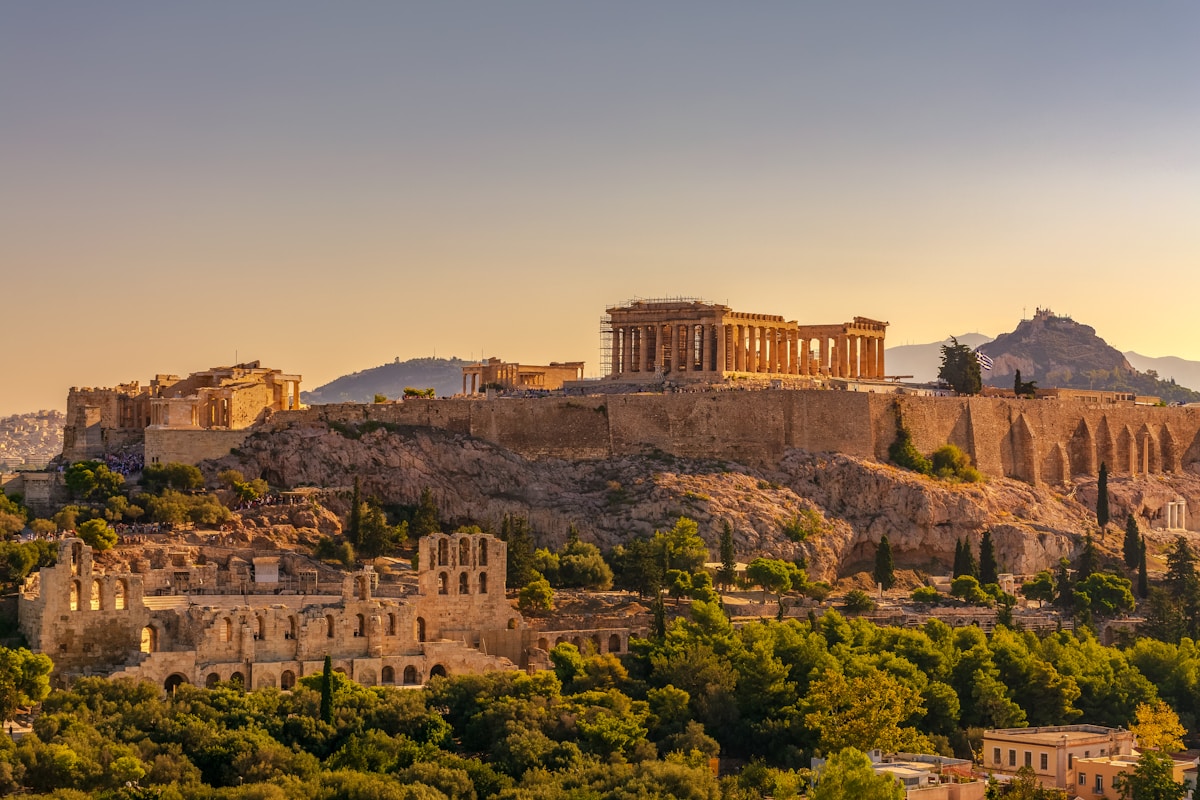
Athens centres its ancient heritage on the Acropolis, which contains the Parthenon (447–438 BC), the Erechtheion, and the Temple of Athena Nike. The Acropolis Museum at the foot of the hill is outstanding - modern architecture housing classical sculpture, with the Parthenon frieze displayed at eye level (entry approximately €20). The Ancient Agora, Temple of Hephaestus, and Kerameikos cemetery round out the ancient core. Athens is compact enough to walk between most major ancient sites in a single day.
Verdict: Different eras, comparable density. Istanbul wins on sheer volume of major monuments. Athens wins on coherence - the Acropolis is the most recognisable ancient monument in the world.
Food
Istanbul is one of the world’s great eating cities. The Istanbul food and drink scene spans simit and börek (₺8–30) through neighbourhood meyhanes (₺250–500 per head) to serious fish restaurants on the Bosphorus (₺700–1,400 per head). Beyoğlu has Turkish-French fusion; Kadiköy has the city’s best street food; Balat has growing café culture. Istanbul also has the deepest vegan and vegetarian options in Turkey.
Athens has undergone a genuine food renaissance in the last decade. Central Market (Varvakios Agora) supplies excellent raw ingredients. Monastiraki and Psirri neighbourhoods hold tavernas serving mezze (small plates from €12–25) and grilled meat. Piraeus fish tavernas are outstanding for seafood. Restaurant meals for two with wine at a good mid-level restaurant run approximately €60–100.
In Istanbul, the equivalent mid-level meal for two runs approximately ₺600–1,200, which translates to roughly €18–35 at 2026 exchange rates - making Istanbul meaningfully cheaper for comparable quality.
Cost Comparison
| Expense | Istanbul | Athens |
|---|---|---|
| Budget hotel | ₺900–1,800/night (~€27–54) | €60–120/night |
| Midrange hotel | ₺2,500–5,000/night (~€75–150) | €120–250/night |
| Restaurant meal (midrange) | ₺150–350/person (~€4–10) | €18–35/person |
| Museum entry | ₺300–1,000 | €10–20 |
| Airport transfer | ₺800–1,200 | €12–40 |
Prices approximate as of 2026. See our Turkey travel costs guide for full Turkey breakdowns.
Istanbul is significantly cheaper than Athens for accommodation and food at current exchange rates. The Turkish lira’s value means Istanbul delivers exceptional value by European standards - a fact that has driven substantial growth in tourism. Athens has become notably more expensive since 2020.
Nightlife
Istanbul is one of Europe’s busiest nightlife cities. Beyoğlu and Karaköy run from sunset to 4am. Bosphorus clubs in summer (Suma Beach, Reina, Babylon) draw large crowds; cover charges run approximately ₺300–600 (€9–18). The rooftop bar scene in Cihangir and Galata is more relaxed.
Athens nightlife concentrates in Gazi, Monastiraki, and Exarchia. Bouzouki clubs (live Greek music) run late into the night. The Athenian summer moves to beach clubs along the Athenian Riviera (Glyfada, Vouliagmeni) - upscale venues with cover charges of €30–60.
Istanbul has more variety and longer hours; Athens has bouzouki and beach clubs that are genuinely unique.
Accommodation
Istanbul midrange options: Hotel Empress Zoe in Sultanahmet at approximately ₺3,200–5,500/night, Vault Karaköy at ₺4,500–7,000/night, Pera Palace Hotel (historic, opened 1892) at ₺6,000–12,000/night. See our Istanbul hotel recommendations.
Athens midrange options: Hotel Grande Bretagne at approximately €400–900/night (landmark property on Syntagma Square), Athens Capital Hotel at €200–350/night, Electra Metropolis at €180–320/night. Budget options in Monastiraki and Psirri run €70–140/night.
Search hotels in Turkey on Booking.com
Getting Around
Istanbul has an extensive public transport network: metro (M1–M11 lines), tram, funicular, ferry, and Marmaray rail, all covered by İstanbul Kart (approximately ₺44 to buy, ₺7–12 per journey as of 2026). The city is huge - allow 40–60 minutes for cross-city journeys. Taxis exist but overcharging tourists is common; use the BiTaksi app.
Athens is compact and walkable around the historic core. The metro (3 lines) connects the airport to central Athens in approximately 40 minutes for €11. Most ancient sites are within 20–30 minutes’ walk of Monastiraki. Taxis are metered and generally reliable.
Visas
Istanbul / Türkiye: Most Western, Australian, and North American travellers can obtain an e-Visa online before travel (approximately $50–60 USD as of 2026). See our Turkey visa guide for current requirements by nationality.
Athens / Greece: Schengen zone - EU/EEA nationals need only a national ID. Most other nationalities have 90-day visa-free access under the Schengen agreement.
When to Visit
| Season | Istanbul | Athens |
|---|---|---|
| Spring (Apr–May) | 12–22°C, excellent | 18–25°C, ideal |
| Summer (Jun–Aug) | 25–33°C, very busy | 30–38°C, hot and dry |
| Autumn (Sep–Oct) | 15–25°C, best season | 22–30°C, still warm |
| Winter (Dec–Feb) | 5–12°C, quiet | 10–16°C, mild |
Both cities are at their best in April–May and September–October. Athens in July–August is extremely hot and the Acropolis is crowded from 9am; early morning (opening) or late afternoon visits are recommended. Istanbul’s summer is humid. See our best time to visit Turkey guide for full monthly detail.
Which to Choose
Choose Istanbul if:
- You want to feel the complexity of a city that has been the centre of the world
- Budget is a significant factor - Istanbul is cheaper at current exchange rates
- World-class food variety and late-night energy matter
- You want the crossing-continents experience (Europe + Asia)
- You’re interested in Ottoman architecture alongside classical antiquity
Choose Athens if:
- Classical Greek history is the primary draw
- You want island-hopping as part of the trip (Athens is the hub for Greek islands)
- A compact, walkable city suits your travel style
- You prefer Schengen-area travel logistics (no e-Visa)
Do both: The two cities are approximately 1 hour apart by air; direct flights run frequently year-round. A 10-day itinerary combining Istanbul (4 nights) and Athens (3 nights) plus a Greek island (3 nights) is a classic Eastern Mediterranean circuit that showcases two of the world’s great civilisations without overcomplicating the logistics.
Frequently Asked Questions
Is Istanbul or Athens better for history? Both cities deliver exceptional historical depth, but in different eras. Istanbul offers Byzantine and Ottoman history at overwhelming scale - Hagia Sophia, Topkapı Palace, the Grand Bazaar, and the Archaeological Museum represent accumulated civilisation across 2,500 years. Athens concentrates on Classical Greek antiquity, anchored by the Acropolis and Parthenon - arguably the single most recognisable ancient monument in the world. If Greek-era history is your primary interest, Athens is the stronger choice. If you want Ottoman, Byzantine, and Roman layers together, Istanbul cannot be matched.
Which is cheaper, Istanbul or Athens? Istanbul is significantly cheaper than Athens at 2026 exchange rates. Accommodation, food, and transport in Istanbul run at roughly 40–60% of Athens prices for comparable quality. A budget traveller can eat well in Istanbul for approximately ₺150–250 per meal (€4–7); the equivalent in Athens runs €15–25. Turkey’s e-Visa cost adds a small upfront expense that Greece does not, but Istanbul’s daily costs are lower once you’re there.
Can you visit Istanbul and Athens in one trip? Easily. Direct flights between Istanbul Atatürk/IST and Athens (ATH) take approximately 1 hour and run frequently year-round. A 10–14 day trip can meaningfully cover both cities plus add a Greek island or Turkish Aegean extension. Istanbul (4 nights) → Athens (3 nights) → Santorini or Mykonos (3–4 nights) is one of the most popular Eastern Mediterranean circuits for European and North American visitors.
Essential extras: An eSIM for Turkey from Airalo gives you mobile data from the moment you land - no airport SIM queue, no physical card. Travel insurance for Turkey should cover medical costs; Turkish private hospitals charge full rates for uninsured visitors.
See also: Istanbul travel guide · 3-day Istanbul itinerary · Istanbul vs Antalya · Istanbul vs İzmir · Turkey vs Greece
Plan Your Trip
✈️ Book your flights to Türkiye 🛡️ Get travel insurance 📱 Stay connected with an eSIM 🚗 Rent a car