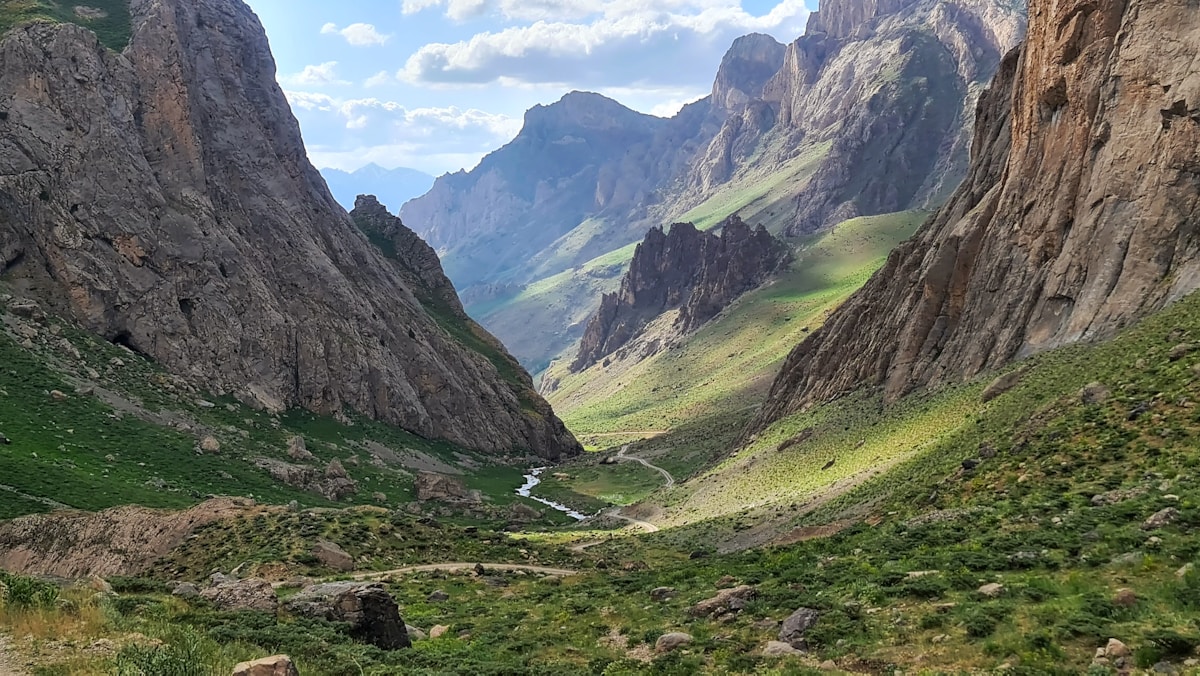
Eastern Turkey rewards patience. The distances between cities are long, the roads traverse high plateau country that can feel genuinely remote, and the sites - Ani, Ishak Pasha Palace, Lake Van - are the kind that stay with you. This 10-day itinerary extends the standard 5-day triangle to include Erzurum, deeper time at Kars and Doğubeyazıt, the volcanic landscapes around Van, and an optional onward connection to Trabzon and the Black Sea.
Before you go
Best season: June to September. July and August are warm (25–32°C in Van, cooler at altitude near Kars and Erzurum), with clear Ararat views before afternoon cloud builds. September brings the best combination of light, fewer tourists, and harvested fields across the plateau. Avoid November to April unless you want a winter adventure - Kars regularly hits −15°C and roads across the Erzurum plateau can close without notice.
Getting there: The most atmospheric start is the Eastern Express train from Ankara (Gar station) to Kars - a 24-hour overnight journey across the Anatolian steppe. Book 2–3 months ahead for autumn. Alternatively, fly to Erzurum (ERZ) direct from Istanbul (1.5 hours) and start the route from there. Van Ferit Melen Airport (VAN) has direct Istanbul connections for the exit.
Visas: Most nationalities require a Turkish e-Visa obtained in advance at evisa.gov.tr - approximately USD 50 as of 2026 for many passport holders.
Day 1–2: Erzurum - gateway to the east
Arriving in Erzurum (1,890 m altitude) is your first reminder that eastern Turkey operates at a different pace and scale. The city sits on a high plateau ringed by mountains and is one of Turkey’s coldest provincial capitals. Two days here make the most of a place most itineraries skip entirely.
Day 1: Old city monuments
Morning: Walk to the Çifte Minareli Medrese (Twin Minaret Seminary, circa 1253 CE), the Seljuk masterpiece whose carved blue-tiled minarets appear on half the postcards from eastern Turkey. Entry is free; opening hours are 08:00–18:00 daily. The stone courtyard is peaceful and the detail on the portal is exceptional.
Next, the Yakutiye Medrese (now a Turkish and Islamic Arts Museum, entry approximately ₺60 as of 2026) and the nearby Erzurum Kalesi (castle) with its clock tower and panoramic views over the city.
Afternoon: The Covered Bazaar (Kapalı Çarşı) on Cumhuriyet Caddesi sells the region’s distinctive black oltu stone jewellery alongside dried fruits, local honey, and the cured meat (pastırma) that Erzurum is famous for. Budget approximately 1.5 hours to walk and browse.
Dinner: Salon Asya (Kazım Karabekir Caddesi) is a local institution for Erzurum’s distinctive cağ kebabı - meat cooked on a horizontal rotating spit, served on skewers with flatbread and pickles. Approximately ₺200–300 per person including drinks as of 2026.
Day 2: Palandöken day trip and depart to Kars
Morning: The ski resort of Palandöken (15 km south of the city) operates year-round as a mountain destination - in summer, the cable car runs to approximately 3,200 m for views across the Erzurum plain. Cable car return: approximately ₺250 as of 2026.
Afternoon: Take the afternoon bus to Kars (approximately 3 hours, ₺180–230 as of 2026). Buses depart from Erzurum Otogar multiple times daily. Arrive Kars by early evening.
Budget tier: Guesthouse Erzurum Centre (Cumhuriyet Caddesi area) - approximately ₺900–1,200/double/night as of 2026. Mid-range tier: Hotel Dilaver or Grand Hitit Hotel - approximately ₺2,000–2,800/double/night as of 2026.
Days 3–4: Kars - cheese, castle, and the Armenian capital at Ani
Kars is a small city with a disproportionate draw. The Russian-era stone architecture, the artisan cheese trade, and its role as the departure point for the extraordinary Ani ruins make it worth two full days.
Day 3: Kars city
Morning: Walk the Russian-era street grid running north of Cumhuriyet Caddesi. The arched stone facades and wide boulevards date from the Russian administration of 1877–1918 and are unlike anything else in Turkey. Kars Kalesi (castle) sits on the hill above - free entry, views over the plateau, allow 45 minutes. The small Kars Museum (₺100 as of 2026, closed Mondays) has good Urartian artefacts and local history displays.
Afternoon: The cheese shops around Atatürk Caddesi are famous across Turkey. Kars Gravyer (a hard mountain cheese similar to Gruyère) and kaşar are the specialities. Buy direct from the producers; a 500 g block costs approximately ₺150–250 as of 2026. Then walk to Lake Kars (Kars Gölü) - approximately 5 km north of the city centre, accessible by taxi for approximately ₺80–120 each way. The shallow seasonal lake attracts flamingos and waders in summer and is a good evening walk.
Dinner: Ocakbaşı Kars near the market area is popular for grilled lamb and regional specialities. Approximately ₺250–400 per person as of 2026.
Day 4: Ani ruins - full day
The medieval Armenian capital of Ani (UNESCO World Heritage Site, entry approximately ₺350–450 as of 2026) requires a full day. Take a taxi from Kars (approximately 45 km, ₺300–400 return with waiting time as of 2026). Arrive by 09:00 before the heat.
The site covers approximately 1.5 km² of walled ruins on a dramatic cliff above the Akhuryan River - the border with Armenia. Key monuments include the Cathedral of Ani (circa 1001 CE, one of the finest Armenian churches in existence), the Church of the Redeemer (Surp Prkich), the Church of St Gregory of the Tigranids, the Manuchihr Mosque (the earliest mosque in Anatolia), and the city walls with their original towers.
Allow 4–5 hours on site. Bring water, wear sun protection, and allow 45 minutes to walk between the main monuments. A licensed guide adds considerable depth - the site’s history spans Urartian, Armenian, Byzantine, Seljuk, Georgian, and Mongol periods. Guide rate: approximately ₺400–600 for a half-day as of 2026.
Budget tier: Hotel Çamlıbel Kars - approximately ₺1,100–1,500/double/night as of 2026. Mid-range tier: Hotel Katerina Sarayı (restored Russian-era building) - approximately ₺2,500–3,500/double/night as of 2026. Luxury tier: Bolat Kars Hotel (best in city) - approximately ₺4,500–6,000/double/night as of 2026.
Days 5–6: Doğubeyazıt - Ishak Pasha and Ararat views
The drive from Kars to Doğubeyazıt (approximately 165 km, 2.5–3 hours by bus via Ağrı) crosses the open plateau and then drops into the Doğubeyazıt plain, with Mount Ararat (5,137 m) dominating the entire horizon. This is one of the most arresting arrivals in Turkey.
Day 5: Ishak Pasha Palace and the plain
Ishak Pasha Palace (İshak Paşa Sarayı) sits on a ridge 5 km east of the town. Built between 1685 and 1784 CE for the regional Kurdish-Ottoman ruler Ishak Pasha, it combines Ottoman, Seljuk, Georgian, Armenian, and Persian architectural elements in a single complex. Entry: approximately ₺350–450 as of 2026. Open 08:00–17:00. Take a taxi from the town centre (approximately ₺80–120 return with waiting time).
Spend 2–3 hours exploring the palace’s mosque, throne room, harem section, and the smaller tomb mosque behind. The view of Doğubeyazıt town below and Ararat beyond is the classic eastern Turkey photograph.
Afternoon: The Urartian fortress of Beyazıt Kalesi behind the palace (free entry) extends the morning and adds the Urartian layer to the site. Then walk the central bazaar in Doğubeyazıt for local honey, dried figs, and hand-woven rugs.
Day 6: Meteor Crater Lake and Ararat views
Meteoric Crater Lake (Meteorit Krateri Gölü, also called the Diyadin Sütunları area) is 35 km east of Doğubeyazıt - a taxi there and back costs approximately ₺300–400 as of 2026. The drive itself is stunning, skirting the base of Ararat across flat agricultural plain.
If you plan to trek Mount Ararat (Ağrı Dağı), a licensed guide is legally required and the permit process should be begun 2–3 months before arrival. A 4-day guided summit attempt costs approximately ₺15,000–25,000 per person as of 2026 including equipment and guide. Most itinerary travellers skip the summit and are content with the views from Ishak Pasha.
Dinner: Yusuf Sofrası near the town centre is reliable for Kurdish-style lamb stew (haşlama), flatbread, and ayran. Approximately ₺180–280 per person as of 2026.
Budget tier: Isfahan Hotel Doğubeyazıt - approximately ₺900–1,300/double/night as of 2026. Mid-range tier: Hotel Grand Derya - approximately ₺2,200–3,200/double/night as of 2026. Luxury tier: Ararat Hotel (best views, suites facing the mountain) - approximately ₺5,000–7,500/double/night as of 2026.
Days 7–9: Van - the lake, the castle, and the cats
The bus from Doğubeyazıt to Van takes approximately 2.5 hours (₺150–200 as of 2026, via Muradiye). Van is the largest city in the eastern region, with a proper restaurant and hotel scene, and the most logistically comfortable base for exploring the lake.
Day 7: Van city and castle
Morning: Van Kalesi (Van Castle) occupies a 3 km rocky ridge on the western shore of Lake Van, with the old city ruins (destroyed in 1915) below. Free entry, open sunrise to sunset. The Urartian cuneiform inscriptions carved into the rock face are among the best in Turkey. Allow 2 hours.
Afternoon: Walk the waterfront to the Van Museum (approximately ₺150 as of 2026, closed Mondays) - outstanding Urartian gold and bronze collections from the 9th–7th centuries BCE, one of the best archaeological museums in eastern Turkey.
Then find the Van cats - the town’s famous semi-wild white cats with different-coloured eyes (one blue, one amber) live around the Van Kedisi Research Centre on the university campus. Entry is free; allow 30 minutes.
Dinner: Van is famous for its kahvaltı (breakfast culture) - the Van breakfast spread of 30+ small dishes including herbs, cheeses, honey, eggs, and bread is actually served all day at many restaurants. Sütçü Ahmet near the market is the most famous, approximately ₺250–350 per person as of 2026.
Day 8: Akdamar Island and Lake Van
Akdamar Island (Akdamar Adası) is one of the most beautiful sites in Turkey. The 10th-century Church of the Holy Cross (Kutsal Haç Kilisesi), built for the Armenian Vaspurakan Kingdom, sits in perfect condition on a small island in the turquoise lake. Bas-relief carvings of biblical scenes cover the exterior walls in extraordinary detail.
Ferries depart from Gevaş jetty (75 km west of Van, approximately ₺200–300 by taxi from Van as of 2026). Ferry return: approximately ₺100–150 as of 2026. Allow 30 minutes on the island plus travel time. Visit morning for the best light on the carvings.
Afternoon: The drive back via the western lakeside road passes through the town of Tatvan at the far end of the lake, with views of Nemrut Volcano Crater Lake (Nemrut Kalderası, not to be confused with the Nemrut in Adıyaman). A shared taxi from Tatvan to the crater rim costs approximately ₺400–600 as of 2026.
Day 9: Hoşap Castle and departure preparation
Hoşap Castle (Güzelsu Kalesi, also called Hoşap Kalesi) sits 60 km southeast of Van on a dramatic rock outcrop above the Hoşap River. Built in 1643 by a Kurdish chief, it is one of the finest medieval castles in the entire region and receives a fraction of the visitors of Ani or Van Castle. A taxi from Van: approximately ₺400–500 return with waiting time as of 2026. Allow 2 hours on site.
Budget tier: Hotel Büyük Urartu Van - approximately ₺900–1,300/double/night as of 2026. Mid-range tier: Merit Asur Hotel or Misafir Evi Van - approximately ₺2,200–3,200/double/night as of 2026. Luxury tier: Hotel Buyuk Berk Van - approximately ₺4,500–7,000/double/night as of 2026.
Day 10: Depart Van - or continue to Trabzon
Van Ferit Melen Airport (VAN) has multiple daily flights to Istanbul (approximately 1 hour 45 minutes). Book in advance - summer seats sell out.
Optional extension to Trabzon: Instead of flying home, experienced travellers sometimes take the scenic overland route north via Erzincan and Giresun to Trabzon on the Black Sea (approximately 6–8 hours total driving, or an overnight bus). From Trabzon you can explore the Black Sea coast before flying home from Trabzon Airport (TZX).
Getting between cities - cost and time summary
| Leg | Mode | Distance | Time | Cost (approx. 2026) |
|---|---|---|---|---|
| Erzurum → Kars | Bus | 205 km | 3 hours | ₺180–230 |
| Kars → Ani | Taxi return | 90 km | 45 min each way | ₺300–400 |
| Kars → Doğubeyazıt | Bus via Ağrı | 165 km | 2.5–3 hours | ₺150–200 |
| Doğubeyazıt → Van | Bus | 160 km | 2.5 hours | ₺150–200 |
| Van → Akdamar | Taxi + ferry | 80 km | 1.5 hours total | ₺350–450 |
| Van → Airport | Taxi | 6 km | 15 min | ₺100–150 |
A rental car in Erzurum for 10 days, dropped in Van, typically costs approximately ₺8,000–15,000 depending on vehicle class and season as of 2026. This is the most flexible option for the Ani, Ishak Pasha, and Akdamar day trips.
What to pack
Eastern Turkey’s altitude (Van is at 1,650 m, Erzurum at 1,890 m) means evenings are cool even in July - bring a fleece or light jacket. The summer sun at altitude is intense; SPF 50 and a hat are essential at Ani and Ishak Pasha, which have no shade. A small daypack, a water bottle, and comfortable walking shoes for uneven stone surfaces round out the basics.
Book Your Trip
- Flights - Find the best fares to Turkiye
- Travel Insurance - Get covered before you go
- eSIM - Stay connected from landing
- Airport Transfers - Pre-book your transfer from Istanbul or Antalya
- Car Rental - Compare prices across providers
Search hotels in Turkey on Booking.com
- Tours & Activities - Browse Turkiye tours on GetYourGuide