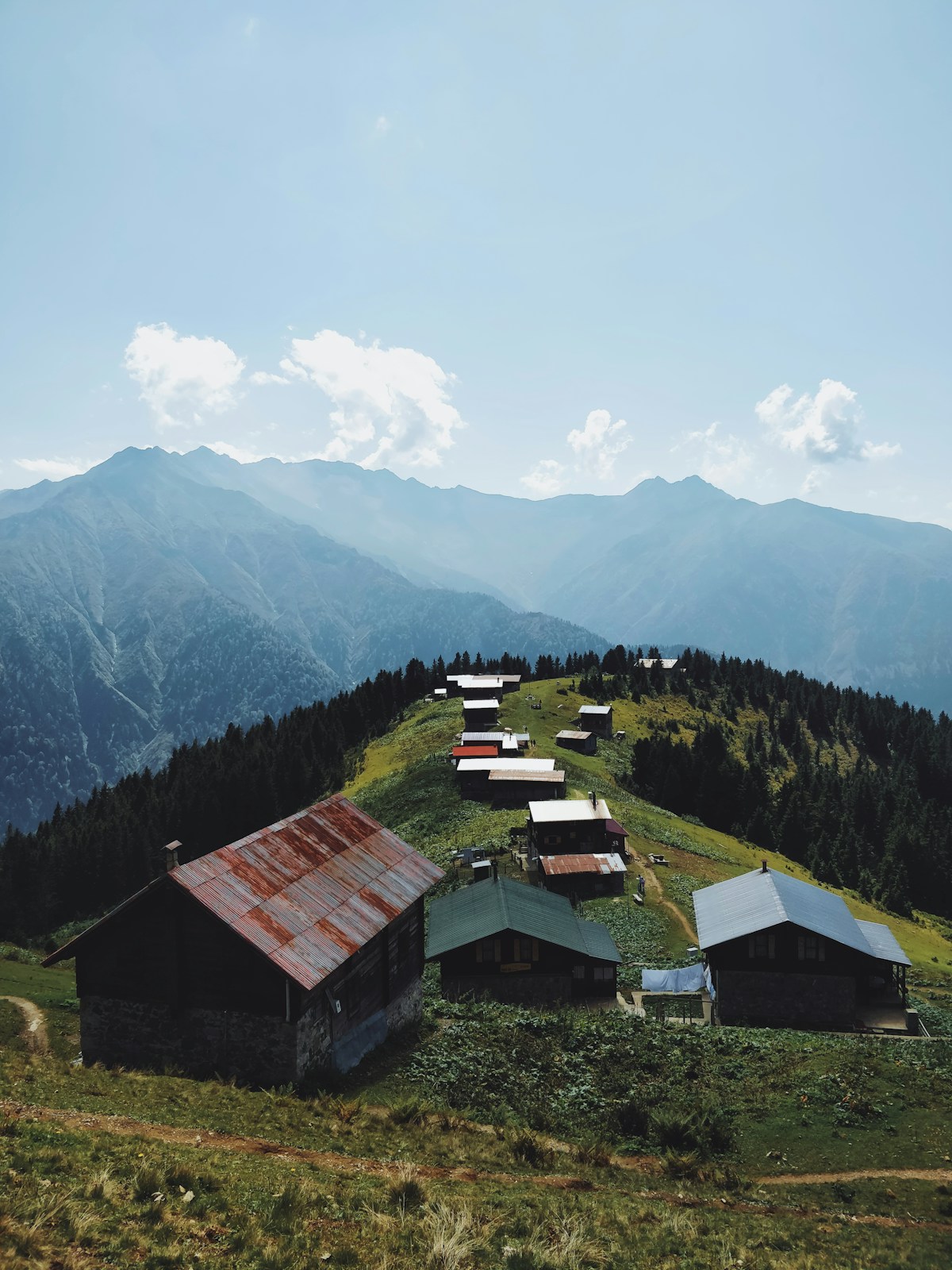
Turkey’s Black Sea coast is the country’s forgotten corridor - green, misty, and startlingly different from the sun-baked Aegean and Mediterranean Turkey that most visitors know. The mountains here drop directly to the sea, ancient Georgian and Armenian churches dot the river valleys, and the highlands above Rize are covered in the tea plantations that supply most of the country. This 7-day route moves from Trabzon westward to Artvin’s gorge country and ends at the Ottoman riverside town of Amasya.
Before you go
Best season: May to June and September to October. The Black Sea coast is Turkey’s wettest region - Rize receives over 2,200 mm of rain per year, more than twice as much as Istanbul. Pack waterproofs even in summer. The yayla (highland plateau) landscapes are most spectacular in late May when spring flowers are out, and in October when the valleys turn amber and red.
Getting there: Fly to Trabzon Airport (TZX) from Istanbul (approximately 1 hour 45 minutes). Turkish Airlines and Pegasus both operate the route. The city centre is 5 km from the airport; taxis cost approximately ₺80–120 as of 2026.
Leaving: Amasya is 6 hours by bus or car from Trabzon. From Amasya, frequent buses connect to Ankara (3.5 hours) and Istanbul (approximately 7–8 hours). Alternatively, fly home from Samsun Airport (SSX), 1 hour by bus from Amasya, with connections to Istanbul.
Day 1: Trabzon - city arrival and harbour food
Trabzon (population approximately 320,000) is the Black Sea’s main city - a working port and regional hub that rewards a day of wandering before you head inland.
Morning: The Atatürk Köşkü (Atatürk’s summer villa, 3 km from the city centre) is the most visited sight - a white mansion set in pine gardens with Bosphorus-facing views. Entry approximately ₺100–150 as of 2026; open 08:00–17:00. A taxi from the centre costs approximately ₺50–80 each way.
Afternoon: Walk down to the Trabzon Bazaar (old covered market area around Maraş Caddesi). The Black Sea version of the covered bazaar is less grand than Istanbul or Bursa but more local - fishmongers, dried food, local honey and cornmeal. Then walk uphill to the Hagia Sophia of Trabzon (Ayasofya Müzesi), a 13th-century Byzantine church converted to a mosque, with remarkable frescoes in the narthex. Entry approximately ₺100–150 as of 2026.
Evening: The harbour fish restaurants along Moloz and the Meydan area offer the classic Black Sea dinner - fresh anchovies (hamsi) in season (October to March), grilled sea bass, and the local cornbread (mısır ekmegi). Budget approximately ₺250–450 per person including drinks as of 2026.
Budget tier: Nur Hotel Trabzon (near the bazaar) - approximately ₺1,200–1,600/double/night as of 2026. Mid-range tier: Hotel Zorlu Grand Trabzon - approximately ₺2,800–3,800/double/night as of 2026. Luxury tier: Radisson Blu Trabzon - approximately ₺5,500–8,000/double/night as of 2026.
Day 2: Sumela Monastery - the mountain monastery
Sumela Monastery (Sümela Manastırı) is carved into a vertical cliff face at 1,200 m altitude in the Altındere National Park, 47 km south of Trabzon. Founded by Byzantine monks in the 4th century CE, occupied until 1923, and now one of the most photographed sites in Turkey.
From Trabzon, take a dolmuş from the Meydan bus station towards Maçka (approximately 40 minutes, ₺20–30 as of 2026), then a taxi or the park minibus up to the monastery (approximately ₺80–120 as of 2026). Arrive by 09:00 to beat the tour groups.
The site requires a steep 20-minute climb on a stone path from the car park to the monastery entrance. The main church interior retains Byzantine frescoes from the 13th–19th centuries, damaged but still striking. The carved rock passages and secondary chapels around the main building are worth exploring. Entry approximately ₺350–450 as of 2026.
Afternoon: Return to Trabzon and explore the Boztepe hill above the city (₺20 by cable car from the lower station, or taxi to the top) - panoramic views over the port and coast at sunset. A tea garden on the summit serves the strong, tannic Black Sea tea.
Day 3: Rize - tea terraces and the plateau road
The drive from Trabzon to Rize (75 km, approximately 1.5 hours) hugs the coastal road past fishing villages and hazelnut groves.
Morning in Rize: Walk up to Rize Kalesi (castle, free entry) on the hill above the city centre for views over the terraced tea gardens falling to the Black Sea below. The Rize Çay Bahçesi (tea garden) adjacent to the castle is a good spot for a glass of local tea with views - this is the actual region that supplies most of Turkey’s tea. The town’s Rize Tea Research Institute (Çay Enstitüsü) occasionally offers tours; ask at your hotel.
Afternoon: Head up into the mountains to the yayla plateau country above Rize. The road towards Çamlıhemşin and then up to Ayder Yaylası (approximately 1,350 m, 60 km from Rize) passes through the region’s most dramatic landscape: steep green valleys, wooden farmhouses on ridgelines, and mist through the trees. Ayder has thermal spring pools (kaplıca) - entry approximately ₺100–200 as of 2026 - where you can soak after the drive.
Overnight in Rize or Çamlıhemşin: Budget tier: Rize Otel (city centre, near the bazaar) - approximately ₺900–1,300/double/night as of 2026. Mid-range tier: Green Park Hotel Rize - approximately ₺2,200–3,200/double/night as of 2026. Luxury tier: Çamlıhemşin area boutique hotels - approximately ₺3,500–5,500/double/night as of 2026.
Day 4: Fırtına Valley and Zilkale
The Fırtına Deresi (Storm Stream) valley east of Rize is one of the most dramatic river gorges in Turkey - a narrow forested canyon with Ottoman stone bridges, a medieval tower, and some of the best white-water rafting in the country.
Morning: Drive east from Rize to Ardeşen (35 km, 45 minutes), then south up the valley towards Çamlıhemşin. The first major sight is the Çifte Köprü (Double Bridge) - twin Ottoman stone arches over the river, free to walk across. Continue south to the Zindan Mağarası (prison cave, a river cave worth a 30-minute detour).
Afternoon: Push further south to Zilkale (approximately 45 km from Ardeşen) - a ruined Genoese-era mountain fortress perched above the river, entry free. The approach is a 20-minute walk from the road. The castle itself is partially collapsed but the site has extraordinary views up the valley to the high peaks, and the sense of remoteness is total.
Return to Rize or continue driving east to overnight near Artvin (approximately 2 hours).
Day 5: Artvin and the Çoruh Valley
Artvin sits dramatically on a hillside above the Çoruh River, one of Turkey’s fastest and most scenically impressive rivers. The gorge country around Artvin is lined with medieval Georgian and Armenian churches that date from when this region was part of the Kingdom of Georgia.
Morning: Drive to the Georgian Church of Dörtkilise (Haho Monastery, approximately 30 km from Artvin towards Yusufeli, then a turn) - a large 10th-century Georgian cathedral in a meadow, free to enter, beautifully carved stonework. Then visit Bağdatlı Köyü and the road along the Çoruh gorge - the river here runs through a narrow canyon of red and orange rock.
Yusufeli: The town of Yusufeli (approximately 50 km south of Artvin) is the white-water centre of the Çoruh - one of the world’s top kayaking rivers. Even non-kayakers come for the riverside restaurants and the spectacular gorge views. Note that the new Yusufeli Dam has partially altered the lower gorge; the upper section above the town remains wild.
Afternoon: Return to Artvin for the overnight. The Artvin Kalesi (castle) above the city is free and gives views over the entire Çoruh valley.
Budget tier: Hotel Karahan Artvin - approximately ₺900–1,400/double/night as of 2026. Mid-range tier: Hotel Artvin or Güneş Otel - approximately ₺1,800–2,800/double/night as of 2026.
Day 6: Drive to Amasya
The drive from Artvin to Amasya (approximately 350 km, 4.5–5 hours) crosses the Black Sea coastal mountains and drops onto the Pontic plain. Take the inland route via Bayburt (worth a 30-minute stop for the ruined castle, one of the largest in Anatolia) and Suşehri.
If you arrive by early afternoon, walk along the Yeşilırmak River waterfront in Amasya to appreciate the Ottoman houses before dark - the late afternoon light on the cliff tombs is the best of the day.
Day 7: Amasya - Pontic tombs and Ottoman houses
Amasya is one of Turkey’s most distinctive provincial towns and the most visually unusual stop on the Black Sea route. The town sits in a narrow river gorge with Ottoman timber-framed mansions crowding both banks of the Yeşilırmak, and the cliff face above the town is perforated with the Pontic Royal Tombs (Kaya Mezarları) - rock-cut chambers carved between the 4th and 2nd centuries BCE for the kings of Pontos.
Morning: Walk up to the tombs (approximately ₺100–150 entry as of 2026, open 08:00–18:00). The largest chamber, the Tomb of Mithridates, goes 15 m into the rock and is illuminated at night. The path continues up to Amasya Kalesi (castle) above - free entry, panoramic views over the town and the river.
Mid-morning: Walk the southern bank of the Yeşilırmak along Hatuniye Caddesi - this is the best street for the classic Amasya photograph of Ottoman houses reflected in the river. The restoration has been careful; several mansions are now small hotels or museums.
Afternoon: The Amasya Museum (approximately ₺100 entry as of 2026, closed Mondays) houses a good collection of Hittite, Pontic, Byzantine, and Ottoman artefacts including the famous mummies - naturally preserved Ottoman governors from the 14th and 15th centuries, one of the most unexpected exhibits in Turkish provincial museology.
Lunch: Şehzade Sofrası on the riverside has good regional dishes - the local specialty is Amasya apple products (everything from apple tea to apple wine). Approximately ₺200–350 per person as of 2026.
Budget tier: Amasya Konağı (riverside guesthouse) - approximately ₺1,000–1,500/double/night as of 2026. Mid-range tier: Ilk Pansiyon or Emin Efendi Konağı (restored Ottoman house hotel) - approximately ₺2,500–3,500/double/night as of 2026. Luxury tier: Apple Palace Hotel Amasya (views of the cliff tombs) - approximately ₺4,000–5,500/double/night as of 2026.
Route summary
| Day | Base | Key site | Drive |
|---|---|---|---|
| 1 | Trabzon | Atatürk Villa, bazaar, Hagia Sophia | Arrive by plane |
| 2 | Trabzon | Sumela Monastery | 47 km south |
| 3 | Rize | Tea terraces, Ayder Yayla | 75 km west |
| 4 | Rize/Artvin | Fırtına Valley, Zilkale | 80 km inland |
| 5 | Artvin | Çoruh gorge, Dörtkilise, Yusufeli | local drives |
| 6 | Amasya | Drive via Bayburt | 350 km, 5 hours |
| 7 | Amasya | Pontic tombs, Ottoman houses | Depart from Samsun |
All distances and times are approximate as of 2026. Road conditions in the Fırtına Valley and above Ayder can be affected by heavy rain - check locally before driving.
Book Your Trip
- Flights - Find the best fares to Turkiye
- Travel Insurance - Get covered before you go
- eSIM - Stay connected from landing
- Airport Transfers - Pre-book your transfer from Istanbul or Antalya
- Car Rental - Compare prices across providers
Search hotels in Turkey on Booking.com
- Tours & Activities - Browse Turkiye tours on GetYourGuide