Patara organises its activities across two distinct experiences: the archaeological site and the protected beach. The ruins are best in the morning; the beach in the afternoon. For those based here several days, the surrounding region - Xanthos, Letoon, the Lycian Way, and Kalkan - extends the range considerably. For accommodation options in Gelemiş village, see where to stay in Patara.
Walking the ruins
The combined beach and ruins ticket (approximately ₺300–350 as of 2026) covers the full archaeological site. Arrive at gate opening (approximately 08:00) for the coolest temperatures and best light.
Recommended route: From the entrance gate, walk first to the triumphal arch - the most photogenic structure and a good orientation point. Continue through the street grid (partially visible under the sand) to the bouleuterion (parliament building), which is the site’s historically most significant structure. From there, work toward the theatre on the hillside, then back down through the granary toward the ancient harbour zone. The return path leads through the dune landscape to the beach.
What to focus on:
Bouleuterion: The assembly hall of the Lycian League, which met at Patara as the federation capital. The building holds particular interest for anyone interested in constitutional history - the Lycian system of proportional representation (small cities sent 1 delegate, medium cities 2, large cities 3) directly influenced American federal thinking. The walls stand to several courses; the interior is roofless.
Triumphal arch: Three-bayed gateway standing to near-full height across the ancient road, built during the Roman governorship of Mettius Modestus (around AD 100). The central arch is the largest.
Theatre: A mid-sized Lycian-Roman theatre on the hillside, partially excavated. The cavea (seating) retains several rows; the view from the upper seats across the dune system to the sea is the main reward. Partially shaded in morning.
Granary: A long multi-bay storage building with vaulted chambers, serving the agricultural and maritime trade of the region.
The beach
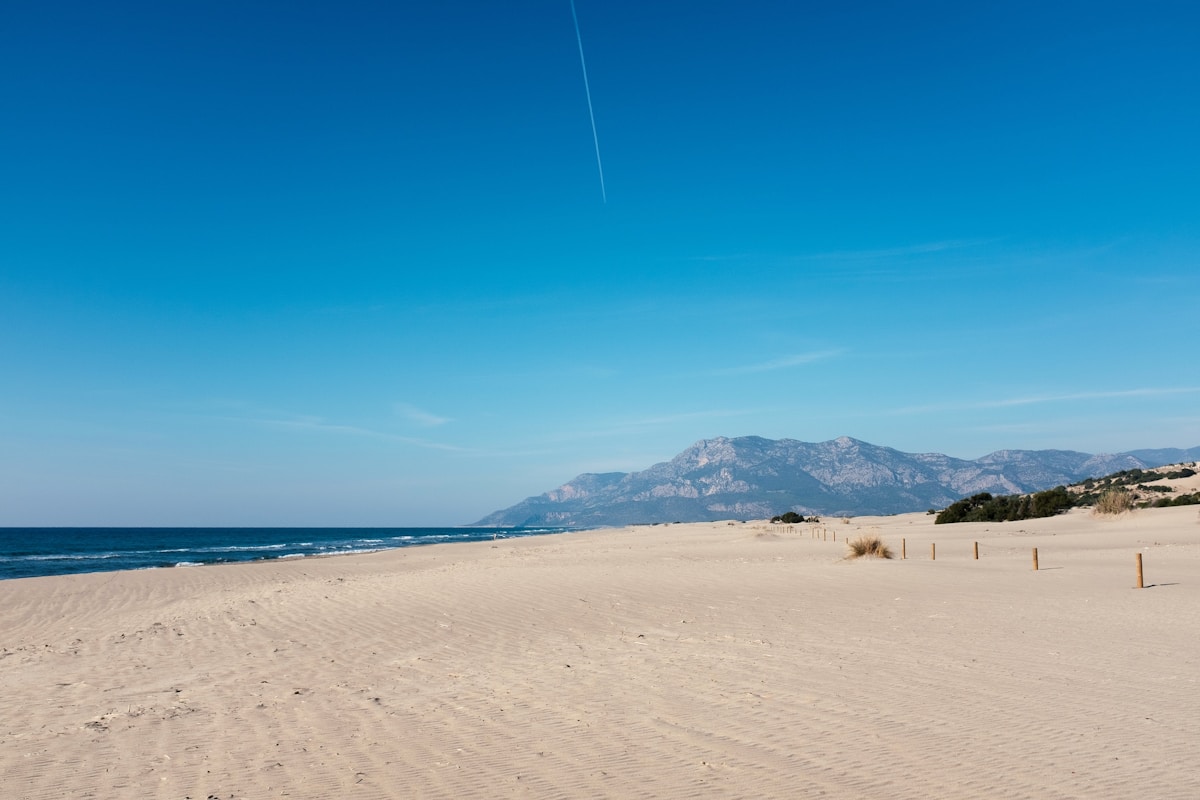
After the ruins walk, the path leads through the dune system to the beach. The transition from ancient city to protected Mediterranean beach is one of the more unusual experiences in Turkey - archaeological site, then dunes, then 18 km of open sand.
Where to swim: The first 500 metres from the entrance gate is where the majority of visitors settle. Walking 20 minutes north along the beach brings substantially more solitude. The water is clear but the beach is exposed - waves and wind are present, particularly from early afternoon when the Aegean breeze builds.
Turtle nesting: Loggerhead turtles (caretta caretta) nest on Patara beach from May through September. The beach conservation team marks active nests; follow posted restrictions and don’t disturb marked areas. Night beach closure (approximately 20:00–08:00) is strictly enforced during nesting season.
Xanthos day trip
Xanthos is 7 km from the Patara junction - 15 minutes by car (rent a car in Turkey to combine both sites easily), reachable by dolmuş in summer. The site is a UNESCO World Heritage Site (listed with Letoon), the former capital of Lycia, and the best-preserved major Lycian city accessible from the Patara base.
What to see: The theatre (well preserved, with inscribed Aramaic stones); the Harpy Tomb on its tall pillar; the agora; city walls; and the site of the Nereid Monument (the original is in the British Museum). An introductory walk takes 1.5–2 hours.
Entry: Approximately ₺200–250 as of 2026. Open daily approximately 08:00–19:00.
Combined programme: Xanthos in the morning (08:00–10:30), drive to Patara (11:00), ruins walk (11:00–13:00), beach afternoon (13:00–17:30). Long but rewarding - the complementary Lycian character of the two sites is clear when visited on the same day.
Letoon sanctuary
5 km southwest of Xanthos, the Letoon (listed with Xanthos on the UNESCO designation) is the religious sanctuary of Lycia. Three temples to Leto, Artemis, and Apollo stand partially submerged in seasonal groundwater - the flooded interior, with frogs and reeds among the column drums, is an arresting sight. Entry approximately ₺100–150 as of 2026. Combine with Xanthos on the same day trip.
Lycian Way hiking
The Lycian Way long-distance trail (500 km) passes through the Patara area and crosses the beach. The section relevant to Patara visitors:
Beach section: The trail follows the Patara beach for approximately 4–5 km before climbing the headland. Walking the beach in the early morning - before the gate ticket office opens, when access is still free - is the way to do this section. The sand is firm near the waterline.
Gelemiş to Kalkan section: Approximately 14 km, difficulty moderate. Climbs from the village over the headland and descends to Kalkan via coastal paths with sea views. Allow 5–6 hours. Best in spring (April–May) or October; the summer heat on exposed limestone paths is significant. Start early.
Patara to Pınara section: A longer and more remote section heading east, requiring navigation skills and water carrying. Not recommended without experience or a guide.
Paragliding (day trip to Babadağ/Ölüdeniz)
The Babadağ mountain above Ölüdeniz (approximately 90 km from Patara, 1 hour 30 minutes by road) is one of the world’s most famous paragliding sites. Tandem flights launch from 1,969 m and descend 35–40 minutes to the Blue Lagoon beach at Ölüdeniz. See our dedicated Ölüdeniz paragliding guide for operator tips and booking advice.
Logistics from Patara: Several tour operators in Gelemiş village offer day trips including transport, tandem flight (with certified pilot), and return - approximately ₺3,500–4,500 per person as of 2026. The flight itself takes 35–40 minutes; the full day including travel is approximately 8 hours.
Best conditions: Thermal flights are best June–October. Morning flights (09:00–11:00) have the calmest air; afternoon flights use stronger thermals for more extended soaring. Pilots adjust flight time based on conditions.
Search hotels in Patara Turkey on Booking.com
Booking in advance: Browse tours and activities in Patara - guided walks, skip-the-line tickets, and day tours are bookable ahead with free cancellation.