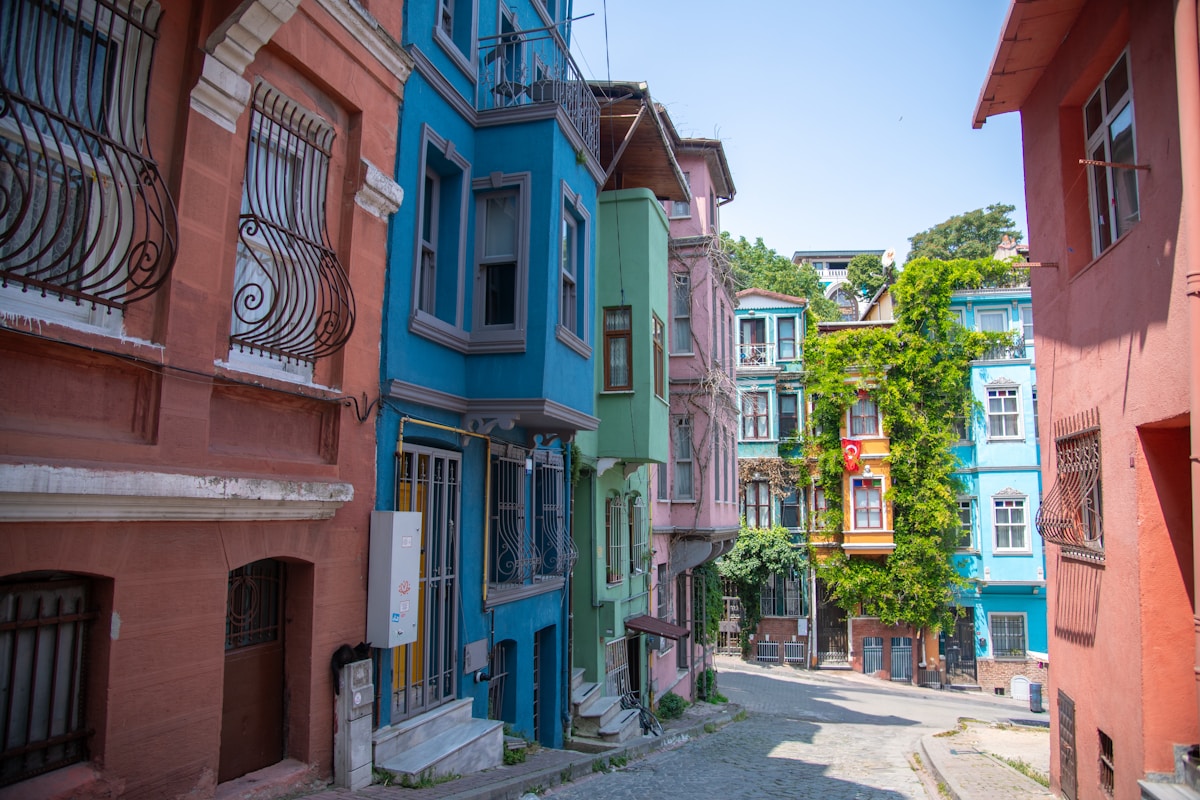
Balat is on the European side of the Golden Horn, west of the historic peninsula, and it is among the most recognisable neighbourhoods in Istanbul. The steep cobblestone streets lined with closely packed colourful Ottoman wooden houses - shutters in yellow, blue, red, and green, Turkish flags from nearly every window - have become one of the most photographed scenes in the city. That visibility has brought cafes and brunch spots in recent years, but the neighbourhood remains primarily working-class and residential.
Understanding where Balat comes from adds considerably to a visit.
Historical Context
Balat was Istanbul’s Jewish quarter from Byzantine times, one of the oldest continually inhabited Jewish settlements in Europe. After the Ottoman conquest in 1453, Sephardic Jewish refugees expelled from Spain in 1492 were welcomed here by Sultan Bayezid II. At its peak in the 19th century, Balat had tens of thousands of Jewish residents, multiple synagogues, schools, and a publishing culture in Ladino, the Judeo-Spanish language.
Adjacent Fener (Phanar in Greek) was the Greek quarter, home to the Phanariot Greeks who served as interpreters and diplomats for the Ottoman court. The Ecumenical Patriarchate has been located here since the 17th century.
Both communities largely left through the 20th century - the 1923 population exchanges, the 1934 Thrace pogroms, the 1955 Istanbul pogrom, and subsequent emigration to Israel and Greece. Today Balat and Fener are primarily working-class Turkish neighbourhoods, with a growing presence of artists, café owners, and creatives who have moved in as rents were still relatively low.
The Streets
Vodina Caddesi and the surrounding network of lanes are where the colourful facades concentrate. The houses are Ottoman timber-frame construction, many dating to the 18th and 19th centuries. Some are meticulously restored; others are in various states of managed decay. The combination of steep terrain, narrow lanes, and layered colour is genuinely distinctive - there is nothing quite like it elsewhere in Istanbul.
Mornings before 11am see the fewest visitors. By noon on weekends, tour groups arrive and the streets fill. The neighbourhood is small enough to walk entirely in under an hour; allow more time to explore slowly and stop at cafes.
The Ahrida Synagogue
The Ahrida Synagogue on Kürkçü Çeşme Sokak is one of the oldest synagogues in Istanbul, built around 1430. The interior, with its ship-shaped tevah (reading platform) and painted wooden ceiling, is among the most beautiful in Istanbul. The synagogue is active and not generally open to casual visitors - access requires advance permission through the Istanbul Jewish community. If a visit matters, contact the community directly well in advance.
The Ecumenical Patriarchate of Constantinople (Fener)
A ten-minute walk west of central Balat, the Ecumenical Patriarchate of Constantinople is the spiritual headquarters of Eastern Orthodox Christianity worldwide and home to the Ecumenical Patriarch. The compound, surrounded by high walls in a quiet Fener street, contains the Cathedral Church of St. George (Hagios Georgios), built in 1720.
The church interior holds significant religious objects including relics of saints venerated across Orthodox Christianity and a throne attributed to the Byzantine emperors. Photography is generally permitted. The compound is open to visitors during daylight hours most days - arrival outside service times is respectful and practical. Dress modestly.
The Church of St. Stephen of the Bulgarians
On the Golden Horn shore directly across from Fener, the Bulgarian Orthodox Church of St. Stephen (1898) is an architectural curiosity worth a detour. The entire structure - nave, columns, balconies, iconostasis - was prefabricated in cast iron in Vienna, shipped in pieces down the Danube and across the Black Sea, and assembled on site. The result is a full Gothic Revival church made entirely of iron. Entry is free.
Cafes and Brunch
Balat’s café scene has expanded considerably in the past five years. The quality is generally good, the prices have risen with popularity, and the atmosphere varies by how early you arrive.
Minoa Coffee has courtyard seating and is among the better coffee options in the neighbourhood. Forno Balat is a bakery producing decent bread and pastries from early morning. Balat Books combines second-hand books with coffee in a small, worn-in space that suits the neighbourhood’s character. Several cafes on Vodina Caddesi serve extended brunch menus on weekends - budget approximately ₺200–350 per person as of 2026.
Getting to Balat
The most direct approach from Eminönü is on foot along the Golden Horn shore - approximately 30 minutes walking. The T1 tram stops at Eminönü; from there, continue on foot or take a taxi (approximately ₺100–150 from Sultanahmet as of 2026). Minibuses (dolmuş) run from Taksim via Beyoğlu through parts of the area. Balat does not have a direct metro or tram stop.
Practical Notes
The streets are steep and paved with irregular cobblestones. Wear shoes with grip, not smooth soles. Most cafes are card-friendly but some smaller shops are cash only. The neighbourhood is quiet on weekday mornings and busy on weekend afternoons - plan accordingly. Combining Balat with Fener makes a natural half-day to full-day itinerary, with the church, the streets, brunch, and the Golden Horn walk.
Search hotels in Istanbul on Booking.com
For your visit: Browse tours and activities in Istanbul for guided experiences in Istanbul - walking tours, day trips, and activity bookings are available with free cancellation. An eSIM for Turkey keeps you connected without airport SIM queues, and travel insurance covers medical costs and cancellations.
See also: Istanbul travel guide · Istanbul neighbourhoods overview · Karaköy guide · Istanbul things to do · 3-day Istanbul itinerary