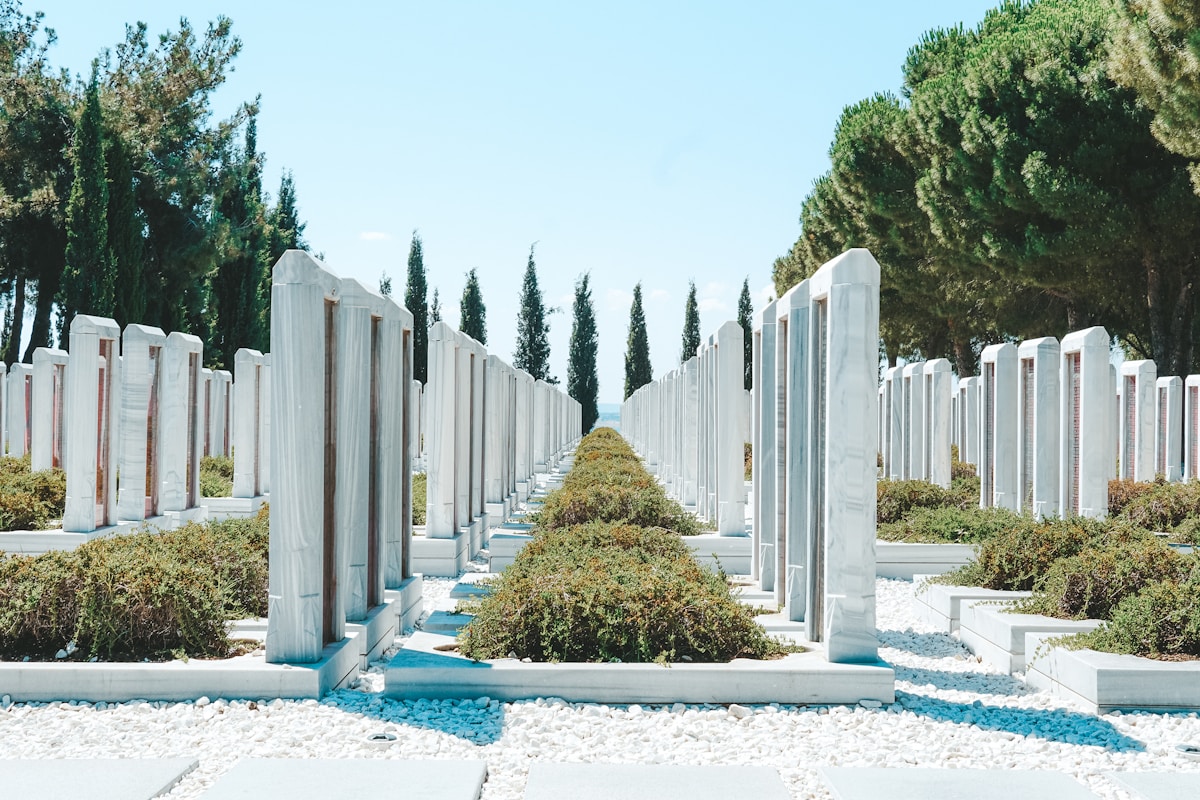
Gallipoli, Türkiye: Peninsula Battlefields, Memorials
Gallipoli travel guide: ANZAC Cove, Lone Pine, Chunuk Bair, how to visit from Çanakkale or Istanbul, and what the 1915 campaign means today.
Guides for Gallipoli
Gallipoli is one of the most significant military sites of the 20th century - a narrow peninsula at the mouth of the Dardanelles where, in 1915, a combined Allied force from Britain, Australia, New Zealand, France, and India attempted to break through Ottoman defences and open a route to Istanbul. The eight-month campaign cost over 100,000 lives on both sides. Today, the peninsula is a national park, covered in meticulously maintained cemeteries, memorials and restored trench lines.
For Australians, New Zealanders, Turks, and many others, Gallipoli carries a weight that is difficult to convey in standard travel terms. The 29 Allied cemeteries and 57 Turkish memorials scattered across the peninsula make it among the most visited pilgrimage sites in the region.
The 1915 Campaign: Essential Context
On 25 April 1915, Allied troops - predominantly ANZAC (Australian and New Zealand Army Corps) forces in the north and British forces in the south - landed on the Gallipoli Peninsula under heavy fire. The campaign aimed to knock the Ottoman Empire out of the war, open the Dardanelles to Allied ships, and potentially reach Istanbul. It failed on all counts.
ANZAC troops landed in the wrong location, a narrow cove below steep ridges they were not expected to hold. For eight months, both sides fought for possession of ridgelines and outpost positions in conditions of extreme difficulty - the terrain steep and rocky, the summer heat extreme, water scarce, and disease rampant. In November 1915, Allied command decided to evacuate; the last troops left in January 1916. The loss rate for the Allies was over 50% of deployed forces.
For Turkey, the defence of Gallipoli under Mustafa Kemal - who would later found the Turkish Republic - carries enormous national significance. For Australia and New Zealand, the ANZAC landings of 25 April are now national commemorative days. The phrase “first light at ANZAC Cove” is embedded in both countries’ national identities.
Key Sites
ANZAC Cove
The narrow beach where Australian and New Zealand troops landed on 25 April 1915. It is smaller than visitors expect - approximately 200 metres of shingle at low tide, overlooked by steep ridges from which Ottoman defenders fired. Today the beach has a modest car park, an information board, and the quietude of a place that knows its history. The sea is clear and calm; the ridges above are pine-forested. It is not dramatic to look at, which may be part of its power.
The Ariburnu Cemetery is immediately above the beach, the first cemetery established after the landings. The Ariburnu Memorial, with inscriptions in Turkish, English, French, Arabic and Greek, stands at the beach entrance.
Lone Pine (Kanlısırt)
Lone Pine is the largest and most visited ANZAC cemetery on the peninsula, the site of some of the most intense close-quarters fighting of the campaign in August 1915. The cemetery holds 4,936 graves; the surrounding ground contained the tunnel systems from which the August attack was launched. A single pine tree (grown from a seed taken from the original tree) stands at the grave of an Australian soldier. This has become the symbolic tree of the Gallipoli memorials.
The cemetery is well-maintained and deeply moving in the way that a site where the inscriptions say “known unto God” on hundreds of headstones tends to be. Allow 30–45 minutes.
Chunuk Bair
The highest point the ANZAC forces reached and held - briefly - during the August offensive of 1915. The New Zealand Memorial stands here: a large stone obelisk overlooking both the ANZAC lines and the Dardanelles below. On 8 August 1915, New Zealand forces captured this ridge and could see the Strait - but could not hold the position. Two days later, a Turkish counterattack led by Mustafa Kemal drove them back.
The view from Chunuk Bair is the best vantage point on the peninsula for understanding the geography of the campaign: the ANZAC lines in the valley below, the Dardanelles, and the Asia Minor coast beyond. Allow 30 minutes.
The Nek
A narrow ridge between the ANZAC position and Chunuk Bair, the site of the charge depicted in Peter Weir’s film Gallipoli (1981). On 7 August 1915, four waves of Australian Light Horse charged across a space roughly 27 metres wide, directly into Turkish machine guns. All four waves were annihilated. The cemetery here is tiny and the ridgeline is now quiet, but the scale of the charge becomes apparent when you stand at the spot.
Kabatepe and the Helles Area
The southern tip of the peninsula - Cape Helles - was the British landing zone on 25 April 1915. The fighting here was different in character: the terrain is flatter and the positions changed less dramatically. The Helles Memorial commemorates over 20,000 Allied forces with no known grave. The Turkish memorial (Mehmetçik Abidesi) stands nearby - worth visiting for the counter-perspective the inscriptions provide.
Turkish Memorials
The Ottoman defences at Gallipoli under Kemal Atatürk are commemorated separately from the Allied memorials but are woven into the same landscape. The Çanakkale Martyr’s Memorial (Çanakkale Şehitleri Abidesi) stands 20km south at Morto Bay - one of the largest war memorials in Turkey. Atatürk’s famous 1934 inscription to the Anzac fallen (“You, the mothers, who sent their sons from faraway countries, wipe away your tears; your sons are now lying in our bosom and are in peace.”) is found at the ANZAC Cove memorial and is one of the most quoted passages in Turkish-Australian relations.
Getting to Gallipoli
From Istanbul (320km): Bus from Istanbul to Çanakkale takes approximately 4.5–5 hours, ₺250–400 from major carriers (Metro, Kamil Koç). Night buses depart around 11pm. Alternatively, fly Antalya–Çanakkale or Istanbul–Çanakkale (Turkish Airlines seasonal routes). From Çanakkale, take the ferry across the Dardanelles to Eceabat (25 minutes, ₺10–15) to reach the peninsula.
From Istanbul by organised tour: Many tour operators offer 2-day Gallipoli-Troy tours from Istanbul. Day 1: Gallipoli peninsula. Day 2: Ancient Troy (30km from Çanakkale). Cost approximately €80–130 per person including transport, guide, and accommodation. This is a common choice for travellers who want context without logistics.
Self-drive from Çanakkale: Hire a car in Turkey in Çanakkale, take the ferry to Eceabat, and follow the Gallipoli National Park road north. A detailed map is available from the ferry terminal or downloaded from the Gallipoli Regional Park website. Fuel up in Eceabat; the peninsula has no petrol stations.
From Eceabat: Minibus tours run from Eceabat to the main memorials; taxis can be hired for a half-day tour. Many hotels in Eceabat offer their own guided transport.
Base Towns
Çanakkale
The main city for Gallipoli visits - accommodation of all standards, good restaurants, and a ferry connection across to the peninsula. The Naval Museum (Deniz Müzesi) in Çanakkale harbour contains exhibits on the Dardanelles campaign, including a replica of a mine and photographs from 1915. The city itself has a pleasant waterfront and the Çimenlik Castle at the harbour mouth.
Accommodation in Çanakkale: Budget (₺500–1,000/night): Anzac Hotel, Yellow Rose Pension. Mid-range (₺1,200–2,500/night): Kolin Hotel, Hotel Akol. Both are comfortable and well-located for the ferry.
Eceabat
The small town on the Gallipoli side of the Dardanelles ferry, 25 minutes from Çanakkale. Staying here puts you closer to the battlefield sites but with far fewer hotel and restaurant options. The Crowded House and TJ’s Hotel are the established backpacker bases; both offer their own daily Gallipoli tours.
When to Visit
ANZAC Day (25 April): The most significant date - the dawn service at ANZAC Cove draws 10,000–20,000 people. To attend, arrive in Çanakkale at least 2 days in advance (all accommodation books out), take the midnight shuttle from Eceabat to the cove, and be in position by 4am. The service begins at 5:30am. The logistics are demanding but the experience is unlike any other commemorative event in Turkey.
September–October: Quieter, with the pines in their summer colour, cooler temperatures, and fewer visitors. The cemeteries are especially peaceful in October.
Avoid: July–August in midday heat - the exposed ridgelines are very hot and the archaeological paths can be uncomfortable. Guided tour groups thin out in shoulder season.
Practical Information
Entry: The Gallipoli peninsula memorials and cemeteries are free to enter. The Gallipoli National Park has no admission charge; the Kabatepe Orientation Centre (museum) charges approximately ₺100 as of 2026.
Getting around the peninsula: The sites are spread across 30+ km of roads. Without a car, hire a tour guide with transport from Eceabat (approximately ₺500–800 per half-day) or join an organised group. The distances between memorials are too great for walking between them in a single day.
Respectful conduct: These are active cemeteries. Photography is permitted but voices should be kept low, particularly at grave sites. Removing any fragment of military material - shell casings, shrapnel - from the site is illegal under Turkish cultural heritage law.
Connecting with the Broader Region
Gallipoli sits in Thrace, close to Çanakkale and within a day’s travel of both Istanbul and Edirne. Most visitors combine Gallipoli with Troy (30km from Çanakkale) on a 2-day circuit from Istanbul.
Tours & activities: Browse tours and activities in Gallipoli - guided battlefield tours, ANZAC Cove day trips from Istanbul, and Troy combination tours are bookable in advance with free cancellation.
Search hotels in Gallipoli Turkey on Booking.com
Getting there: Flights to Turkey connect via Istanbul with most European carriers. For a door-to-door arrival, pre-book an airport transfer for fixed-price, hassle-free pickup. An eSIM for Turkey activates before you land and keeps you connected from the moment you clear arrivals.
See also: Çanakkale travel guide · Edirne travel guide · Istanbul travel guide · Istanbul day trips · Getting around Türkiye
Book an experience
Top experiences in Gallipoli
Explore the best tours and activities in Gallipoli, with instant confirmation and free cancellation on most bookings.
Find hotels in Gallipoli
Explore accommodation in Gallipoli →We earn a small commission at no cost to you.