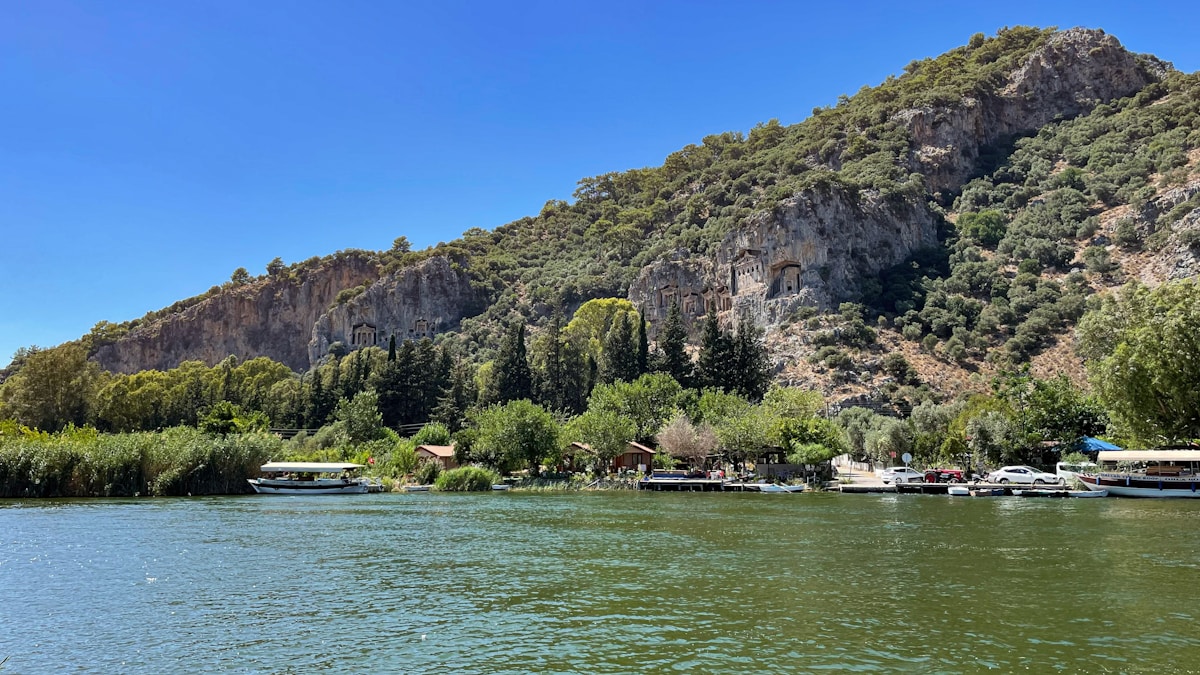
Dalyan, Türkiye: Lycian Tombs, Mud Baths, Loggerhead Turtles
Dalyan travel guide: Lycian rock tombs, thermal mud baths, loggerhead sea turtle nesting beach, and river boat trips in Muğla province, Turkey.
Guides for Dalyan
Dalyan is a small river town in Muğla province where the landscape does most of the work: a wide, reed-banked river leads past sheer limestone cliffs carved with Lycian rock tombs, through a reed delta, to a 4.5km Mediterranean beach where loggerhead sea turtles nest each summer. Add thermal mud baths, the ruins of the ancient city of Kaunos, and the surrounding wetland ecology, and Dalyan is one of the most distinctive day-and-overnight destinations on Turkey’s Aegean coast.
The town itself is small and pleasant - a riverside street with restaurants, pension hotels, a lively morning market, and boat jetties where flat-bottomed boats take tourists up and down the river. It is 10km from Ortaca, the nearest large town, and 60km from Marmaris.
The Dalyan River and Lycian Rock Tombs
The primary experience in Dalyan is the river. Traditional flat-bottomed boats leave from the jetty on the town’s main riverfront throughout the morning and afternoon, taking visitors through the reed channels and past the most dramatic feature of the valley: the Lycian rock tombs carved into the cliff face above the river.
The tombs date from the 4th century BCE when Dalyan was part of the Lycian cultural region. Unlike many ancient burials, these are cut directly into vertical limestone - the façades designed to resemble the fronts of wooden Lycian houses, complete with columns and decorative pediments. The rock face rises approximately 80m above the river; the tombs are visible for several kilometres as you travel downstream. Viewing from the river, at water level, gives a striking perspective: the carved monuments appear suspended on the cliff wall above. Boats pass close enough for photography.
From the boat, the perspective shifts with the light - morning hours give cleaner photographs with the sun on the cliff face; afternoon puts the tombs in partial shadow but the warm light on the river reeds is better.
Entry to the tomb complex (on foot, via a path from the other side of the rock): approximately ₺150 as of 2026. The river-level view from a boat is free as part of the standard boat trip.
Kaunos Ancient City
Directly across the river from Dalyan, accessible by a short boat hop, are the ruins of Kaunos - a Carian-Lycian city founded around 400 BCE and inhabited through the Byzantine period. The site includes a substantial Roman theatre (capacity approximately 5,000), an acropolis with walls, a large gymnasium complex, and the Stoa of the Agora.
Kaunos was a prosperous trading port in antiquity, known for its purple dye and dried figs. The harbour silted up over centuries; the town is now several kilometres from the sea. A small museum on site holds inscriptions and sculpture finds.
Entry: approximately ₺300 as of 2026. Accessible by the same boats that do the river tour. Most standard boat trips include a stop at Kaunos.
Thermal Mud Baths and Hot Springs
4km upstream from Dalyan town, the Sultaniye thermal springs feed outdoor mud bath pools that visitors have used since antiquity - the Romans used these waters too. The pools contain naturally hot, mineral-rich water (approximately 38–40°C) mixed with sulphurous thermal mud. The standard procedure is to cover yourself in mud from the pool edge, let it dry for 20–30 minutes in the sun, then rinse in the thermal pool. The mud is reputedly beneficial for skin conditions and joint pain; the experience is memorably peculiar.
Entry: approximately ₺150–200 as of 2026. Included in most standard Dalyan boat trips. Towels available for hire. Changing facilities on site. The pools are open year-round; summer is the busiest time.
A separate indoor hammam spa facility operates alongside the mud pools, offering treatments from approximately ₺200 upward.
İztuzu Beach (Turtle Beach)
İztuzu is Dalyan’s Mediterranean beach - 4.5km of sand on the barrier spit between the river delta and the open sea. It is one of the most important nesting beaches in Turkey for the loggerhead sea turtle (Caretta caretta), an endangered species that returns to the same beach each year to lay eggs in the sand. The turtles arrive from May and the nesting season runs through August; hatchlings emerge and make for the sea from July through October.
To protect the turtles, the beach is:
- Open to visitors from 8am to 8pm daily (May–October)
- Closed after 8pm to prevent artificial light disturbing nesting females
- Subject to restrictions on sunbeds in the nesting zone (marked with stakes)
- No vehicles permitted on the sand
The turtles are nocturnal and rarely seen by day visitors. If you want to observe hatching, local conservation groups run monitored dawn viewings during peak hatching (August–September); ask at Dalyan hotels for current arrangements.
The beach itself is excellent independent of turtles: long, sandy, facing directly into the Mediterranean, with the reed delta and river estuary immediately behind. One end (the Dalyan side) has a small cluster of refreshment kiosks; the rest of the beach is largely undeveloped.
Getting there: Boat from Dalyan town jetty (approximately 20 minutes, ₺40–60 return). No road access to the beach itself; the ferry from the river is the only way in. Boats run from approximately 8am; last return typically around 6pm.
Boat Trips: What’s Included
Standard full-day boat trips from Dalyan town (departing approximately 9am, returning around 5pm) typically cover:
- Lycian rock tombs viewpoint on the river
- Kaunos ancient city stop (approximately 1 hour)
- Thermal mud baths at Sultaniye (approximately 1–1.5 hours)
- İztuzu Beach (2–3 hours)
Cost: approximately ₺300–500 per person as of 2026 depending on whether entry fees are included. Confirm what’s included before booking. Boats leave from the central jetty; most tours fill up by 9am in peak season, so book the evening before.
Private boat hire is also available for half-day or full-day trips: approximately ₺1,500–3,000 for a boat of 4–8 people.
Getting to Dalyan
From Marmaris (60km): Dolmuş from Marmaris to Ortaca (approximately 1 hour, ₺50–70), then local dolmuş or taxi from Ortaca to Dalyan (10km, approximately ₺30–50). Total journey approximately 1.5 hours. Direct taxis Marmaris–Dalyan cost approximately ₺300–400.
From Fethiye (100km): Bus or dolmuş to Ortaca (1.5 hours, ₺70–100), then connect to Dalyan. Total approximately 2 hours.
From Dalaman Airport (20km): Dalaman Airport is the closest airport to Dalyan - approximately 20 minutes by taxi (₺150–200) or shuttle service. Several Aegean resort carriers fly directly to Dalaman from UK and European cities in summer (British Airways, easyJet, Jet2). This is a significantly better arrival point for Dalyan than flying via Antalya or Bodrum.
From Bodrum (170km): Bus to Ortaca (approximately 2.5 hours), then connect to Dalyan. Or fly Bodrum–Dalaman (summer schedules).
Where to Stay
Dalyan’s accommodation is concentrated along the river and the surrounding streets - predominantly small hotels, pensions and guesthouses with 10–30 rooms. There are no large resort hotels in Dalyan town itself; the pace is intentionally slower.
Budget (₺600–1,200/night): Family-run pensions with simple rooms and good breakfasts. Several are riverside, which is the best location for evening atmosphere. Sultan Palas and Dalyan Hotel are frequently recommended for cleanliness and location.
Mid-range (₺1,200–2,500/night): Small boutique hotels with pools. Dalyan Resort Spa and Midas Pension are the better options at this price point. Most mid-range properties include breakfast and some have their own river-view terraces.
Luxury (₺2,500–6,000/night): Club Phellos is the most established upscale property in the area, with riverside location, pool complex, and organised boat trips. Some Airbnb-style apartments are available through local agencies for longer stays.
Search hotels in Dalyan on Booking.com
Eating in Dalyan
Dalyan’s restaurant scene is concentrated on the riverside street and the main pedestrian street running parallel. Quality is generally reliable for standard Turkish and meze-based menus.
Fresh fish is the main local speciality - river fish (especially carp and eel from the delta) alongside standard Mediterranean grills. The riverside restaurants have good views; quality is generally better than pricing suggests, though the obvious tourist spots inflate prices by 30–40%.
Meyhane style dining: Several restaurants do traditional meyhane (Turkish tavern) dinners with multiple mezze plates and raki. This format is the best value eating in Dalyan - approximately ₺300–500 for a full spread per person.
What to eat: Beyaz peynir (white cheese), dolma (stuffed vegetables), midye tava (fried mussels), and fresh çipura (sea bream) are all common in Dalyan menus.
When to Visit
May–June: The best combination of warm weather, turtle season beginning, fewer crowds, and lower prices. The river is high and the reeds green.
September–October: Quieter than summer, warm (26–30°C), and turtle hatchlings emerging through September. October is excellent - largely empty, still warm enough to swim, prices drop 30–40%.
July–August: Peak season. Boats busy, beach crowded by Turkish standards (still uncrowded by Marmaris or Bodrum comparison), accommodation higher-priced. İztuzu beach still excellent.
November–April: Low season. Most boat operators close November–March; the mud baths and Kaunos are accessible but the beach experience is cold. The wetland is beautiful in winter for birdwatching (the Dalyan delta is a significant migratory bird resting point).
Nearby Destinations
Dalyan sits between Marmaris (60km northwest) and Fethiye (100km east) - both larger resort towns with more accommodation choice, nightlife, and onward connections. Köyceğiz Lake, which feeds the Dalyan river, is worth an afternoon visit for the surrounding market town. Renting a car in Turkey gives the most flexibility for combining Dalyan with Köyceğiz, Fethiye and the broader Turquoise Coast. The Lycian Way long-distance walking trail passes near Dalyan, and walkers often use it as a base for a rest day. For the broader region, the Turkish Riviera road trip itinerary covers Dalyan alongside Marmaris, Fethiye, and Kas.
Tours & activities: Browse tours and activities in Dalyan - boat trips to İztuzu beach, Lycian tomb tours, and mud bath excursions are bookable in advance with free cancellation.
Getting there: Flights to Turkey connect via Istanbul with most European carriers. For a door-to-door arrival, pre-book an airport transfer for fixed-price, hassle-free pickup. An eSIM for Turkey activates before you land and keeps you connected from the moment you clear arrivals.
See also: Marmaris travel guide · Fethiye travel guide · Bodrum vs Fethiye comparison · Blue cruise guide
Book an experience
Top experiences in Dalyan
Explore the best tours and activities in Dalyan, with instant confirmation and free cancellation on most bookings.
Find hotels in Dalyan
Explore accommodation in Dalyan →We earn a small commission at no cost to you.