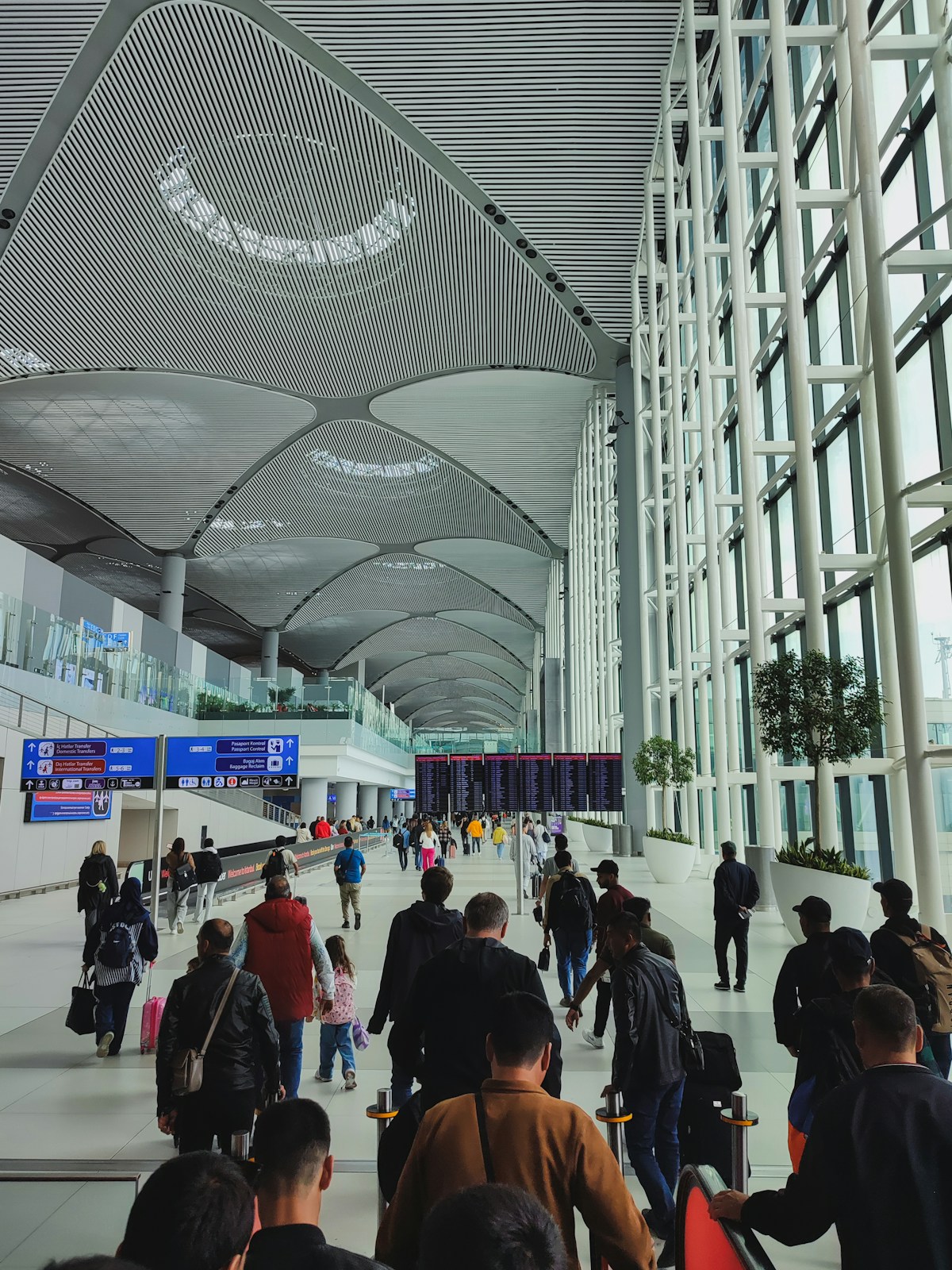
Istanbul Airport overtook London Heathrow as Europe’s busiest airport in July 2026, handling 8.15 million passengers against Heathrow’s 8.16 million — a margin narrow enough that the two airports traded the top spot across individual weeks throughout the month. The volume underlines the scale of demand flowing through the hub, and it sets the context for the announcement made by Turkey’s Transport Minister Abdulkadir Uraloğlu on 14 September: the airport’s fourth runway will be inaugurated on 18 September 2026.
Specifications and What Changes Operationally
The new runway is 2,820 metres long and 45 metres wide. Unlike the existing pair of parallel north–south runways, the fourth runway is oriented east–west — a significant addition because it allows simultaneous operations in a perpendicular configuration.
Key operational improvements once the fourth runway enters full service:
- Quad-runway capacity: all four runways can operate simultaneously during peak demand, substantially increasing the theoretical departure and arrival throughput
- Reduced holding patterns: aircraft circling Istanbul’s approaches during morning and evening peaks should decrease as more departure capacity becomes available
- Better crosswind resilience: the east–west orientation gives controllers more flexibility when Bosphorus winds push aircraft off the optimal north–south approach
Istanbul Airport already has two auxiliary runways, giving it six total paved surfaces — the largest runway inventory of any airport in Europe by that measure.
Turkish Airlines Network Context
Istanbul Airport is the primary hub for Turkish Airlines, which operates to over 340 destinations worldwide. Delays at IST cascade through that network, affecting connecting passengers on long-haul routings through Istanbul.
The airline has been running a punctuality improvement programme throughout 2026 in parallel with the runway expansion. Early data from Cirium shows on-time departure performance improving from around 64% in May to 71% in August. The fourth runway should further reduce ground-side congestion that causes the bulk of short delays.
What to Expect When You Fly Through
For passengers transiting through Istanbul, the minimum recommended connection time remains 90 minutes for international-to-international transfers. The airport’s single integrated terminal with satellite concourses is large — gate-to-gate distances can be significant. Shorter connections than 90 minutes are at risk.
Arrivals from outside the Schengen area will continue to pass through EES biometric checks. The process adds 10–20 minutes at peak times; if your flight lands at 06:00–09:00 or 18:00–21:00, budget extra time.
The fourth runway primarily benefits departure punctuality and reduces airspace holding time — it does not change terminal layout or immigration processing speeds.
Our Istanbul city guide covers getting from the airport to the city, and our Istanbul Airport transfer guide has the most current information on terminals, transport, and transfer timing. Compare flights to Istanbul to take advantage of the improved punctuality the new runway should bring this winter.